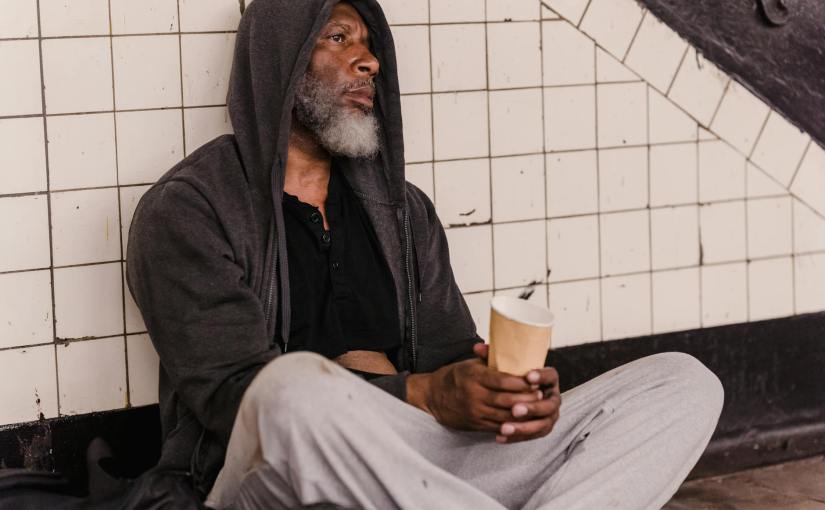
Preferring the Poor

If we believe that science and religion are incompatible

we will live in one world

and pray and believe in another

the Newtonian view of the world

did not include the human person –

everything was mechanical

and even when the new physics gave us a dynamic cosmos

religious consciousness was stuck in a medieval cosmos:

a perfect/immutable/unchanging/hierarchical/

anthropocentric world

evolution may be a painful movement forward

marked by dramatic suffering and losses

the losses cannot be ignored

but neither can the progress

from hunter-gatherer

to mythic religious empires

to pluralistic informational societies

spiritual regress happened with Nietzsche’s

“will-to-power”

which is not “will” in the psychological sense

nor power in the sociological sense –

for Nietzsche will-to-power

is ontological/basic reality/the way things are

spiritual progress happened after the death

of Brother Lawrence of the Resurrection in 1691

when his Abbott published Lawrence’s Practice of the Presence of God

and it exploded around the world

spiritual progress also occurred with Gustavo Gutierrez

and his radical theology of the poor –

theology from the perspective of poor people not victors

the polar opposite of Nietzsche’s will-to-power

and mirrored in the Second Vatican Council’s

“preferential option for the poor.”

 

Why Be Religious?

It has become fashionable in the past two decades to be “spiritual but not religious.” There are many reasons for this, probably the biggest one being the clergy sex scandals, particularly in the Catholic church. Perhaps another big reason is that our society values busyness more and more, and Sunday is no longer a day off so people can now work 24/7.

By being religious, I don’t necessarily mean going to church, although that could be part of it. What I mean by “being religious” is “connecting with one of the great world religious traditions.

These traditions are like super-highways of spirituality. They all have people who are recognized as being super-spiritual. Normally they are called saints or mystics. These spiritual super-heroes have developed ways of drawing closer to God that are tried, true and shared down through the centuries with everyone within the tradition.

Also, the scriptures of all these traditions are super-countercultural. They tell you that you are loved not because of how rich or famous or beautiful you are, but just because you are a human being. You are loved without conditions, unlike in the “meritocracy” most of us live in where your worth is constantly being calculated by how much you produce and consume.

Numerous studies by contemporary psychologists have shown that religious people are healthier, live longer, have better relationships, more friends, better marriages, better sex and are more generous than non-religious folks.

Also, these traditions specialize in giving people the big picture when asked the fundamental questions: who are we, where did we come from, how are we to live, and where are we going?

On top of all this, these traditions have engaged in major charitable works throughout the world, founding schools and hospitals for the poor and advocating for their rights.

If you are spiritual but not religious by yourself, you would have to get other people to join you if you were going to get any significant charitable work done. And as soon as you get any group of people together, you run into the same problems religions have always faced regarding who gets to lead the group, how to keep your egos from clashing, etc, etc.

So why not just join one of the major world religions that have tons of lived experience down through the centuries to share with you?