
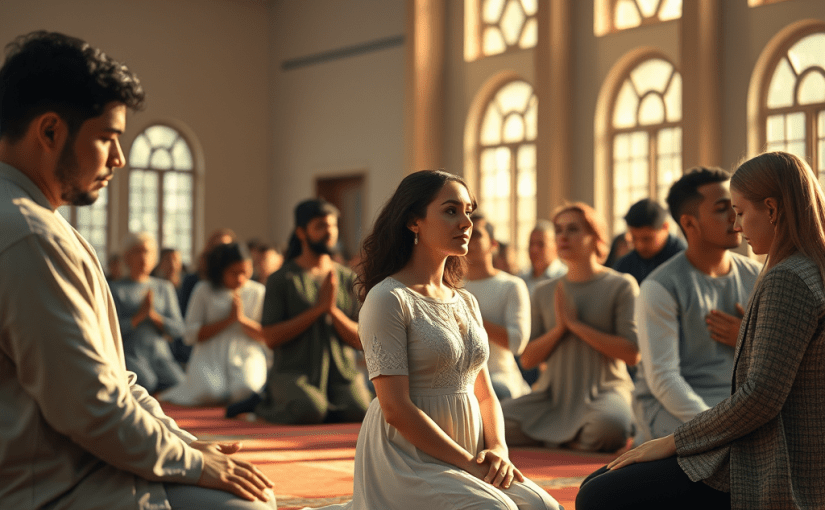
Most people who believe in God, whether Christians, Muslims, Hindus, Bahais, or Jews, pray at least occasionally. For many, prayer is central to their spiritual journey. However, like anything else we do, prayer can be effective or ineffective.
The key to prayer is desire for God. St. Augustine’s classic Christian definition of prayer is “lifting up our hearts and minds to God.” In this sense, whatever we do, whether working, playing, or even just walking the dog, can be prayer if we use it to connect to God.
Another key to effective prayer is silence, both internal and external. It helps to pray in a quiet environment and to take a moment to still the constant cacophony of thought before beginning. However, God can be found in the midst of noise and chaos as well.
Having a special designated place and time can be helpful, but where, when, how often and how long you pray depends entirely on your schedule and whatever proves fruitful for you.
In preparing to pray it helps to get into a comfortable posture, whether sitting or kneeling, and then follow the A.C.T.S. formula: Adoration (instead of starting with requests bring to mind God’s glory: e.g. “Almighty God, source of all being, truth and life…”), Confession (examine your conscience, repent of and surrender to God all negatives such as unforgiveness and deceit), Thanksgiving ( remember all God’s blessings), Supplication (pray for the needs of others).
It is also okay to pray for your own needs, as long as this does not become the major focus of your prayer. As well, the Jewish scriptures say that if you pray for someone else’s need and you have a similar need, God will supply your need as well. You don’t even have to ask for it.
There are seven habits of people who are highly effective at prayer:
First, their prayer is based on their own experience of God, so they are praying from their heart as well as their head, not just mumbling prayers composed by someone else.
Secondly, their prayer is simple and direct. Good prayer is possible for anyone, not just the religious professionals. You don’t have to have a doctorate in theology to pray well.
Next, their prayer is bold, strong, and durable. They boldly approach God because they know God as a God of compassion. They do not timidly address God as if God’s grace did not outweigh their failings. Also, their prayer gets stronger, not weaker, during the hard times.
Fourth, their prayer is deep and loving. It involves a radical commitment to God and others, particularly their enemies. For them, prayer is broad and hospitable. It welcomes all human beings, all creatures, and the whole planet into their hearts. It is never just about their own little group.
Fifth, they listen to God as much as they talk, and they take this listening attitude into their daily life. Throughout their day they are sensitive to the subtle promptings of the Spirit. In this sense, they “pray always” as St. Paul exhorted Christians to do.
Sixth, their prayer is socially conscious. They are particularly aware of the marginalized, the people the rest of us often forget about because they drop through society’s cracks. Their prayer takes in the social issues of the day. It is never just about “God and me.”
Lastly, their prayer is integrating. It integrates their faith with their life, their contemplation with their action. After they pray, they do something that addresses what they prayed about. As someone said, the person who is effective at prayer “prays as if it all depended on God and then acts as if it all depended on them.” They know that what the world needs now is effective prayer harnessed to effective social action.
Bruce Tallman is a spiritual director and educator of adults in religion. brucetallman.com
 Intelligent Christian Spirituality