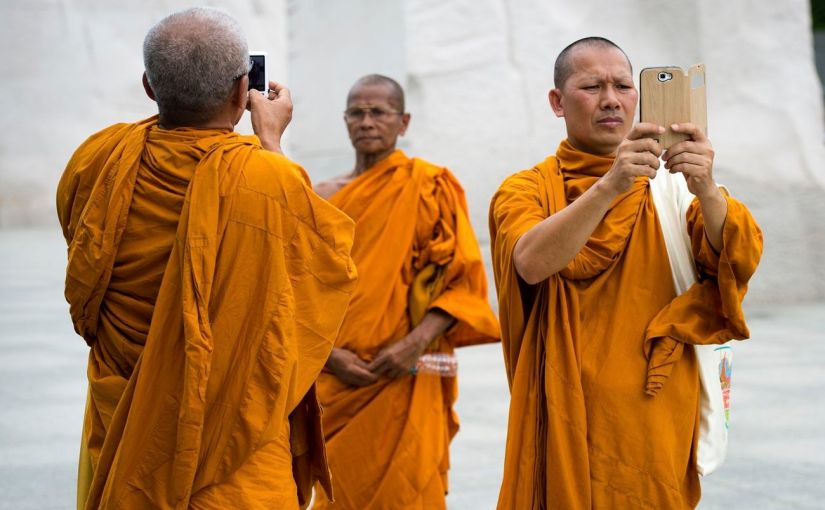
BEWARE THE CHEESE MONKS!

Modern values focus on individualism

postmodern values focus on relativism

and often both result in nihilism and meaninglessness.

We all have limitless wealth –

the whole Creation is given to us by God

but we get so caught up in individualistic or relativistic

competition/defeat/victory

that we no longer see

what is right in front of us.


A competitive society is violent

so the apparent passivity Jesus preached

in the Sermon on the Mount –

turn the other cheek – seems absurd

but is actually subversive resistance

which forces perpetrators to face

their own violence.


What Thomas Merton rejected in the “world”

was not wealth or ambition

but the world’s triviality –

its fads/advertising/masks of hypocrisy

which even his comrades he disparagingly called

the “cheese monks” got caught up in –

as if their true calling/purpose was to produce

excellent cheeses or liqueurs!


The Catholic Church got so off track

that sex scandals broke it –

one third of people raised Catholic

vacated the premises

and with the pandemic

another third departed.


If real transformation never happens for Christians

then for professional church staff

their work becomes just a career

and for lay people church becomes something

one just attends, an afterthought

instead of the living Body of Christ

which heals the “world” and its violence

by giving it profundity.



Why Be Religious?

It has become fashionable in the past two decades to be “spiritual but not religious.” There are many reasons for this, probably the biggest one being the clergy sex scandals, particularly in the Catholic church. Perhaps another big reason is that our society values busyness more and more, and Sunday is no longer a day off so people can now work 24/7.

By being religious, I don’t necessarily mean going to church, although that could be part of it. What I mean by “being religious” is “connecting with one of the great world religious traditions.

These traditions are like super-highways of spirituality. They all have people who are recognized as being super-spiritual. Normally they are called saints or mystics. These spiritual super-heroes have developed ways of drawing closer to God that are tried, true and shared down through the centuries with everyone within the tradition.

Also, the scriptures of all these traditions are super-countercultural. They tell you that you are loved not because of how rich or famous or beautiful you are, but just because you are a human being. You are loved without conditions, unlike in the “meritocracy” most of us live in where your worth is constantly being calculated by how much you produce and consume.

Numerous studies by contemporary psychologists have shown that religious people are healthier, live longer, have better relationships, more friends, better marriages, better sex and are more generous than non-religious folks.

Also, these traditions specialize in giving people the big picture when asked the fundamental questions: who are we, where did we come from, how are we to live, and where are we going?

On top of all this, these traditions have engaged in major charitable works throughout the world, founding schools and hospitals for the poor and advocating for their rights.

If you are spiritual but not religious by yourself, you would have to get other people to join you if you were going to get any significant charitable work done. And as soon as you get any group of people together, you run into the same problems religions have always faced regarding who gets to lead the group, how to keep your egos from clashing, etc, etc.

So why not just join one of the major world religions that have tons of lived experience down through the centuries to share with you?