Christianity needs to befriend contemporary spirituality

Twenty years ago, Eckhart Tolle’s books, The Power of Now and A New Earth sold millions of copies, and more recently Tolle facilitated what was probably the largest classroom in human history: 1.2 million people simultaneously online. 

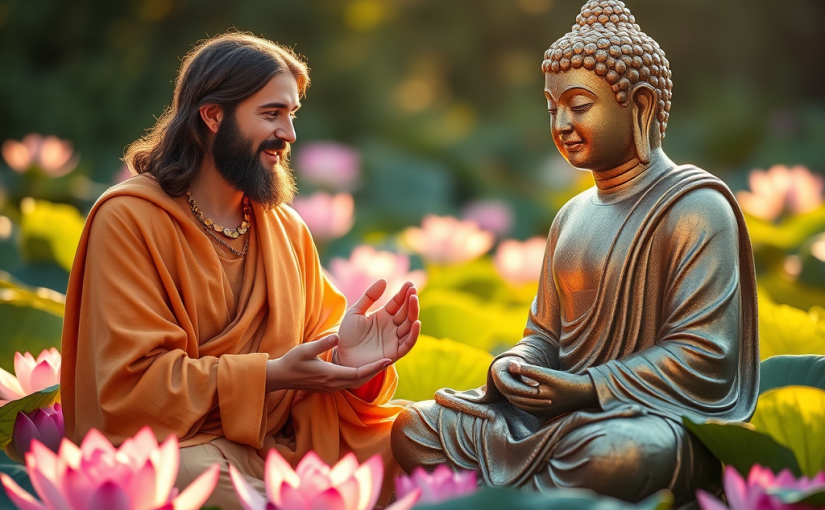
       This great spiritual teacher’s vast popularity has led to the predictable reaction of some conservative Christians who have branded Tolle as a threat to Christianity and a leader of what used to be called the “New Age” movement, which is really simply contemporary spirituality. This is unfortunate because first of all, Jesus said “those who are not against us are for us,” and secondly Tolle can give us fresh new insights into the depths of the teachings of Christ.

       A Rabbi once told me that many Jews believe that non-Jewish people who live by the Ten Commandments, whether consciously or not, are on their side. Tolle, while not explicitly claiming to be Christian, is certainly not anti-Christian. If anything, he seems to bring to light things in Christianity that have been buried for centuries.

       One could easily argue that Tolle is a latent Christian and capable of helping many people become latent Christians, in that he subscribes to many of the same values as Christians, such as peace and detachment from materialism and consumerism. Also, in A New Earth he quotes Jesus more than anyone else, and the endnotes are almost all references to the New Testament.

       Throughout The Power of Now you could replace the word “Now” with “God” and the meaning would not change. His basic message in the book is that we need to live in the present moment, the Now, not in the past or future. Jesus said similar things, for example, “take no thought for tomorrow,” that is, don’t worry about the future or past, live now. He also said the reign of God is “at hand” that is, here and now.

       In A New Earth Tolle engages in a brilliant analysis of how the ego causes all our problems and how we must let go of it to live fully. Jesus taught that if you lose your small self you find you true self, your self in God.

       Richard Rohr, one of the most enlightened Catholic priests in the world, believes that Tolle could be seen as part of the “Sacrament of the Present Moment” tradition made popular by Brother Lawrence, Francisco de Osuna, and Jean Pierre de Caussade hundreds of years ago. Rohr sees Tolle as no threat to Christianity because Tolle is not teaching doctrines or dogmas, he is teaching practices just as John Wesley taught methods, and Ignatius of Loyola taught exercises, meant to help people overcome their prideful self, the ego.

       Rohr also believes that, although Tolle never explicitly states his theology, he is not a pantheist (all things are God), but rather a panentheist (all things are in God). The few times Tolle does speak of God he says things like “God is the One Life in and beyond all forms of life.”

       Rohr further believes that Catholics, who have a much longer tradition and are more familiar with mystics like John of the Cross and Meister Eckhart, will more easily embrace Tolle than Protestants whose tradition began in the sixteenth century. Tolle in fact adopted Meister Eckhart’s name when he realized he was also called to be a spiritual teacher.

       If Christians want to be relevant, they need to respond to the “signs of the times” by engaging contemporary people who are SBNR, that is, spiritual but not religious, in dialogue. What is needed is intelligent Christianity, capable of sifting out the good wheat in the current “zeitgeist,” or “prevailing thoughts of a culture,”  and letting the chaff blow away. Otherwise, Christianity may miss the opportunity to understand its own teachings more deeply and seem irrelevant to millions of people outside the church. These people might be more interested in the church if the church was more interested in contemporary spirituality.

Bruce Tallman is a spiritual director and educator of adults in religion. http://www.brucetallman.com


EVOLUTION AND CONSCIOUSNESS

Dear Friends,

On September 7 the London Free Press published my article below under the title “Evolution leads to cosmic consciousness”

It is 689 words, so when you have 2 minutes, why not give it a quick read?

Blessings and peace,

Bruce Tallman

Spiritual Director

www.brucetallman.com

Mystics give us a bigger vision of where we are evolving

    Sri Aurobindo was a Hindu mystic. Teilhard de Chardin was a Christian mystic. They never knew of the other’s work. Despite this, they both came to the same momentous conclusion. The direction of evolution is toward divinization. This means God is fully alive in every human being.

    In books like The Future Evolution of Man (Aurobindo) and The Phenomenon of Man (Teilhard), they both outlined the earthly process. It moves from rocks and water (matter) to plants (sensitivity). Then it progresses to animals (feelings), leading to humans (thought). Finally, it reaches the spread of the great religions (spirit). The goal of evolution is greater and greater consciousness, from matter to spirit. We are heading towards God (Cosmic Consciousness) being all in all.

    Of course, since we have free will, if we choose hate and war over love and peace, we could destroy ourselves. The planet might be destroyed with us. Divinization is not a guaranteed process.

    In the past one hundred or so years new technologies such as radio, television, Internet, smartphones, and now artificial intelligence have been growing our consciousness at light-speed. These are all new stages of the world-wide evolution of humanity.

    Mystics and scientists have come to the same conclusion: everything is interconnected and one. The pandemic also forced unitive thinking on us: we are all in this together. As well the climate crisis forces us to see our interconnectivity: our energy use affects everything else.

    Richard Rohr, a Franciscan priest, has written about order, disorder, and re-order. For hundreds of years white males have dominated the planet, making decisions affecting everyone. The modern means of communication, particularly the Internet, have gradually dissolved this domination, allowing suppressed voices to speak: women, blacks, indigenous, and LGBTQ2SA+ people. All these new voices have also expanded our consciousness. Domination by white males is rapidly becoming a thing of the past.

    Our consciousness is expanding. We are now aware of stages of faith. The group stage loves order and simply believes what others say. The personal stage loves asking questions and deconstructing everything, particularly religion. At this stage people often feel they are losing their religion and leave their church, synagogue, mosque, or temple. This stage however is in danger of getting stuck in disorder. And disorder is the case for many young people today – they have never experienced even the group stage of faith and so have no spiritual foundation to build their lives on. 

    The final stage of faith is mysticism where you accept that those previous stages had their role to play. As Rohr says, you need somewhere to discover that some things are holy, and church is a good place to start. But the mature person grows their consciousness beyond that and eventually realizes that everything is holy: every creature is a face of God. The local church still has a role to play however: starting people on the road to oneness, holiness, justice, and mysticism.

    White male domination now senses that all these new voices are creating disorder and is trying to re-establish their authority and order, for example, “Make America Great Again,” or by arch-conservative bishops in the Catholic church trying to take the church back to the 1950s, before Vatican II (1962-65), which they perceive as disorder. But history always works as a spiral: two steps forward, one back, but ever onward (unless we destroy it).

    The Spirit of God is moving us inexorably towards re-order – towards unity, mysticism, and justice for all voices. This is what people like Aurobindo, Teilhard, Thomas Merton (a Catholic monk), Rohr, Matthew Fox (an Anglican priest), Brian McLaren (a Protestant minister), and Ilia Delio (a Franciscan sister and expert on Teilhard), advocate in their many books.

    Pope Francis also advocates this in his attempt to make the church “synodal,” that is, one where lay Catholics have a voice in church governance, not just priests and bishops. Despite this being opposed as disorder by some bishops, the church will likely continue on its road to inclusion, unity, and mysticism as this seems to be where God is leading it, and all of evolution.

Bruce Tallman is a London spiritual director and religious educator of adults. http://www.brucetallman.com

INTERFAITH PANDEMIC LESSONS

INTERFAITH LESSONS FROM A PANDEMIC

    In Falling Upward Richard Rohr talks about the “spirituality of subtraction,” the value of letting go. The first half of life is about gaining: an education, job, home, marriage, and children. The second half is about subtraction: the kids move out, we downsize our housing, retire, start to lose our health, friends or spouses die, etc. 

    In a spirituality of subtraction, we learn four main spiritual values: humility, gratitude, simplicity/poverty and solidarity/community. A number of spiritual leaders from various traditions have noted that a crisis can speed up this process. 

    Humility. The former Archbishop of Canterbury, Rowan Williams, stated in a talk in our city a year ago, that we all tend to be “cultural snobs,” that is, we think our culture is superior to all others. There may have been famines, wars and plagues throughout history, but this couldn’t possibly happen to us because we are so scientifically superior. 

    The point was to not get too self-assured. My priest in Winnipeg, Fr. Firmin Michiels, similarly told the congregation “Don’t pray for success, pray for strength when everything falls apart.” This is a frequent theme in every religion. “When people say ‘peace and security,’ then sudden destruction will come upon them” (I Thessalonians 5:3). COVID-19 has subtracted the illusion of our cultural-scientific omnipotence.

    Gratitude. Omar Ricci, an imam at the Islamic Center of Southern California, gave a talk titled “Thank God for the coronavirus.” Not that God caused the virus, but we should thank God for this reminder we are not in control and always depend on God. Thank God for this reminder to be grateful for all things, particularly things we take for granted like groceries and good health. Thank God for reminding us life is fragile and “we had best appreciate the miracle of life God has given us.”

    A rabbi at Chabad Lubavitch, a Hasidic community in Bozeman, Montana, noted that “Jews have always said that for every breath we take, we should thank God.” In light of the respiratory problems caused by COVID-19, “it’s become very real.”

    The Buddhist attitude of gratitude towards any crisis has been summed up in four words by the well-known monk Thich Nhat Hanh “No mud, no lotus.”

    Simplicity/Poverty. In Hinduism, the goal at the end of life is to become a “sannyasin,” a holy man or woman who renounces all the trappings of society and chooses to be reduced to nothing but his or her relationship with God. 

    All this stripping away is mirrored in Christianity in people who take religious vows of poverty, chastity and obedience. Jesus himself emptied and “humbled himself and became obedient to the point of death – even death on a cross” (Philippians 2:8).

    The spirituality of subtraction is about emptying the ego of self-centered pride so that God can fill you. In general, a good day for the ego (a day of gain) is a bad day for the soul, and a bad day for the ego (loss) is a good day for the soul. Subtraction is meant by God to edge the ego out, reversing Wayne Dyer’s definition of “ego:” “edging God out.”

    Solidarity/Community. Churches are experiencing what they have always given intellectual assent to – that the church is not buildings but the “ecclesia” – the community. They are reaching out online far beyond their normal congregations. Adam Ericksen, a United Church of Christ minister in Milwaukie, Oregon has noted that “the role of the church in this moment is to make sure no one falls through the cracks.”

    Beyond churches, mosques and synagogues, God’s work is going on everywhere, in every single person who makes the decision to love their neighbor as themselves: health care and grocery workers and everyone sacrificing themselves in inconvenient self-isolation in order to keep others healthy.

    This time of subtraction will hopefully continue to be a time of great spiritual growth.

Bruce Tallman is a London spiritual director, marriage preparation specialist and religious educator of adults. brucetallman.com