EASTER: CHRIST’S CONSCIOUSNESS

For Meister Eckhart the spiritual journey

is not a climb up Jacob’s ladder

nor the ascent of Mount Carmel

but rather an upward spiral

of expanding consciousness

that has no limits

which fits with what Carl Jung thought

the purpose of life is:

to constantly grow in consciousness


which in some ways is similar

to Abraham Maslow’s hierarchy of needs:

physiological (food and shelter) needs/

safety needs/the need to belong/

the need for self-esteem/then self-actualization/

and finally self-transcendence

where you forget yourself

in service to others


self-transcendence does not mean

you think your self is very little

but that you think of your self

very little


everyone’s story, however little, is sacred

and story is our primary means

of accessing the Divine Source

and the ultimate meaning of life


this is why Jesus spoke in parables –

stories that overturned everyone’s applecart –

their view of how life worked –

the religious leaders want to kill God?

Are you serious?


but they were serious

because they were operating

from the lowest rungs

of the spiral of consciousness –

the need for their own safety –

because the Romans would destroy their Jewish applecart

if this rebel prophet Jesus

converted too many people to his level of consciousness –

Christ’s call to “repent” is “metanoia:” in Greek:

Christ said: “Go to your Higher (‘meta’) Mind (‘noia’).”
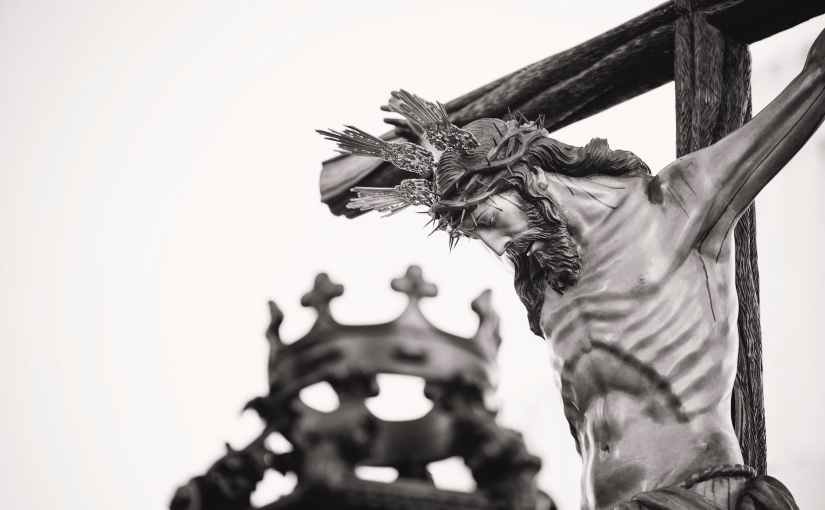
BEING/EMPTYING VS SUFFERING

The Cross and Resurrection are the Christian solution

to the problem of evil – this is far more satisfying

than Carl Jung’s solution of making evil part of God

Zen Buddhists love the “kenosis” passage (Philippians 2:7)

where Christ empties himself – even to death –

death on a cross –

because Zen is all about emptying oneself 

of all attachments/passions/thoughts

and learning to just sit for hours or days

to “waste time with God”

as Christian monks call it –

like old friends who don’t need to speak

they just enjoy BEING together –

this is all God asks of us: “Please BE with me” –

“To just BE alive is sacred, to just BE is holy”

– Abraham Heschel

besides emptying, part and parcel of Zen  

is awareness of suffering

caused by peoples’ unmindful speech/inability to listen

Buddhists therefore vow 

to cultivate loving speech/deep listening 

that alleviates suffering

the intellectual nature of the human person 

is perfected by wisdom 

for the intellectual drive 

is not confined to observable data alone – 

wisdom gently leads all our drives 

beyond the visible world to what is invisible –

what is honestly true/honestly good

without this humble inner quest

without interior spiritual integration

even something as spiritual as a pilgrimage

can turn into a divisive/destructive/alienating journey

just as forsaking of self/emptying of ego 

unites you to God

so giving up external things

brings you peace.

THE LIMITS OF REASON

In religion, only non-dual seers are the experts

the only ones who can hold contrary/opposites together.

One non-dual seer was Augustine

who perceived that God is

merciful yet just

ancient yet new

hidden yet present.

There is an ambiance of

light/peace/wisdom

around great sages –

even when they are not present

their life and words show us the way.

Similar to Augustine

the author of the Cloud of Unknowing

was not anti-intellectual

but believed reason is limited:

God cannot be known by thought –

only by love.

Reason by itself alone would give us

God as a loveless clock-maker

who winds up the universe like a toy

and lets it run on its own till it runs out

in which case all revelation/ scripture/prophecy

are irrelevant.

The ‘dialectic of progress’ is ongoing

gains and losses – one era sees and solves

the problems of the previous era

but then has its own problems

but there is a net gain

and therefore a direction to evolution.

God is the direction.

If rational people equate holiness

with perfection – for this is what reason dictates –

these ‘perfect people’ would not see

their shadow, and project it onto others.

The more shadow is repressed

the more it grows, becomes autonomous

and dangerous.

If you haven’t worked through

your personal complexes then repressed conflict

between say, sex and religion, prevents you

from getting to the transcendental level.

We need to feel the fear

and make it our companion, not our enemy.

Beyond the shadow

Vedanta Hinduism warns:

If you think your Higher Self is God

and you are not your body

you won’t get out of the way

of a charging elephant –

you will be crushed.

It is important to know your place.

In Islam, beneath Allah

are three created intelligences:

angels made of light

jinn (spirits) made of fire

humans made of dust.

Many jinn have accepted the True Faith

and are good. The bad jinn

work with the fallen angels

particularly Iblis, chief of the fallen angels.

In countering the chief of the fallen angels, Satan

Jesus tried to move everyone to the good

to wake us up

out of our hypnotic cultural trance/collective sleepwalking

by countercultural actions/teachings/parables –

tools for turning the status quo upside down.

Jesus was often abrasive with hypocrites –

his crucifixion was not without cause

nor was it just personal –

it holds global/cosmic implications

which we usually overlook

just as we overlook our present global/cosmic disaster.

The crucifixion of Christ and of the planet

always need serious theological reflection:

the mission of Christianity and all religions now must be

to save the world

from climate change.