SACRIFICE/LIBERATION/SALVATION

Contemporary theologians would do well

to free themselves from the “Hellenic complex” –

the integration of Greek categories of thought

into Christian theology – starting with Thomas Aquinas

and his merging of Aristotle into Judeo-Christian beliefs –

Popes John Paul II and Benedict thought Catholicism

should no longer be dominated by Aquinas

but they embraced no one else


they could have embraced Gustavo Gutierrez

who realized the new European theology he learned

could not deal with the structural injustices

of his South American continent

so he began interpreting the gospel in light of the poor

but “Saint Pope J.P. II” condemned this as Marxism

and so destroyed liberation theology


in spite of “Saint Pope J.P. II” liberation theology

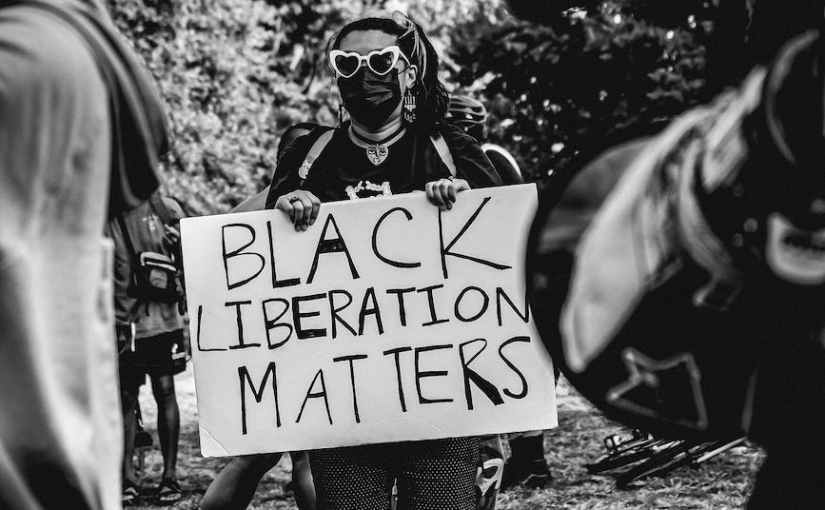
became the key to black theology in North America –

the theology of liberation contained in the Bible –

the liberation of the Jewish slaves from Egypt –

parallels the liberation of black slaves in America –

Lincoln was Moses to the sharecroppers –

because the very essence of Jesus is freedom

Jesus became the model of liberation for blacks


understanding is the most powerful tool for “liberation”

which in Buddhism is “salvation from suffering”

so Buddhists talk about salvation by understanding

and the seed of understanding in everyone –

so similar in Christian or Buddhist terms –

is God/Jesus/Christ-Consciousness/Buddha-Mind –

Buddhist meditation involves deep insight

and creates understanding/love/salvation


love is both dependent and free at the same time –

it depends on objective values and creates new values:

joy/gratitude/self-sacrifice –

the bodhisattvas sacrificed entering into nirvana/heaven

until all sentient beings were liberated


similarly, Muslims sacrifice sex during the Great Fast/Ramadan:

“Do not lie with your wives during the day but cleave to the mosque –

(but during the night you can go into your wives and lie with them)” –

some sacrifice (but not too much) there. 😊
Cosmic Lovemaking

A COSMIC, SPIRITUAL VIEW OF MAKING LOVE

    If God is love, the universe is grounded in love and exists by and for love. Love is the purpose of the universe.

    It was out of wanting to share love that God created the universe in such a way that matter intrinsically evolves towards spirit, and Earth went from rocks and water to human beings. Things have gone from pre-personal to personal and are heading towards the super-personal where all are filled with God and love God in return.

    Humans are at the center of this personalization process, not some accidental branch on the tree of evolution. And the process was furthered when Jesus said the greatest commandments are to “Love God with all your passion, prayer, intelligence and energy, and love others as well as you love yourself” (Luke 10:27 as translated by Eugene Peterson in The Message).

    Ilia Delio, a Franciscan nun, wrote in a chapter titled “Love, Sex and the Cosmos” that sex is basically spiritual. The sacred life-force that drives the evolution of the universe moves us from within with unitive desire. We all want union as intimately as possible with another human being. Sexual intercourse was meant by God to be the apex of the personalization of the cosmos, an integral part of our personal fulfillment with a beloved soulmate we can share life and love with.

    Going even further, sexual intercourse could be thought of as the primordial sacrament, since God’s first words to humans were “be fruitful and multiply” (Genesis 1:28) and without sex there would be no human race, religion, church or sacraments. 

    Given the sacredness of sexuality, how did we end up with a widespread culture of sexual abuse and rape, as the “Me Too” movement testifies?

     One explanation was given by Martin Buber, the great Jewish theologian, who wrote in his spiritual classic I and Thou that there are two basic ways of relating to everything: I-Thou and I-It. The I-Thou way sees everything as a sacred “Thou” full of the presence of God, including humans, animals and all of nature. 

    However, in a technological consumer culture we tend to relate to everything as an It, that is, as a soulless object to be used for our own self-centered purposes. 

    A young woman once said “I decided to get married because I am fed-up with the ‘hook-up’ culture where you are expected to have sex on the first date. I want true intimacy not fake ‘intimacy,’ a code word our culture uses for sexual intercourse. It is easy to bare your body and have sex; it is hard to bare your soul and make love.”

    Not everyone can have sexual intercourse, but anyone can make love in the sense of opening up your soul and sharing who you really are with others. Single people, the elderly and even vowed celibates can make love in this sense. William Johnston, a Jesuit writer on Christian mysticism, described in his autobiography Mystical Journey how he and Amy Lim, a Japanese nun, had a decades-long intimate but non-sexual relationship when he taught spirituality and theology in Japan.

    To learn more about making love in the spiritual sense, I would recommend Embracing the Beloved: Relationship as a Path of Awakening which describes a Buddhist way of intimacy as a “tandem inner journey towards spiritual realization.” Or read Pope John Paul II’s personalist “theology of the body” as popularized by Christopher West.

Bruce Tallman is a London spiritual director, marriage coach and religious educator of adults. brucetallman.com