
Understanding Spirituality: The Essence of Consciousness

    God is Mother as much as Father. God as Mother is welcoming, warm, and inclusive. Returning to God as Mother would be a return to compassion and wisdom as a way of life.

The most foundational thing in existence is not matter, atoms, or quarks, but consciousness or spirit. Ultimately, we live in a spiritual universe.

    The bottom line is not money; it is God’s love. So, reality is foundationally safe and benevolent. Ultimately, it is not a scary universe. 

    God does not love us because we are good. God loves us because God is good.

    Salvation is not perfect morality. It is letting the dance/wind/fire of God flow through you.

    True religion is humble, not judgmental. It says, “Maybe I am the problem here, not you.”

    Love is to recognize the oneness of all things. God is in all of us, I am in you and you are in me, and we are all in this together. 

    God is not a concept to be believed in. God is a reality to be experienced.

    God, who is infinitely perfect and blessed, in an act of sheer goodness, created humans to share in God’s blessed life. That is our ultimate purpose.

        All the world’s major religions have identified the main problem as the ego.

    All the world’s major religions have identified the main problem as the ego.

    We all need to stop focusing on which worldview or religion is superior and start focusing on inner transformation by letting go of our egos.

    The only way to let go of ego is awareness of it. Ego is unconsciousness, so awareness kills it.

    The foundation of all justice is that our equality is intrinsic and founded on God’s love, not earned. Through no doing of our own, we are all equally loved by God.

    A teacher imparts knowledge or techniques. A master teaches by his or her way of life.

    All the great spiritual masters say: wake up: God has a plan for the creation. The plan is that God be all in all. This is the ultimate purpose of the cosmos. Do not shut God out of your life!

    The rich person may be poor, blind, and naked in God’s sight. Or not. The poor person may be rich in God’s sight. Or not. Outward state is no indicator of God’s favor or disfavor.

    “Ten thousand difficulties do not make a doubt.” – John Henry Newman

    To have everything, desire nothing.

    The garden of Eden, paradise, heaven, and God are within us, and it is the knowledge of good and evil, and the judgmentalism that comes with it, that keeps us out of the unity of all things.

    Life has always been a struggle and always will be. The fact life is hard does not mean it is not good. If the universe was perfect, there wouldn’t be anything to do. God made life good not easy.

    If we accept whatever God gives us: honor or dishonor, long life or short, health or sickness, riches or poverty, then we are free indeed.

    God is the only true object of desire because God alone has all love, knowledge, truth, justice, peace, freedom, and wisdom.

Bruce Tallman is a spiritual director and educator of adults in religion. http://www.brucetallman.com
THE NEW SCIENCE AND THE DIVINE PLAN

The first theme of The Imitation of Christ by Thomas à Kempis

is dying to self. The second theme is detachment

because attachment to material things

is one of the great impediments to the spiritual life.


However, according to Matthew Fox

Meister Eckhart is as different from Thomas à Kempis

as compassion from sentimentalism

as passion from repression

as celebration from asceticism.


The new science should cause religious people to celebrate

because “radical amazement,” according to Abraham Heschel

is the primary characteristic of a religious attitude to life.


Ponder for a minute what the new science tells us:

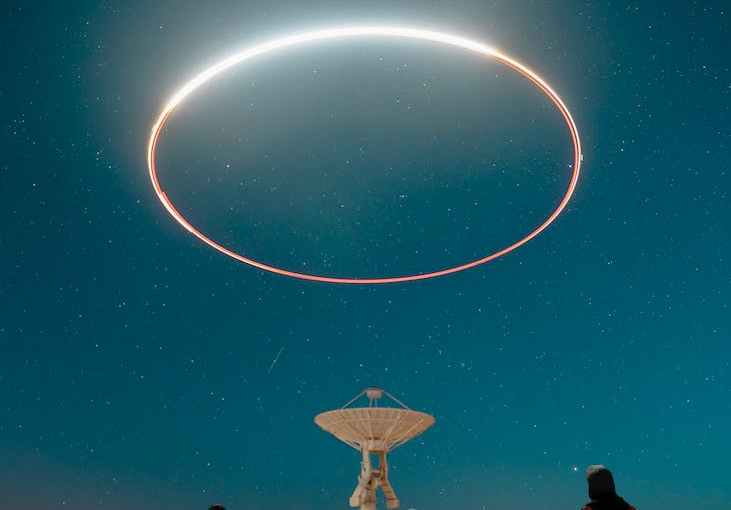
the sun emits more energy in the form of light

in one second than all of humanity has consumed

in its whole history – four million tons of energy –

which is thirteen million times

the energy consumption of USA in a year.


Non-dual thinkers use knowledge like this

not to “puff up” but to build up/induce awe/transform others

starting with themselves.

They never use knowledge

to shame those who know less or control them –

they use knowledge to help us all

see reality with new eyes.


The birth of radical awe is good timing

because along with our new scientific/technical knowledge

comes awesome power

and so greater wisdom is absolutely necessary.


Humility/wisdom/compassion are needed

when it comes to science and technology

because humility/wisdom/compassion

are the only things that give us new eyes

to see the Holy Spirit/the Divine Knowledge/the Divine Plan

and according to Oscar Romero

“There are many things that can only be seen

through eyes that have cried.”


WORLD NEEDS ADULT FAITH

  1. Fundamentalism, in terms of people having a simplistic faith, has become a problem for all of us. As a person’s world view progressively narrows, they become more and more judgmental, intolerant, and even dangerous. In some cases people are willing to kill themselves and others for their religious cause.

    As our world becomes increasingly complex, people seek simple answers in order to cope, and so fundamentalism is spreading everywhere. The solution is for people to develop an adult faith.

    By integrating the thinking of James Hayes, a former Catholic archbishop, Friedrich Von Hugel, a nineteenth century theologian, and Gordon Allport, a Harvard psychologist, we can outline ten characteristics of an adult faith which could apply to Christians, Jews, Muslims, Bahais, or any other faith-based tradition.

    First of all, a mature faith is open. It honours the basic freedom and autonomy of other adults, knows that our world is complex and ambiguous, and therefore respectfully listens to others and tries to understand their viewpoint. Then it speaks its own truth freely. This “dialogical” rather than argumentative approach represents a middle path between saying nothing and being authoritarian, that is, trying to impose our faith on others. 

    Secondly, an adult faith is searching. The adult believer distinguishes between constructive questioning (the search for truth) and destructive questioning ( the desire to disprove the truth). Constructive questioning is essential to progress in faith and normally produces greater clarity, broader horizons, and deeper ownership of one’s beliefs. The adult believer is wary of anyone who tries to shut down the quest for understanding.

    A mature faith is also informed and comprehensive in its world view. Ideally, adult believers know the scriptures of their tradition well, and supplement this with ancient and modern spiritual classics. Adult believers should also become familiar with at least one science, and scientific methods of investigation, to keep their faith from becoming superstitious and ungrounded.

    An adult faith is humble. It is a pilgrim faith that never believes it has fully arrived. It is open to ongoing learning and conversion, rather than the faith of someone who has all the answers.

    Fifthly, a mature faith is critically evaluative. While it immerses itself in its culture, it critically evaluates the social order in light of the demands of human rights, responsibilities, and justice.

    An adult faith is also decisive. In spite of cultural complexity, the mature faith is not paralyzed. Rather, it is able to make sophisticated judgments and to take appropriate action for the common good.

    Seventh, a mature faith is integrated, that is, it integrates the sacred and the secular, faith and life. It acts the same whether inside or outside the synagogue, church, mosque or temple. It is consistently moral and just.

    Adult believers also have a differentiated faith. That is, they don’t believe that all religious traditions are the same, so that it doesn’t matter which one you belong to. They make critical discernments about the different truth claims between major world religions and also the diverse claims by the various branches within each tradition. At the same time, the adult believer focuses on similarities more than differences and builds bridges between and within traditions.

    Adult faith is also personal. Adult believers struggle to come to their own conclusions rather than just simplistically accepting what is handed to them by religious authorities. They wrestle with whether or not assertions by those in authority make any sense to them based on their own personal life experience.

    Finally, knowing their own limits and the limits of others means that the adult believer’s faith is simultaneously compassionate and communal. They know that they and others cannot do it all alone, they need human support. They know that being a part of, and being accountable to, a supportive religious or spiritual community is essential to maintaining an adult faith.

    What the world needs now is not just love but also adults with an adult faith.

INTERFAITH PANDEMIC LESSONS

INTERFAITH LESSONS FROM A PANDEMIC

    In Falling Upward Richard Rohr talks about the “spirituality of subtraction,” the value of letting go. The first half of life is about gaining: an education, job, home, marriage, and children. The second half is about subtraction: the kids move out, we downsize our housing, retire, start to lose our health, friends or spouses die, etc. 

    In a spirituality of subtraction, we learn four main spiritual values: humility, gratitude, simplicity/poverty and solidarity/community. A number of spiritual leaders from various traditions have noted that a crisis can speed up this process. 

    Humility. The former Archbishop of Canterbury, Rowan Williams, stated in a talk in our city a year ago, that we all tend to be “cultural snobs,” that is, we think our culture is superior to all others. There may have been famines, wars and plagues throughout history, but this couldn’t possibly happen to us because we are so scientifically superior. 

    The point was to not get too self-assured. My priest in Winnipeg, Fr. Firmin Michiels, similarly told the congregation “Don’t pray for success, pray for strength when everything falls apart.” This is a frequent theme in every religion. “When people say ‘peace and security,’ then sudden destruction will come upon them” (I Thessalonians 5:3). COVID-19 has subtracted the illusion of our cultural-scientific omnipotence.

    Gratitude. Omar Ricci, an imam at the Islamic Center of Southern California, gave a talk titled “Thank God for the coronavirus.” Not that God caused the virus, but we should thank God for this reminder we are not in control and always depend on God. Thank God for this reminder to be grateful for all things, particularly things we take for granted like groceries and good health. Thank God for reminding us life is fragile and “we had best appreciate the miracle of life God has given us.”

    A rabbi at Chabad Lubavitch, a Hasidic community in Bozeman, Montana, noted that “Jews have always said that for every breath we take, we should thank God.” In light of the respiratory problems caused by COVID-19, “it’s become very real.”

    The Buddhist attitude of gratitude towards any crisis has been summed up in four words by the well-known monk Thich Nhat Hanh “No mud, no lotus.”

    Simplicity/Poverty. In Hinduism, the goal at the end of life is to become a “sannyasin,” a holy man or woman who renounces all the trappings of society and chooses to be reduced to nothing but his or her relationship with God. 

    All this stripping away is mirrored in Christianity in people who take religious vows of poverty, chastity and obedience. Jesus himself emptied and “humbled himself and became obedient to the point of death – even death on a cross” (Philippians 2:8).

    The spirituality of subtraction is about emptying the ego of self-centered pride so that God can fill you. In general, a good day for the ego (a day of gain) is a bad day for the soul, and a bad day for the ego (loss) is a good day for the soul. Subtraction is meant by God to edge the ego out, reversing Wayne Dyer’s definition of “ego:” “edging God out.”

    Solidarity/Community. Churches are experiencing what they have always given intellectual assent to – that the church is not buildings but the “ecclesia” – the community. They are reaching out online far beyond their normal congregations. Adam Ericksen, a United Church of Christ minister in Milwaukie, Oregon has noted that “the role of the church in this moment is to make sure no one falls through the cracks.”

    Beyond churches, mosques and synagogues, God’s work is going on everywhere, in every single person who makes the decision to love their neighbor as themselves: health care and grocery workers and everyone sacrificing themselves in inconvenient self-isolation in order to keep others healthy.

    This time of subtraction will hopefully continue to be a time of great spiritual growth.

Bruce Tallman is a London spiritual director, marriage preparation specialist and religious educator of adults. brucetallman.com

BEING EXALTED IN GOD’S EYES

Suffering and humility are what exalt a person most in the eyes of God.

Being willing to do whatever God wants, even if it involves our suffering, is a sure sign of someone who is completely surrendered to God’s will: “Thy will be done, not my will be done.” This takes absolute trust on our part, and God showers those who trust God with many blessings in the long run. Nothing pleases God more than trust. God works all things to the good for those who love and trust God.

Humility likewise pleases God. God can only really work with people who have moved beyond their ego. As Wayne Dyer used to say “E.G.O. = Edging God Out.” And as scripture says “Those who exalt themselves will be brought low. Those who humble themselves will be exalted.”

brucetallman.com, btallman@rogers.com