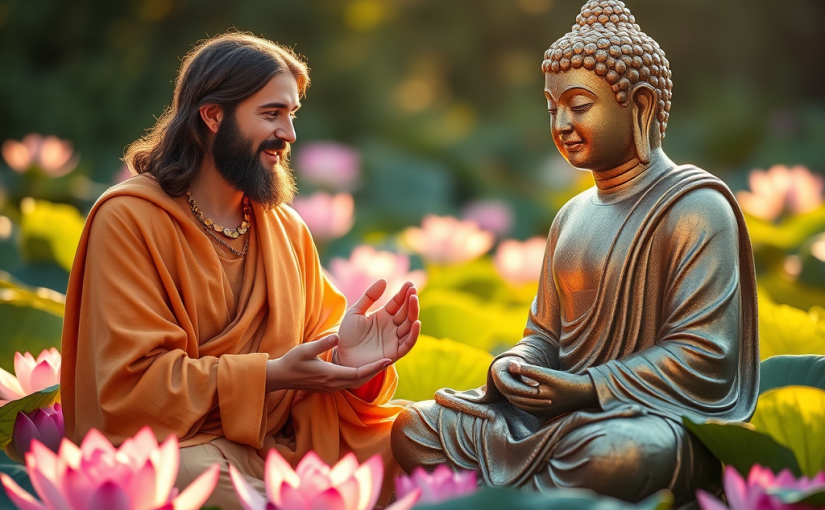
Christianity needs to befriend contemporary spirituality

Twenty years ago, Eckhart Tolle’s books, The Power of Now and A New Earth sold millions of copies, and more recently Tolle facilitated what was probably the largest classroom in human history: 1.2 million people simultaneously online. 

       This great spiritual teacher’s vast popularity has led to the predictable reaction of some conservative Christians who have branded Tolle as a threat to Christianity and a leader of what used to be called the “New Age” movement, which is really simply contemporary spirituality. This is unfortunate because first of all, Jesus said “those who are not against us are for us,” and secondly Tolle can give us fresh new insights into the depths of the teachings of Christ.

       A Rabbi once told me that many Jews believe that non-Jewish people who live by the Ten Commandments, whether consciously or not, are on their side. Tolle, while not explicitly claiming to be Christian, is certainly not anti-Christian. If anything, he seems to bring to light things in Christianity that have been buried for centuries.

       One could easily argue that Tolle is a latent Christian and capable of helping many people become latent Christians, in that he subscribes to many of the same values as Christians, such as peace and detachment from materialism and consumerism. Also, in A New Earth he quotes Jesus more than anyone else, and the endnotes are almost all references to the New Testament.

       Throughout The Power of Now you could replace the word “Now” with “God” and the meaning would not change. His basic message in the book is that we need to live in the present moment, the Now, not in the past or future. Jesus said similar things, for example, “take no thought for tomorrow,” that is, don’t worry about the future or past, live now. He also said the reign of God is “at hand” that is, here and now.

       In A New Earth Tolle engages in a brilliant analysis of how the ego causes all our problems and how we must let go of it to live fully. Jesus taught that if you lose your small self you find you true self, your self in God.

       Richard Rohr, one of the most enlightened Catholic priests in the world, believes that Tolle could be seen as part of the “Sacrament of the Present Moment” tradition made popular by Brother Lawrence, Francisco de Osuna, and Jean Pierre de Caussade hundreds of years ago. Rohr sees Tolle as no threat to Christianity because Tolle is not teaching doctrines or dogmas, he is teaching practices just as John Wesley taught methods, and Ignatius of Loyola taught exercises, meant to help people overcome their prideful self, the ego.

       Rohr also believes that, although Tolle never explicitly states his theology, he is not a pantheist (all things are God), but rather a panentheist (all things are in God). The few times Tolle does speak of God he says things like “God is the One Life in and beyond all forms of life.”

       Rohr further believes that Catholics, who have a much longer tradition and are more familiar with mystics like John of the Cross and Meister Eckhart, will more easily embrace Tolle than Protestants whose tradition began in the sixteenth century. Tolle in fact adopted Meister Eckhart’s name when he realized he was also called to be a spiritual teacher.

       If Christians want to be relevant, they need to respond to the “signs of the times” by engaging contemporary people who are SBNR, that is, spiritual but not religious, in dialogue. What is needed is intelligent Christianity, capable of sifting out the good wheat in the current “zeitgeist,” or “prevailing thoughts of a culture,”  and letting the chaff blow away. Otherwise, Christianity may miss the opportunity to understand its own teachings more deeply and seem irrelevant to millions of people outside the church. These people might be more interested in the church if the church was more interested in contemporary spirituality.

Bruce Tallman is a spiritual director and educator of adults in religion. http://www.brucetallman.com

SPIRITUAL AUTHORITY

Art/morals/religion could not stand up to the steam engine

of science

only God could –

but God and spirituality had been repressed

and so the differentiation of art/morals/religion/ (1600-1800)

was followed by their dissociation (1800-1900)

and western intellectuals knew this would be a cultural catastrophe

but could not fix it


now, secular media sees only two types of religious people:

fundamentalist nutcases

who believe in myth

and New Age nutcases

who believe in magic

but both are “pre-rational”

and any “trans-rational” people

who have seen the limits of reason

and include reason while transcending it

are lumped in with the nutcases


the challenge of institutional religion

is to lead everyone to the supreme wisdom

of being one in God

this is the task of everyone in the church/synagogue/mosque

not just the priest/rabbi/imam


in any case, spiritual authority now resides

less in religious organizations/ordained clergy/traditional creeds

than in direct experience and friendship with God –

the source of all religious organizations in the first place


answers and authority come now from the Voice of God/

from voices of others (if we form a spiritual community)/

from our own voice


the current appeal of Meister Eckhart –

the truly mystical element in his writing –

is that he helps people cut thru

the distractions of life

so they can find

their essential grounding in God.


FINDING UNITY IN SPITE OF PLURALITY

In the inter-spirituality approach of Brother Teasdale

authentic enlightenment/awakening can be had

by deeply following any of the branches of the religious tree

of humanity’s search for the Godhead.


However, New Age/Alternative Spirituality’s rejection of dogma/

Joseph Campbell’s injunction to follow your bliss/

Krishnamurti’s radical openness to any spirituality

can lead naïve seekers into dabbling in the occult

and thus vulnerable to dark forces/false prophets.

A sense of the numinous can lead to deep calm/awe

or wild bacchanalian debauchery/dread.


Psychoanalysis/depth psychology was rejected

by many religious people because it disturbed

their ‘undisturbed conscience’ by showing them

the depths of their cruelty and hatred

that only the Cross of Christ can handle –

simplistic Christians were ironically afraid

of the depths of their own tradition

of deep Christianity.


Thomas Merton revealed western religion had lost

the deep wisdom/unitive tradition Jesus taught –

even in monasticism there are monks and nuns

dualistic in their thoughts/practices.


God created the universe with an end in mind:

a Christified cosmos.

Thus, despite the immensity of the universe

which could induce ‘cosmic terror’ in the naïve

the universe is a unity not an unrelated plurality

it is meaningful and purposeful

because it is grounded in the Cosmic Christ.

INNER WORK

Endowed with a spiritual soul/free will/intellect

humans from conception are ordered to God

and destined for eternal happiness.

They pursue perfection by seeking and being

that which is true and good.

Celtic mysticism is built on

a charism of pilgrimage

a constant quest for the land of the saints

and a return to Paradise, the great journey

St. Brendan and his monks manifested.

Buddhists also sought the Pure Land

because the Buddha taught

three basics of human existence:

impermanence/no separate ego/suffering.

To accept these three

is to accept reality as it is.

We all seek true transcendence but

since we won’t let go of our separate ego

we cannot find our destiny.

We seek true life in substitutes:

food/knowledge/sex/power

but never find wholeness.

To not settle for substitutes for God

requires inner work which is done

not just for your self

but for the whole Body of Christ.

Inner work makes you aware 

of any self-seeking disguised as Christian service.

Failure to integrate the shadow

causes serious problems in Christianity –

clergy sexual abuse which destroys

the Church’s moral authority and role:

the conscience of culture.

On the other hand, many see inner work and spirituality

as just another form of consumerism

individualistic/lacking commitment to the common good/

devoid of intellectual content

basically, a New Age fad of Oprah religion.

But, to pray is to build your house

then, to realize Someone Else is in your house

then, to discover this Someone Else owns the house

then, to discover there is no house

because everyone shares the same

one and only Home – our True Home – God.

Doubt can grow along with faith –

faith and doubt are co-relative terms –

to grow in faith, you must go through doubt

about your old ways of being and believing

to come to higher and broader levels of faith.

Doubt wrestles with God, like Jacob and the angel –

“Israel” means “one who wrestles with God.”

Just as there is no love of God

without love of neighbor

there is no real conversion to God

without conversion to the world and its problems

caused by wanting/wanting/wanting.

God opposes constant wanting. God only wants

the creation of more complex and conscious beings

but this spiritualization of matter

and how matter leaps to new levels

is always brought about by periods

of great stress/instability/crisis.

The consciousness and dignity of humans

and of the divine image within us

requires authentic freedom

when it comes to religious choices –

freedom from external pressures

and internal compulsions.

Women are under intense pressure

to get caught in the competitive/masculine/hero archetype

which clashes with a deeper archetype within them:

the desire to be a mother – the Mother-Archetype.

Who will deliver us

from this constant human folly of constant wanting?

Beyond inner work we need a Savior

to save us from ourselves.

THE TWO TREES IN EDEN

The two trees in Eden 

are metaphors for two minds:

dualistic and unitive.

The Tree of Knowledge 

splits everything into either/or

(God forbids us to eat from this Tree).

The Tree of Life

symbolizes unitive contemplation

and promises access to eternity.

Separation of things by the Church

into sacred (Church)

and secular (world)

meant the Church treated the world

with contemptus mundi.

The Church thought it had everything

to teach the world

and nothing

to learn from it.

Scripture and tradition 

not philosophy or science

are indeed the final norms

for revealing what is truly human.

The philosophy of non-being

in Heidegger, Sartre, Dostoevsky and Berdyaev

viewed religiously

simply speak 

to the transitoriness of all things

and to the power of the demonic

in souls and history.

But atheism 

is not religion’s worst enemy – 

indifference is.

In the New Age

there is passion

because God is only within/immanent.

But to conservative religion 

God is only without/transcendent.

First find the Inner Authority

of your True Self in God

then balance/integrate it 

with the Outer Authority

of Scripture and Tradition.

Balance/integrate God totally within

with God totally without

and voilà 

you have stable yet creative religion.

Totalitarian regimes 

dominate with Outer Authority

 and hate the passion of artists

who break people out of slavery

by waking them up 

to imperial ideology.

Totalitarians rule by power and money

but human reality is constituted

by meaning not matter.

Meaning not money 

is the foundational reality.

It is a spiritual universe.

John of the Cross

put it all together

as a mystic, theologian, and spiritual explorer

who discovered Treasure Island:

that in Christ are buried all treasures

of wisdom and meaning.

Mindfulness of Christ brings

joy, peace, and happiness.

In distress consciously breathe in 

the peace of Christ

and consciously breathe out

the healing of Christ.

Catherine of Siena heard Jesus say

“I want people to meditate

on the greatness of my mercy

before contemplating their shortcomings.

Self-knowledge of sin

must be tempered by and subordinated to

knowledge of God-alive-in-you.”

3 Big Ideas for March 18, 2019

  1. Henri Nouwen saw Christian life as in three stages: communion, community, and commission. That is, life apart from others (in solitude with self and in communion with God), life shared with others (with kindred hearts in community), life given for others (in ministry).
  2. The very essence of the New Spirituality (spirituality outside the church) is freedom to follow your own inner light without any pressure from dogma, teachers, leaders or institutions. As Oprah says “You are your own authority.” The only problem with this is that you are putting a lot of pressure on the one short life you have, and ignoring the accumulated wisdom of centuries of religion and the tried and true experience of millions of people.
  3. Jonathan Edwards, a 19th century Protestant theologian, wrote that “The Holy Scriptures everywhere place religion in the affections: love, hate, fear, joy, sorrow, hope.” Religion in his opinion, is a matter of feeling and emotion not intellect. This may be true, but Holy Scripture also says we should have “reasons for the hope that is in us.” (1Peter 3:15). This is particularly necessary in an age of science and the New Atheism.