The Power of Wisdom in an Internet Age

Wise people value wisdom above all for it is the source of peace in the midst of information chaos. Knowledge now doubles every six months, and this overwhelming barrage of information makes it increasingly difficult to discern what has lasting value. However, by holding to principles of wisdom that have withstood the test of time, our future-shocked culture can survive.

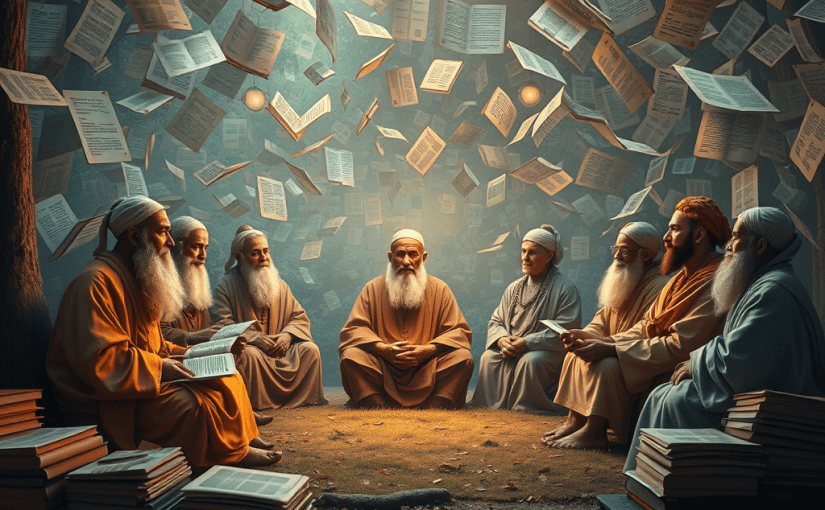
    Jesus, Buddha, King Solomon, and Socrates, all revered as exceptionally wise men of the ancient world, have some particularly relevant thoughts for our present age. They all agree that wisdom is more precious than money or anything else you could desire because it is the source of all truly good things. Wisdom, not information, is what is ultimately important.

    Studying wisdom cross-culturally reveals seven key principles.

1. God Exists. Many scientists, including Einstein, believe that anyone who pursues science with their whole heart inevitably comes to the conclusion that there must exist an Intelligence behind everything that is vastly superior to the human mind. 

    God constitutes the source, sustenance, and goal of all things whether in the scientific age, information age, new age, or any age. The wisdom literature of western religion repeats over and over “The fool says in their heart ‘There is no God’”.

2. Accept Your Humanity. The three great monotheistic religions, Judaism, Christianity, and Islam, agree that the ancient message of the Garden of Eden remains true: all our problems begin with pride, with denying our place in the scheme of things, with wanting to be like God.

    Through the Internet we have fifty million computers at our fingertips. This gives us the god-like quality of instant knowledge about anything, which can tempt us to think we have all the answers and are, in fact, God. Bloated with information, we have no room for wisdom.

    False pride easily blinds us to our limitations, creatureliness, and humanness, but all major religions agree that the essence of wisdom consists in forgiving yourself for being human. If the first principle of wisdom is “There is a God”, the second one is “You are not God”. If pride causes all our problems, humility, that is, accepting our humanity, is the solution.

3. All Wisdom Comes From God. King Solomon states over and over that wisdom begins and ends with recognition of God’s supreme wisdom. You may not understand things, but God does. Similarly Socrates maintains that intellectual humility marks the first quality of the wise person: the realization that you lack wisdom and do not have all the answers. The wise listen much more than they speak.

4. All Things Pass Away Except God. Like Jesus, Buddha taught that everything passes away, and sorrow derives from putting too much stock in this world. 

    The epidemic of depression in our culture stems, at least partly, from ever-accelerating change in which we constantly lose people, things, lifestyles, and beliefs we had clung to. Instant access to infinite information has only sped up the change/loss process. Many find they cannot keep up.

    Therefore, hold everything lightly: your health, spouse, children, friends, job, wealth, reputation, ambitions, ministry, and theology, for they all inevitably change. Wisdom teaches that true joy and peace comes from clinging only to God, for God alone lasts.

5. Purify Your Desires. God wants lasting love, truth, and peace but the commercialization of the Internet places all the treasures, pleasures, and temptations of the world before us in an unprecedented way. We must use the great gift of this technology wisely, to bring us what is truly good and life-giving rather than the ever-increasing hawking of earthly wares and human bodies.

6. Wisdom Means Compassion. Christ exhorted us to love our enemies. Similarly, Buddha stated that compassion, even for adversaries, arises when we realize the suffering of all beings. Many people have become news addicts and, through an endless parade of woe in the media, anesthetized to other peoples’ pain. However, in spite of “compassion fatigue” we still need to reach out and try to comfort those who are suffering.

7. Wisdom Sees the Oneness of All Things. Wisdom thinks constantly in terms of unity, and realizes that whatever we do to others we do to ourselves. Therefore it always strives to create community and to take care of all people, creatures, and the Earth. Social and environmental justice are natural outflows of wisdom. The information age tends to fragment people into ever smaller interest groups. We need to use the world wide web to bring people with divergent views together in dialogue.

    In conclusion, there are three main ways to gain wisdom: pray for it, study it, and imitate it. Every major religion has a body of wisdom literature, a collection of reflections of its founders, greatest saints, and prophets whose lives can be emulated. In particular , we could all grow spiritually by imitating Jesus, who is considered by Christians to be the Wisdom of God in the flesh. Only by following the wisdom of the ancients will we transform the information age into an age of true peace and love. 

Bruce Tallman is a spiritual director and educator of adults in religion. http://www.brucetallman.com.    

Archetypes underlie all religions

Given all the religion-based conflict in the world, perhaps it would help if we tried to emphasize the similarities between religions rather than the differences tha t drive us apart and cause bloodshed. Archetypes provide a valuable common ground since they underlie all faiths.

   Carl Jung, one of the great psychologists of the twentieth century, noticed that certain patterns kept coming up, not only in his patients’ dreams, but also in literature, mythology, history, religion, and daily life in all cultures and all ages.

    From this he surmised that all humans must share in a level of the psyche even deeper than the subconscious mind that his mentor, Sigmund Freud, discovered. Jung called this deeper level the collective unconscious, and the contents of this part of the psyche or soul he called archetypes

    Archetypes are spiritual energy centers and part of the imago Dei, the image of God that God created in the soul, to guide us to fulfilling lives. Jung and others claim that these primordial images are like instincts in that they subconsciously control everything we think, feel, and do.

    Four key archetypes that form the basic structure of the human soul in men and women everywhere are the sovereign, warrior, seer, and lover. Franciscan priest Richard Rohr, Robert Moore, Carol Pearson, Caroline Myss, Robert Bly, and others have written extensively about these four heroic archetypes.

    The sovereign is the benevolent leader or person in charge, the warrior is the one who fights for goodness and justice, the seer is the wise man or woman, and the lover is the one who is passionate for others whether it is a partner, friend, the poor, or the earth.

    As an example of how the sovereign appears everywhere and in every age, consider that throughout history there have been kings, queens, maharajahs, sultans, tsars, emperors, presidents, and prime ministers in various countries, as well as chiefs in native American, Canadian, Brazilian, Australian, and African tribes. The sovereign is also manifest in daily life in the chief executive officer or manager at work, or the father or mother at home.

    There are also anti-heroic or “shadow” archetypes which involve complete possession or complete dispossession by the sovereign, warrior, seer, or lover. For example, if a person is completely possessed by the sovereign archetype, he or she becomes a tyrant. Complete dispossession means the person becomes an abdicator. The other anti-heroic archetypes are the sadist and masochist (warrior shadows), manipulator and fool (seer shadows), and the addict and frigid (lover shadows). 

    These negative archetypes, working subconsciously, can cause great misery in our lives. In fact, the whole post-911 world can be explained in terms of archetypes in the form of tyrants (George W. and Saddam) and sadists (Osama and other terrorists). 

    Negative archetypes can also affect church leadership in the form of bishops and priests who are tyrants ruling with an iron fist, abdicators who don’t teach justice, sadists who condemn everyone’s spirituality and morality but their own, masochists who don’t take care of themselves, manipulators who make the laity fearful, fools who subtly block the ministry of any talented lay person, addicts who abuse children for their own sexual pleasure, and frigids who are burned out, emotionally dead, and cynical.

    People in archetypal roles have great power because they activate the numinous archetypal energies of our souls. This explains the aura that surrounds seers such as the medical doctor, medicine man or woman, shaman, guru, imam, rabbi, priest, or minister. This also explains why the pope and dalai lama draw huge crowds wherever they go. They have double the fascinating numinous power since they are in both the sovereign and seer role.

    The Bible is eternally appealing to the human soul because it is an archetypal book, full of heroic and anti-heroic sovereigns, warriors, seers and lovers. Think, for example, in the Jewish scriptures/Old Testament of King David, Queen Esther, King Saul, Queen Jezebel, Goliath, Samson, Delilah, Samuel, Solomon, Isaiah, Ruth, and the lovers in The Song of Songs.

    The New Testament likewise is full of heroes and anti-heroes. There is Peter (the spiritual abdicator and later, spiritual sovereign), Paul (the spiritual warrior if ever there was one), King Herod, Queen Herodias, Pilate (the political abdicator), centurions and zealots, magi (seers), good and bad priests, John the Baptist, Judas (the manipulator), contemplatives (lovers of God) like Stephen and John the beloved disciple, and so on.

    Churches use archetypal language all the time, whether they know it or not, when they refer to Christ as priest, prophet, king, and supreme lover. Certainly he was in warrior mode when he cleared the moneychangers out of the temple, and there is a graphic, symbolic description in the book of Revelation (19:11-21) of Christ leading the armies of heaven against the forces of evil. To Christians, Jesus had the four foundational archetypes in perfection.

    Since these archetypes are hardwired into the human psyche, they appear in other religions as well. No Muslim would dispute the fact that Mohammed is the sovereign leader of Islam, that he was a physical and spiritual warrior in the wars against the polytheists, and a great seer in receiving the Quran from the archangel Gabriel. 

    Hindus could point to Krishna as a lover when he danced with the gopi cowgirls, Arjuna as a warrior, and great seers like Sri Aurobindo, Vivekananda and others. All Buddhist monks and nuns would come under the seer archetype, and boddhisattvas would be examples of agape lovers, sacrificing their own entrance into nirvana until all sentient beings are enlightened.

    Anyone interested in ministry or leadership in any religion, or in spirituality in general, would do well to familiarize themselves with the heroic and anti-heroic archetypes which have the power to fulfill or destroy any individual, religious tradition, or even whole societies.

Bruce Tallman is author of Archetypes for Spiritual Direction: Discovering the Heroes Within (Paulist Press 2005). See http://www.brucetallman.com.

EVOLUTION AND CONSCIOUSNESS

Dear Friends,

On September 7 the London Free Press published my article below under the title “Evolution leads to cosmic consciousness”

It is 689 words, so when you have 2 minutes, why not give it a quick read?

Blessings and peace,

Bruce Tallman

Spiritual Director

www.brucetallman.com

Mystics give us a bigger vision of where we are evolving

    Sri Aurobindo was a Hindu mystic. Teilhard de Chardin was a Christian mystic. They never knew of the other’s work. Despite this, they both came to the same momentous conclusion. The direction of evolution is toward divinization. This means God is fully alive in every human being.

    In books like The Future Evolution of Man (Aurobindo) and The Phenomenon of Man (Teilhard), they both outlined the earthly process. It moves from rocks and water (matter) to plants (sensitivity). Then it progresses to animals (feelings), leading to humans (thought). Finally, it reaches the spread of the great religions (spirit). The goal of evolution is greater and greater consciousness, from matter to spirit. We are heading towards God (Cosmic Consciousness) being all in all.

    Of course, since we have free will, if we choose hate and war over love and peace, we could destroy ourselves. The planet might be destroyed with us. Divinization is not a guaranteed process.

    In the past one hundred or so years new technologies such as radio, television, Internet, smartphones, and now artificial intelligence have been growing our consciousness at light-speed. These are all new stages of the world-wide evolution of humanity.

    Mystics and scientists have come to the same conclusion: everything is interconnected and one. The pandemic also forced unitive thinking on us: we are all in this together. As well the climate crisis forces us to see our interconnectivity: our energy use affects everything else.

    Richard Rohr, a Franciscan priest, has written about order, disorder, and re-order. For hundreds of years white males have dominated the planet, making decisions affecting everyone. The modern means of communication, particularly the Internet, have gradually dissolved this domination, allowing suppressed voices to speak: women, blacks, indigenous, and LGBTQ2SA+ people. All these new voices have also expanded our consciousness. Domination by white males is rapidly becoming a thing of the past.

    Our consciousness is expanding. We are now aware of stages of faith. The group stage loves order and simply believes what others say. The personal stage loves asking questions and deconstructing everything, particularly religion. At this stage people often feel they are losing their religion and leave their church, synagogue, mosque, or temple. This stage however is in danger of getting stuck in disorder. And disorder is the case for many young people today – they have never experienced even the group stage of faith and so have no spiritual foundation to build their lives on. 

    The final stage of faith is mysticism where you accept that those previous stages had their role to play. As Rohr says, you need somewhere to discover that some things are holy, and church is a good place to start. But the mature person grows their consciousness beyond that and eventually realizes that everything is holy: every creature is a face of God. The local church still has a role to play however: starting people on the road to oneness, holiness, justice, and mysticism.

    White male domination now senses that all these new voices are creating disorder and is trying to re-establish their authority and order, for example, “Make America Great Again,” or by arch-conservative bishops in the Catholic church trying to take the church back to the 1950s, before Vatican II (1962-65), which they perceive as disorder. But history always works as a spiral: two steps forward, one back, but ever onward (unless we destroy it).

    The Spirit of God is moving us inexorably towards re-order – towards unity, mysticism, and justice for all voices. This is what people like Aurobindo, Teilhard, Thomas Merton (a Catholic monk), Rohr, Matthew Fox (an Anglican priest), Brian McLaren (a Protestant minister), and Ilia Delio (a Franciscan sister and expert on Teilhard), advocate in their many books.

    Pope Francis also advocates this in his attempt to make the church “synodal,” that is, one where lay Catholics have a voice in church governance, not just priests and bishops. Despite this being opposed as disorder by some bishops, the church will likely continue on its road to inclusion, unity, and mysticism as this seems to be where God is leading it, and all of evolution.

Bruce Tallman is a London spiritual director and religious educator of adults. http://www.brucetallman.com

Repentance and Glory: Transformative Christian Values

Making room for not knowing

is more important than certainty –

we think something is going to bring us pleasure

or misery/be a disaster or a great adventure

but we really don’t know

one thing we do know for certain:

inferior goods such as silver and gold/

temporal honors and power

have their temporary delights

but they are nothing compared to God

who made them all –

true delight and joy rests in God

“Ultimate Reality is at hand –

change your mind and believe such good news!”

– Richard Rohr’s translation of 

“The kingdom of God is at hand

repent, and believe in the gospel” (Mark 1:15)

to repent is to change your mind –

to be baptized into Christ’s death and resurrection

means that you have died to the values

of the Roman or American Empire

and been born into Christian values

of peace/charity/justice/nonviolence

which sometimes involves suffering like Christ 

who said to Francis of Assisi

“I have given you the stigmata

the five wounds in my feet/hands/side

the emblems of my Passion

so that you may be my Standard-Bearer”

but Francis tried to hide these wounds

which in truth were his glory

but then again, God hides God’s glory:

“God’s glory is to be in all God’s creatures

giving them their being/breath/everything

living in their midst as unknown

for if we could see how unlike our glory

is to God’s glory

we would die for love of God.”

– Thomas Merton

Three Truths of Wisdom: Confucianism and Christianity Explored

Confucian wisdom has three components:

cultivation of the person

meaningful action nourished by heavenly splendor

harmony of one’s wisdom with the wisdom of others

Christian wisdom knows the soul needs three truths:

knowledge of God’s goodness

knowledge of self

cure for the world’s woes in constant/humble/prayer

in Confucianism, filial piety

does not equal blind obedience/subservience

to age and authority –

a son will correct his father 

when he knows his father is wrong

similarly, the minister will correct the prince 

when the prince is wrong

in Christianity the beginning of wisdom 

and nondual consciousness

involves seeing not only the goodness of things

but also their weakness/failure/dark side

the ‘prosperity gospel’ on the other hand

tries to see only the good side of things

and divides everything into either/or

good/bad – there is no realism/

no middle ground

and so the ‘prosperity gospel’ weaves 

Christianity and the American dream of wealth together

breeding fanaticism and unbalance

the Second Vatican Council (1962-1965)

recognized that the institutions/laws/

modes of thinking of earlier generations

were not well adapted to contemporary realities

but the Council Fathers/Bishops/Archbishops

wanted to aid those trying to preserve three truths:

the holiness/natural dignity/greatness

of ordinary life and its superlative value

much as Confucianism does.

Spiritual Warriors: Beyond Patriarchy and Pleasure

In medieval royal courts, the joker/jester

was seen as a symbol of Christ –

pricking the balloon of patriarchal pomposity

overturning people’s applecarts

and worldviews –

Christ was and still is the glittering joker

dancing in the dragon’s jaws –

laughing at the precariousness of life

when Eternity is at hand

when we let go of patriarchy

we do not abandon ourselves to evil

we come home to a relational God

who created relational human beings

who enjoy pleasure

but “If we abandon ourselves to pleasure alone

the pleasure principle leads to despair 

since life becomes meaningless” 

– Seneca, Stoic philosopher

we also need to reclaim the warrior archetype 

from the military

we need to fight against the war machine and injustice

for the true warrior is spiritual –

true mystics and prophets are spiritual warriors

Mohammed was a spiritual warrior

and, by the grace of God, a genius of literature –

it is not just the message

but the fusion of poetry and prose

that makes the Quran a masterpiece

Mohammed, like Moses and Jesus

created not just a ‘revival’ but also an ‘awakening’ –

revivals are personal/emotional conversions 

of individuals –

awakenings are cultural revitalizations

that restructure not only social institutions

but also the very purposes and goals 

of civilizations.

The Cosmic Christ: Love as the Universe’s Creative Force

“Passion is the true stuff of the universe –

erotic attraction is the primary creative force in the universe –

the universe itself is erotic” – Teilhard de Chardin

the reason for the Incarnation was love not sin –

the primacy of Christ comes before the primacy of sin –

“All things have been created through and for the Cosmic Christ –

he is before all things and in him all things hold together” – Col. 1:16-17

– particularly in Eastern Orthodoxy

many theologians disagree with Anselm’s notion 

that sin is the primary reason for the Incarnation

“Jesus, the Cosmic Christ incarnate

is our only source of information about divinity –

if anyone wants to know what God is like

or what God might do, they can look at Jesus 

this is what it means to accept Jesus as our God” – Albert Nolan

love and wisdom are gifts of the Spirit of God –

the love of God is poured into us by the Holy Spirit

and love leads to wisdom

which transcends reason –

“The heart has reasons of its own” – Blaise Pascal

the spiritual journey means moving

from unconscious to conscious loving –

the Christian ‘Way’ (Tao) as Christ showed us

is loving others in our daily lives

and to the degree that we love

God makes us whole/healed/holy

Rumi said “Make friends with your emotions”

this simply means give negative emotions 

your whole-hearted attention

rather than being ignorant of them

denying or struggling against them 

feeling guilty or ashamed of them

which gives them power –

once you give them your full attention

you discover their insubstantial nature

and dissolve their power over you –

you are free to fully love the Whole Creation.

Understanding Spirituality Through Great Thinkers

Martin Buber was the great spiritual interpreter of relationships

Gustavo Gutierrez of liberation

Karl Rahner of ordinary experience

Paul Tillich of cultural trends

Ken Wilber of everything

Wilber and Tillich:

everyone has a spirituality: an ultimate concern:

– archaic spirituality (food/sex/survival)

– magic spirituality (rituals/voodoo/Santeria)

– mythic spirituality (fundamentalism/literalism/exclusivism)

– rational spirituality (reason/materialism/science)

– pluralist spirituality (postmodernism/relativism/skepticism)

– systems spirituality (deep ecology/Gaiaism/interconnectedness)

– integral spirituality (inclusivism/developmentalism/

inner and communal transformation)

Buber: “Spirituality and life is about community 

not the lone individual”

in a Christian society, people produce goods and services

for the good of all/the common good

not for the profits of the owners

all work is done for a transcendent purpose:

building the kingdom/queendom/kindom of God 

where all people and creatures are taken care of

However, Christianity is not the only place of God’s rule:

Chakravartin, the universal Hindu king in India

Ashoka, the first Buddhist monarch in Buddhism

Shih Tuang Hi, the first Taoist emperor of a united kingdom in China

all governed by Heaven’s Mandate

under Heaven’s Law

so Mother Teresa taught her sisters

never to try to convert a Muslim/Hindu/Buddhist

by talking about Jesus

or promoting Christianity

but rather by being Jesus to them.

Unity Consciousness in Spiritual Experience

If you are spiritual you cannot ignore the flesh

you cannot pretend we don’t need the body

to live/breathe/move/see/hear/think/contemplate God

without the body and its senses there would be no spirituality

contemplation allows us to connect scriptures to life

to see how the God who liberated the Israelites

from slavery

wants to liberate us 

from slavery

to addictions/codependency/consumerism/victimhood

however, “Shame and aggression are central

in the human psyche, particularly men –

and these are the universal ‘original wounds’

not ‘original sins’ – and they are hard to shake”

– Otto Rank

but prayer heals

and translates religion/doctrines/dogma

into vital spirituality

and we pray in the first person

subject-to-subject

our soul to God’s soul

we say, “Lord, I am sad/joyful” 

not “Lord, he/she/it is sad/joyful”

Carl Jung’s personal myth of meaning

which he also found expressed in the Western Mystics

was the myth that God needs us 

to become more and more conscious

so that God can become conscious of the whole

which is what the Spirit is leading us to

the core of spiritual experience 

is the same in all religions:

unity consciousness

which is not a phantasmagoric mystical experience

but rather a life-changing sense 

of the unity of all things –

no more separation

we are all one

with God/others/ourselves

the whole Creation.

The Messy God in All Things

Raimon Pannikar and Paul Tillich support Teilhard’s view

that a new perspective of God is rising out of the old one –

a God more comfortable with the messiness of evolution

than with the order and structure of Greek metaphysics

the direction of evolution is now seen as 

towards the maximization of goodness

and thus towards the incarnation of God –

if Christ is the Divine Word as Creator

and if Christ is the Word Incarnate as Jesus

Christ Jesus is also the Redeemer –

what is created in Love is redeemed in Love

through prayer Love is received

and through miracles Love is expressed

prayer is the medium for miracles

our night dreams show us 

we contain in our unconscious 

the miracle of secret Aladdin caves 

a mythological world of jewels and ‘jinn’ –

spirits within that invite us into

the desire and dread of the human adventure –

to have our secure inner world dismantled/

deconstructed but also reconstructed

into a broader/more compassionate/

more fully human space

in general, it is better to approach God

through the Holy Spirit, as a living reality

than through theology as an abstract concept

self-abandonment to Divine Providence

in the present moment

begets faith

which helps us to see 

God hides God’s Self

so we develop a pure faith

that can see God in everything –

in all life

and all evolution.