Exploring Atheism in the Context of Progressive Christianity

Gretta Vosper, director of the Canadian Centre for Progressive Christianity, a United Church of Canada minister, and author of the bestselling With Or Without God: Why the Way We Live Is More Important Than What We Believe, declared she was an atheist in 2001. A minister who is an atheist?

       She said in most mainline churches there is a vast gap between what the clergy know and what the laity believe. What she believes most clergy know is that there is no supernatural being called God and even if there was, God does not intervene in human affairs or respond to prayer. God is merely our own human efforts in the world for justice and peace. She also believes the Bible was just written by humans, there is no heaven, and the Christian creeds are irrelevant. I’m sure most clergy were surprised the United Church let her continue in spite of her atheism. 

    Like most atheists, she has no authentically satisfactory explanation of where everything came from. You have to stop the infinite regress of asking “Where did that come from?” at some point. Asking, as atheists do, “Where did God come from?” makes no sense because the concept of God implies eternality. God has always existed. Atheists could say the same about the universe, but at some point, you are forced to give something God-like qualities like eternal existence. You have to make something into God, either God or the universe. 

    Vosper sees religion as an attempt to deal with chaos in the world. However, how does she explain order in the world? The late Bernard Lonergan, a Jesuit theologian, explained through his concept of “emergent probability” how there can be both order and chaos in the universe because God works through “secondary causes,” such as nature, without violating those causes. God is mystery, and just because we don’t understand exactly how God works does not mean God does not exist.

       I like the approach of biblical scholars who say humans wrote the Bible and therefore it has scientific and historical errors in it, because God works through secondary causes like flawed and limited human beings, but underlying it all, the Bible is inspired by God. 

       Also, in my experience, prayer does work, and I regularly hear from my clients how prayer works in their lives. Some things have to be believed to be seen. If you don’t believe in God’s intervention, you won’t see it, but if you do believe in it, you see it everywhere. Coincidences happen that are too coincidental to be mere coincidences. They are “God-incidences.”

       Progressive Christianity can be helpful, but Vosper’s attempt to leave God out does not address our existential angst. Who do you turn to when human effort fails, you fail yourself, people betray you, or you suddenly find you have cancer and are going to die?

       To be fair to Vosper, I think she has a point: we need to look for the positive common values found in all religions, and this is more important than our various creeds. She is right that our beliefs are meaningless if we do not live our faith. Believing the faith is easy, living it is hard. As G. K. Chesterton said, “Christianity has not failed, it has just never been tried.”

       In fact, it has been tried by individuals who Christians call “saints,” who always put more emphasis on living the faith than on doctrine. As one of the most famous, Francis of Assisi, said, “Preach the gospel wherever you go, using words if necessary.” 

       So yes, let’s be progressive and update our faith in the light of contemporary scholarship, but let’s not throw out God with the childhood religion, as atheists do. Let’s have an adult faith. In God, not Gretta Vosper.

Bruce Tallman is a London spiritual director and educator of adults in religion. www.brucetallman.com
The Historical Reality of Jesus: Myths vs. Truth

Within Christianity in the past thirty years, there have been persistent attempts to recast the basic tenets of Christianity itself. One of the most remarkable attempts came from Tom Harpur, who noted in The Pagan Christ that other cultures had myths about the dying and rising god, and therefore, the early church just made up a myth about the dying and rising Jesus. 

    Myths in many cultures have been powerful carriers of cosmic truths, and the early church knew this. However, according to Harpur, over the course of its first three hundred years, the church gradually came to claim that the myth they had made up was a historical reality called Jesus Christ.

    My sense is that Harpur is either not being true to himself or has somehow forgotten his theological studies as an Anglican priest. Every student of Christian theology is taught that the distinctiveness of the Jewish God was that this God acted in history. One of the most dramatic examples of this was when God liberated the Hebrew slaves from Egypt. God acted throughout Jewish history from the time of Abraham to the kings and prophets. 

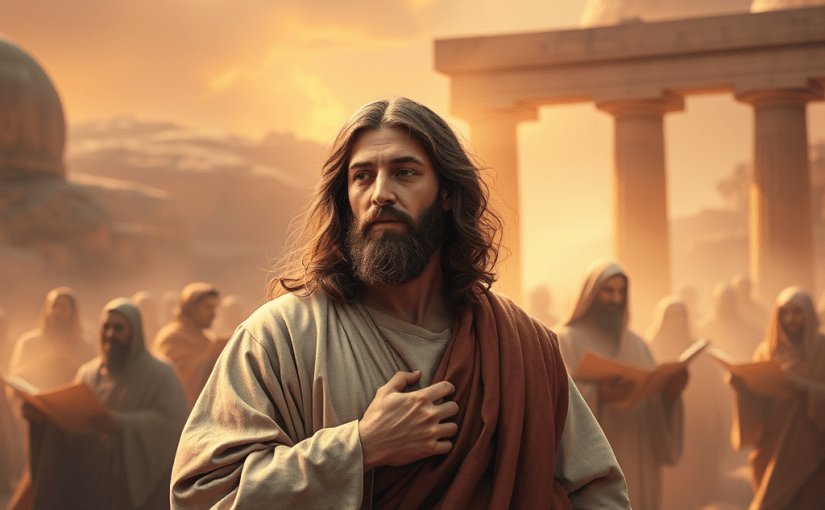
    This experience of God acting in history simply continued in the most dramatic way of all when God became human in Jesus Christ. God acting in history was not a new idea that the early church made up. The church did not try to change a myth into a reality. Rather, it proclaimed that all the myths of other cultures suddenly became a reality when Christ was born. This was Paul’s basic approach when he told the Greeks and Romans that Jesus was their Unknown God.

    Harpur is right that God has always been incarnate in all of God’s creation, and therefore, there are many paths to God, but the traditional belief of the church has been that God was incarnate in a special way in Christ and therefore, Christ is a specialpath to God. This idea that the Infinite Ruler of the Universe can be in a specific location in a special way is, again, not a new Christian idea. Jews believed that God was present in a special way in the sanctuary of the temple. Catholics, Anglicans, and Lutherans have taken the special incarnation of God a step further in their belief that the cosmic Christ is incarnate in a very special way in the communion host.

    It makes sense that God would not just tell us how to live, as God did in the Ten Commandments, but God would also showus how to live by becoming human. In Christ, God gave us a three year audio-visual demonstration of what a true human being is and also what God is really like.

    There were many witnesses to the specialness of Jesus before, during, and after his life. First, there is the ancient scriptural record. Before the historical Jesus appeared, there were dozens of prophecies recorded in the Jewish scriptures of what the Messiah would be like: royal, suffering, and divine. Jesus fulfilled all these prophecies, particularly the ones by the prophet Isaiah, who said that a child will be born who will be called “Mighty God” and “Everlasting Father” and will have a kingdom without end (Isaiah 9: 6-8). This suffering servant will be “pierced for our sins”, but “by his wounds, we are healed” (Isaiah 53:5)

    Then there is the vision of the prophet Daniel of a man who was led into the presence of  God. God gave this man everlasting authority, sovereign power, and glory, and the people of every nation worshiped him (Daniel 7:13-14). There are many other Jewish prophecies like this.

    During Christ’s life, he gave great and sublime teachings such as the Sermon on the Mount, in which he first focused on the nature of true happiness in the Beatitudes. The rest of Christ’s teachings also extended and completed the spirit of the Law and the Prophets.

    Another witness is the astounding miracles: Jesus calming the raging sea, multiplying food for the hungry, healing all manner of illnesses, driving out evil spirits, and raising a man to life who had been dead for four days!

    Even if we overlook the miracles, there is the witness of the way Christ lived. His courage, integrity, wisdom, and compassion were so complete they must have had a supernatural source.

    There is the witness of the appearances of Christ after his resurrection to hundreds of disciples, and there is the New Testament record of miracles performed in the name of Jesus by these disciples.

    There is also the witness of people dying for their faith in Christ, the record of all the martyrs in the early church. No one would lay down their life for some mythical human being. Then there is the record of the ongoing growth of the church through the centuries and of so many present-day martyrs.

    Put all this together, and one is almost forced to conclude that in Jesus, something extremely special was going on. In fact, it all points to one reality: that God was in Christ, reconciling the world to God. In the birth of Christ, God gave us the greatest gift of all: God in the form of a human being.

Bruce Tallman is a London spiritual director and educator of adults in religion www.brucetallman.com  

The Power of Wisdom in an Internet Age

Wise people value wisdom above all for it is the source of peace in the midst of information chaos. Knowledge now doubles every six months, and this overwhelming barrage of information makes it increasingly difficult to discern what has lasting value. However, by holding to principles of wisdom that have withstood the test of time, our future-shocked culture can survive.

    Jesus, Buddha, King Solomon, and Socrates, all revered as exceptionally wise men of the ancient world, have some particularly relevant thoughts for our present age. They all agree that wisdom is more precious than money or anything else you could desire because it is the source of all truly good things. Wisdom, not information, is what is ultimately important.

    Studying wisdom cross-culturally reveals seven key principles.

1. God Exists. Many scientists, including Einstein, believe that anyone who pursues science with their whole heart inevitably comes to the conclusion that there must exist an Intelligence behind everything that is vastly superior to the human mind. 

    God constitutes the source, sustenance, and goal of all things whether in the scientific age, information age, new age, or any age. The wisdom literature of western religion repeats over and over “The fool says in their heart ‘There is no God’”.

2. Accept Your Humanity. The three great monotheistic religions, Judaism, Christianity, and Islam, agree that the ancient message of the Garden of Eden remains true: all our problems begin with pride, with denying our place in the scheme of things, with wanting to be like God.

    Through the Internet we have fifty million computers at our fingertips. This gives us the god-like quality of instant knowledge about anything, which can tempt us to think we have all the answers and are, in fact, God. Bloated with information, we have no room for wisdom.

    False pride easily blinds us to our limitations, creatureliness, and humanness, but all major religions agree that the essence of wisdom consists in forgiving yourself for being human. If the first principle of wisdom is “There is a God”, the second one is “You are not God”. If pride causes all our problems, humility, that is, accepting our humanity, is the solution.

3. All Wisdom Comes From God. King Solomon states over and over that wisdom begins and ends with recognition of God’s supreme wisdom. You may not understand things, but God does. Similarly Socrates maintains that intellectual humility marks the first quality of the wise person: the realization that you lack wisdom and do not have all the answers. The wise listen much more than they speak.

4. All Things Pass Away Except God. Like Jesus, Buddha taught that everything passes away, and sorrow derives from putting too much stock in this world. 

    The epidemic of depression in our culture stems, at least partly, from ever-accelerating change in which we constantly lose people, things, lifestyles, and beliefs we had clung to. Instant access to infinite information has only sped up the change/loss process. Many find they cannot keep up.

    Therefore, hold everything lightly: your health, spouse, children, friends, job, wealth, reputation, ambitions, ministry, and theology, for they all inevitably change. Wisdom teaches that true joy and peace comes from clinging only to God, for God alone lasts.

5. Purify Your Desires. God wants lasting love, truth, and peace but the commercialization of the Internet places all the treasures, pleasures, and temptations of the world before us in an unprecedented way. We must use the great gift of this technology wisely, to bring us what is truly good and life-giving rather than the ever-increasing hawking of earthly wares and human bodies.

6. Wisdom Means Compassion. Christ exhorted us to love our enemies. Similarly, Buddha stated that compassion, even for adversaries, arises when we realize the suffering of all beings. Many people have become news addicts and, through an endless parade of woe in the media, anesthetized to other peoples’ pain. However, in spite of “compassion fatigue” we still need to reach out and try to comfort those who are suffering.

7. Wisdom Sees the Oneness of All Things. Wisdom thinks constantly in terms of unity, and realizes that whatever we do to others we do to ourselves. Therefore it always strives to create community and to take care of all people, creatures, and the Earth. Social and environmental justice are natural outflows of wisdom. The information age tends to fragment people into ever smaller interest groups. We need to use the world wide web to bring people with divergent views together in dialogue.

    In conclusion, there are three main ways to gain wisdom: pray for it, study it, and imitate it. Every major religion has a body of wisdom literature, a collection of reflections of its founders, greatest saints, and prophets whose lives can be emulated. In particular , we could all grow spiritually by imitating Jesus, who is considered by Christians to be the Wisdom of God in the flesh. Only by following the wisdom of the ancients will we transform the information age into an age of true peace and love. 

Bruce Tallman is a spiritual director and educator of adults in religion. http://www.brucetallman.com.    

Is Trump or Harris Anti-Christ or Scapegoat?

Kamala Harris has been accused by Trump of being the “anti-Christ.” Subsequently, some of his followers have argued that Harris, if elected President of the United States, will be responsible for the slaughter of millions of children as she tries to get Roe vs Wade reinstated. She has also allowed millions of illegal aliens to flood across the US border, and they are all rapists and murderers.

    On the other hand, the Harris camp points out that, in the Christian scriptures, the devil is called the “Father of Lies,” and Trump is seen as an unrepentant liar. He has deceived half the population of the United States with his lies, spews racism and hatred, is obsessed with power, wants to be the most powerful person in the world, and tried to destroy democracy by inciting the January 6 attempt to overthrow the US government.

    In either case, although both claim to be Christian, they are promoting the exact opposite of Christ’s teaching to “love your enemies.” They both are preaching the anti-gospel by demonizing their opponents.

    Rene Girard (1923-2015), a French philosopher, claimed that whenever things go wrong in a society, the political leaders will try to gain or hold onto power by scapegoating some group, that is, proclaiming the group is the cause of all the society’s problems. Therefore, the solution is to banish or kill off that group, and then all will be well again. This was Hitler’s basic strategy in the Second World War: the Jewish race was the cause of all of Germany’s problems and, therefore, must be eliminated.

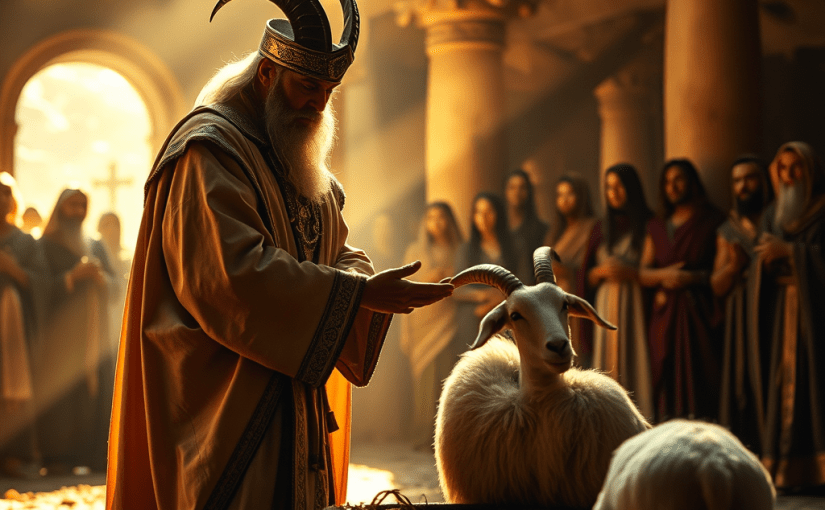
    “Scapegoat” is an interesting word. Its roots come from the ancient Jewish practice of, once a year, having the High Priest pray and lay his hands on the head of a goat, thus symbolically transferring all the sins of the Israelites from the previous year onto the goat, which was then banished to die in the desert. Then, everyone celebrates being cleansed of their sins – until their sins start to cause problems again.

    Scapegoating works in a perverse way in any culture because it allows all the pent-up fear, anger and hatred of that culture to be focused on a persecuted and usually defenceless and innocent minority group. It also conveniently allows the persecuting group to escape looking at their own sins as the cause of the culture’s problems and take responsibility for the culture’s flaws.

    The first step in scapegoating is to dehumanize your chosen enemy by calling them denigrating names such as ”anti-Christ.” So, they are both scapegoating the other party. Neither Trump nor Harris is the anti-Christ. They are limited human beings like the rest of us who are convinced their own point of view is right and simultaneously choosing not to see anything positive in their opponent. 

    The Trump camp has been emphasizing as their main argument that when Trump was president, there were no wars and no inflation, as if Joe Biden and Kamala Harris were personally responsible for the wars in Ukraine and Israel, and as if inflation was not a consequence of the government giving out billions of free dollars to keep the economy afloat during the Covid shutdown.

    The Harris camp has been pressing as their main argument that Trump is a fascist, and if he is elected with total legal immunity, it will be the end of women’s rights and of democracy.

    It is far too late, but it might have helped if both of them had meditated on and tried to follow Jesus, the ultimate scapegoat, who Christians claim took away the sins of the whole world by sacrificing himself on the cross. In this case, he is both the High Priest and victim of our scapegoating, both the G.O.A.T. (Greatest Of All Time) and the goat. 

    However, this approach only works if Christians do not use Christ’s redeeming work on the cross as an excuse to let themselves off the hook of owning their own sins and scapegoating as the cause of all their problems. God takes away our sins, but that doesn’t mean we don’t have to change our lives.

    Christians, and all of us, need to own how often we do not love our enemies.

Bruce Tallman is an educator of adults in religion. http://www.brucetallman.com

Three Truths of Wisdom: Confucianism and Christianity Explored

Confucian wisdom has three components:

cultivation of the person

meaningful action nourished by heavenly splendor

harmony of one’s wisdom with the wisdom of others

Christian wisdom knows the soul needs three truths:

knowledge of God’s goodness

knowledge of self

cure for the world’s woes in constant/humble/prayer

in Confucianism, filial piety

does not equal blind obedience/subservience

to age and authority –

a son will correct his father 

when he knows his father is wrong

similarly, the minister will correct the prince 

when the prince is wrong

in Christianity the beginning of wisdom 

and nondual consciousness

involves seeing not only the goodness of things

but also their weakness/failure/dark side

the ‘prosperity gospel’ on the other hand

tries to see only the good side of things

and divides everything into either/or

good/bad – there is no realism/

no middle ground

and so the ‘prosperity gospel’ weaves 

Christianity and the American dream of wealth together

breeding fanaticism and unbalance

the Second Vatican Council (1962-1965)

recognized that the institutions/laws/

modes of thinking of earlier generations

were not well adapted to contemporary realities

but the Council Fathers/Bishops/Archbishops

wanted to aid those trying to preserve three truths:

the holiness/natural dignity/greatness

of ordinary life and its superlative value

much as Confucianism does.

SPIRITUALITY BEFORE BIBLE

A Jesuit approached a guru

and asked to be initiated

into the art of praying without ceasing

the guru said “Concentrate on your breathing

and the air you breathe in and out is God

and stay with that awareness”

the Jesuit soon realized

prayer is as easy

as breathing

and that with the guru’s method

praying without ceasing is easy-

all of us are praying without ceasing

as we breathe

as long as we are aware


but constant awareness is the great challenge

for all of us, not just Hindus and Jesuits –

and in addition, the challenge for Buddhist practice

is to hold the sadness of Samsara

and the vision of the Eastern Sun

at the same time –

to hold sadness at our broken/illusory world

and the joy of heaven

simultaneously

and in constant awareness


but any type of prayer, Eastern or Western,

is powerful –

it was three hundred years of praying

that came before and led to

the Nicene Creed

and to choosing what books went in the Bible

and what did not make the cut –

the Gospels of Peter/Mary/Magdalene/Phillip/Thomas/

Gospel of Truth/Gospel to the Egyptians/Secret Book of James –

prayer came before choosing

the Canon of Scripture –

the officially sanctioned books by the Church –

the Bible and Creeds came after the prayer of the Church


the Bible and Creeds are not unimportant

but they are not foundational

spirituality/prayer is.


DEMYTHOLOGIZING: KILLING GOD SOFTLY

“Matter is just a minor pollutant in a universe

made of light” – Ilya Prigogine


“For the rest of my life, I want to reflect

on what light is” – Albert Einstein


but artists/philosophers/scientists say

their best ideas emerged spontaneously

out of their unconscious

out of archetypes

residing deeply in the collective unconscious

in the dark –

it is the dark which paradoxically gives light


the drug-user/druggie/droog

swims in the same water

as the mystic –

the water of universal archetypes –

of mythology –

arch-types are the same all over the world

in their essential form

though interpreted differently

in different cultures


biblical scholars kowtowing to our scientific age

tried to demythologize the Holy Bible

and get to the facts

but anthropologists hrecognize

beginning and ending stories in all cultures

that is, myths

and myths are far more important to a culture

and convey far deeper truths

than mere facts –

facts are superficial –

deeper universal truth can only be found

thru myths


demythologizing kills God and religion

because myths are more important –

meaning is more important

to peoples’ hearts –

than science

and facts.

SPIRIT UNDERLIES AND CONNECTS ALL

When the Spirit of God – always feminine in the Bible

breathed life into human beings in Genesis

She breathed life into all human beings

not just Jews or Christians – these two world religions

have no exclusive claim to the Holy Spirit

so it is not surprising a Buddhist like Thich Nhat Hanh

claims the Holy Spirit as the Source of his life and all life

the Holy Spirit connects everything –

Rupert Sheldrake postulated that repetitive behaviour

creates “morphogenetic fields” – gene-transforming spiritual fields –

that influence the behaviour of all members of a species –

this explains how generation after generation 

of birds and butterflies know what pathways to take 

when they fly south guided by the Spirit

therefore, contrary to the great atheist Richard Dawkins

we are more than our selfish genes –

our Spirit-fueled behaviours/relationships/souls guide us

the desire for God is behind all our motivations and all our sins –

pride wants what is lofty, but nothing is loftier than God

so pride wants to be God – to replace God with ego

ambition seeks honor and glory

but God alone is worthy of honor and glory

cruelty wants to arouse fear

but the only thing we ought to fear is God –

the Lord Almighty/Creator of Heaven and Earth –

but Jesus said “Do not fear God for God loves you

and even numbers all the hairs on your head” (Luke 12:7)

sloth is a desire for a quiet life

but God alone gives true rest

the problem with the Bible is it’s true teachings

always become subverted by counter-teachings –

the radical assertions of Jesus are subverted 

by putting rhetorically violent words in his mouth –

the sheep go to eternal bliss, the goats to eternal torture (Matthew 25) –

on the other hand, Jesus was always authentically himself 

and expressed what he truly felt: even anger and grief

he lived what he preached – 

walked his talk no matter the cost – 

expressing all aspects of love: self-revelation/

understanding/empowering/celebrating/

uniting all things.

STORIES R US

Hildegard of Bingen’s famous visions

made her sick until she wrote them down

and communicated them to others.

God will not let us bury our talents/visions/stories

– they are given to us for the common good.


Carl Jung’s story about humans is that

we are all interdependent and interrelated

not just interpersonally but cosmically –

from this came his idea of the Collective Unconscious –

whereas Sigmund Freud atomized humans

seeing each one as an independent individual

Jung fits much better than Freud

in the quantum interconnected story of the universe.


A basic quantum theology principle:

ultimate meaning is embedded in stories not facts –

ideologies/mythologies/worldviews/religions

create our world more than facts.


The main components of the new story

of the emerging Interspiritual Age:

the evolutionary consciousness movement

the developmentalist movement

Spiral Dynamics/Integral Theory/Einsteinian physics

all these together create a new metaphysical story.


In the other major story –

the materialistic/scientific/rationalistic one –

Meister Eckhart’s spiritual concepts are hard to grasp –

the “God-beyond-God” and “praying to God

to rid him of the concept of ‘God’” –

since all our concepts of God are false idols.


Even simple Bible stories written for the common good

need interpretation: the meaning of John 3:16

changes radically depending on how you interpret

“everyone who believes in Jesus will not perish” –

does “believes” mean “intellectual assent 

that Jesus is the Third person of the Trinity”

or “everyone who trusts in Jesus” will be saved?”

Biblical interpretation is the story about the stories

that created western civilization.


A PROPER VIEW OF GOD PROMOTES MENTAL AND SOCIAL PEACE

  The mistaken interpretation of the wrath of God in the Bible, the foundational book of western culture for most of its history, has caused many to live their lives in fear and guilt, moral rigidity, narrowmindedness, and a feverish need to proselytize (force their beliefs on others). In fact, some have used it as a justification for violence – if God is violent, violence against others must be acceptable in God’s sight.

    Is it possible to undo all this harm without simply throwing the baby (the scriptures) out with the bath water (the wrath of God)? An intelligent approach to biblical wrath of God would be a major way to promote mental health and social peace.

    Although many believe the Bible is inspired by God, it is important to understand it did not drop out of heaven. It came to us through human beings who were influenced by their culture, and so there were often two steps forward and one back in understanding what God is like, until we arrive at Jesus, who many believe gives us the best means of understanding God and the Bible.

    Humans have often lived in ego-based, divisive, reward and punishment cultures. There is a movement in the Bible from a vengeful God, which is what the ego wants, to the merciful God of Jesus, which is what the soul hopes for, a God who is gracious, overlooks human foibles, and responds to wrongs not by punishment but by love.

    Much of the wrath of God in the Bible was due to human authors failing to separate God and nature. Floods or poisonous snakes killing people must be from God, the authors believed, since they had no other explanation except that everything that happens must be from God. This mentality is still with us today when insurance companies refer to floods, hurricanes, tornadoes, and earthquakes as “acts of God.”

    However, God and nature are not the same. These so-called acts of God are not God’s will, but rather nature obeying natural laws about water, wind, and tectonic plates. The biblical writers knew nothing about science and the laws of nature.

    Despite occasional verses about the wrath of God, there are many biblical examples of God’s desire for restoration not punishment. In Ezekiel 33:11 God says, “I take no pleasure in the death of the wicked, but rather that the wicked turn from his way and live.” And the prophet Micah declares “Who is a God like you, who pardons iniquity? You will cast all our sins into the depths of the sea” (Micah 7:18). Isaiah 53:5-6 prophesied that God would restore us to love, peace, and justice through a Messiah.

    What then do we do with the “hard sayings” of Jesus that seemingly speak of God’s wrath? He says, for example, that it is better to cut off your hand if it causes you to sin, than to end up in hell (Matthew 5: 29-30) and the sheep (who took care of the poor) go to heaven and the goats (who didn’t care for the poor) go to hell (Matthew 25: 31-46).

    Context is important here. Jesus was speaking to Jews, Romans, and Greeks who were masters of rhetoric – the art of dramatic speech to make a point. Jesus knew it was not the hand but the heart that caused sin. He didn’t expect people to actually cut off their hand, as if that would solve anything. He is speaking dramatically here to make the point that sin and not taking care of the poor are extremely serious. They destroy human community and create hell on Earth. He knew people do not change easily, so he had to speak dramatically to make his point.

    Jesus also said other hard, countercultural things such as love your enemies, which is the essence of restorative justice: God conquers his enemies by loving them and making them his friends, not destroying them. This is the essence of wisdom not wrath.

    In conclusion, the proper interpretation of scripture leads us to a God of pure love, not a false god who is a mixture of love, punishment, and wrath. Approaching the Bible this way will eliminate a major source of fear, guilt, and violence and so be a great boon for mental health and social peace.


Bruce Tallman is a spiritual director and religious educator of adults. brucetallman.com btallman@rogers.com