THE ZEN OF SEXUALITY

One of the major obstacles to Enlightenment

is resentment about who/what/where you are

therefore it is crucial to be a friend to yourself


the delusions underlying both

the life-wish (kama/pleasure/desire)

and the death wish (mara/hostility/destruction)

can be dispelled by psychological analysis


thru the passion for union/Oneness an isolated individual

emerges more personalized than before –

because the way God created sexuality is that

healthy sex is integral

to a personalizing universe –

but evil tries to pervert this –

good is always foundational (and sex is very good)

but evil is always secondary/always a perversion

of what was originally good

into adultery/pornography/trafficking


accountability is a universal theme in feminist theology –

feminist theologians want us accountable

to communities of the oppressed

particularly half the human race – women whose bodies

are used as objects of self-gratification by men –

feminist theology promotes anti-imperial/post-colonial/

anti-conquest of women’s bodies

and action on this not just speculation


when asked where the One comes from

the Zen master Joshu said

“I made a beautiful robe out of hemp”

this seemingly nonsensical Zen answer

was a warning to westerners

to stop trying to understand Zen

as “neo-platonic monism”/“pantheism”/whatever –

although Zen masters believe all things are One

Zen is unclassifiable because the Zen master’s concern

is action in the world not speculation


Zen believes we can only be sexually fulfilled thru dual-action:

  1. courage – we do not deny our wheat/goodness
  2. humility – we do not deny our weeds/evil

otherwise, we will be A. dis-couraged B. blind.

 

DEATH AND REBIRTH OF RELIGION

The emphasis on love as due to genes or neurochemical reactions

detracts from love as Omega – the final purpose and meaning

of life and the universe


Judy Cannato, author of Radical Amazement: Contemplative Lessons

from Black Holes/Supernovas/and Other Wonders of the Universe

found as she got to know the new sciences

of quantum mechanics and cosmology

they resonated more and more with her experience

of the Holy One –

she believes God’s vision/desire is unity

and this is what the new sciences tell us –

all things are already united –

and this needs to be the root of our own spirituality


in Fall/Redemption theology suffering and death

are the wages of sin

but in Creation Spirituality suffering

is due to the birth pangs of a constantly evolving universe

and death is a natural event –

a prelude to recycling and rebirth


traditionally, the Institutional Church made heaven and hell

into geographic locations – places in the universe

instead of what is within us and around us

but even someone as conservative as Pope John Paul II

believed heaven and hell

are primordially “states of consciousness” –

similarly, according to Simone Weil:

“God graciously invites all the damned into paradise

but for them paradise is hell”


since true religion is about consciousness

and the source of ultimate inner freedom

totalitarian systems feel obligated to attack it

but ironically they attack it with the same values

that religion holds such as communal/brotherly/sisterly love

which religion professed but failed at


but religion fails and is born again everywhere

– numerous Japanese Zen teachers criticize corrupt Buddhists

and thus invite non-Buddhists, Catholics in particular

(thanks to Thomas Merton, author of Zen and the Birds of Appetite)

to practice Zen – they felt Zen had a greater future in Catholicism

since it was dying in Japan.

THE PARADOXICAL GOOD NEWS

The deeper and wider our knowledge of God

the greater our love of God


but Christians tend to limit love to humans

and not see it in other species or in the universe itself

therefore we focus on inner love and outer darkness

another classic duality/division in our thinking


true nondual language is paradoxical

like a Zen koan – “I am different from all others

yet the same as them” – this is true in life

because life itself is paradoxical


and even though Christianity stands or falls on Christology

we couldn’t handle the paradox of Christ:

both human and God – and so we spiritualized Jesus –

we couldn’t handle the humanity of Jesus

like the docetist heretics – so we made Jesus into pure God

rather than the God/human

and we made salvation totally spiritual

so that Christianity had only a limited impact on the world

and we didn’t have to change – so far


but when we divorce theology from cosmology

we get just an idea of God

rather than the living God

and there exists a tremendous gap

between the transcendent/religious dimension

and the material/science dimension of life –

life becomes divided against itself


but contemplation opens our dualistic minds

to the paradoxical Good News

of intelligent Christian spirituality:

our fulfillment/salvation is received not achieved

but we have to work out our salvation

with fear and trembling

“for it is God who works in you

both to will and to work

for God’s good pleasure”

Philippians 2: 12-13.


BEING/EMPTYING VS SUFFERING

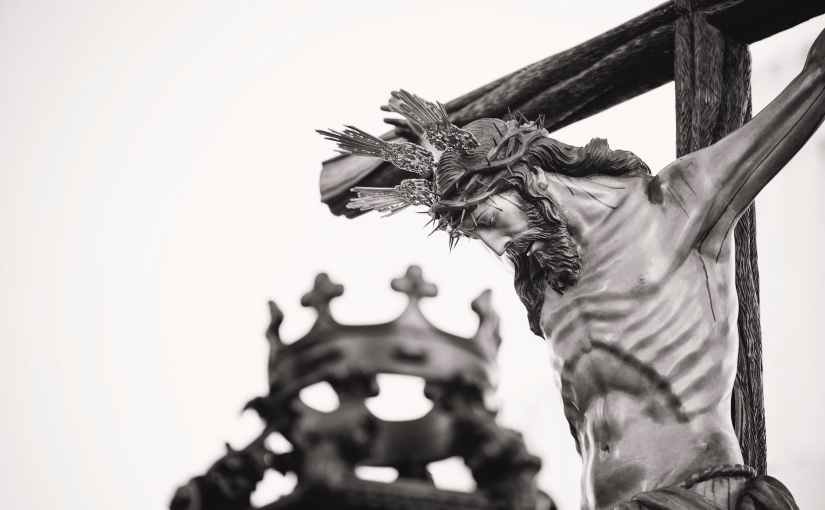
The Cross and Resurrection are the Christian solution

to the problem of evil – this is far more satisfying

than Carl Jung’s solution of making evil part of God

Zen Buddhists love the “kenosis” passage (Philippians 2:7)

where Christ empties himself – even to death –

death on a cross –

because Zen is all about emptying oneself 

of all attachments/passions/thoughts

and learning to just sit for hours or days

to “waste time with God”

as Christian monks call it –

like old friends who don’t need to speak

they just enjoy BEING together –

this is all God asks of us: “Please BE with me” –

“To just BE alive is sacred, to just BE is holy”

– Abraham Heschel

besides emptying, part and parcel of Zen  

is awareness of suffering

caused by peoples’ unmindful speech/inability to listen

Buddhists therefore vow 

to cultivate loving speech/deep listening 

that alleviates suffering

the intellectual nature of the human person 

is perfected by wisdom 

for the intellectual drive 

is not confined to observable data alone – 

wisdom gently leads all our drives 

beyond the visible world to what is invisible –

what is honestly true/honestly good

without this humble inner quest

without interior spiritual integration

even something as spiritual as a pilgrimage

can turn into a divisive/destructive/alienating journey

just as forsaking of self/emptying of ego 

unites you to God

so giving up external things

brings you peace.

RELIGION TRANSCENDS REASON

Life and religion are deeper than rationality

and Christianity is not the only seemingly irrational religion:

“The first/most elementary fact about Zen

is its abhorrence of the dualistic division

between matter and spirit – body and soul are one.”

– Thomas Merton

Many of the beliefs of Christianity can be fully understood

only by contemplatives who know nondual consciousness

and its paradoxes: “Jesus is fully human and fully divine”

“Mary is both virgin and mother”

“Bread is still bread and yet it is Jesus.”

No wonder this faith seems irrational to the secular mind!


Bernard Lonergan, a brilliant Canadian theologian

thought it was ironic that scholastics exaggerated

the objectivity of truth since Thomas Aquinas

the Father of Scholasticism thought truth

was in the mind of God and in human minds

so Lonergan spent his life’s work emphasizing

the importance of subjective experience –

the internal mental processes by which we discern truth.


The truth of most spirituality tells us

we have forgotten who we are

therefore the main task of religion is to remind us

that we are original blessings: daughters and sons of God.


“Without God, what am I

except a guide to my own self-destruction.”

– Augustine


Naskapi Indians have always been guided

by their “Great One” – their soul

who appears to them in their dreams

and instructs them about when to hunt or lay low.

Lies/dishonesty they have found

drive their Great One away

and honesty/generosity draw the Great One near.


This shows the Cosmic Christ like life itself

transcends rationality and can be contemplated and found

in the joy of everything/everywhere/everyone

all at once.


BEING ONE YET MANY

Christ’s fiery touch at Pentecost

brought our souls and the Church alive.

Christ’s touch separates us from others

and yet binds us to them

so that at the same time each Christian

is a hermit and the whole Church.


The challenge for us is to be one and many

as symbolized in the three-in-one Trinity:

Father/Son/Holy Spirit are all distinct yet one –

so we must be united to all and yet our self.

Nature can help us imagine this –

since it is a ‘process’ – a flowing whole movement

of interconnected organisms

not a series of independent mechanisms.


In Zen, spirit and matter are one not separate

and so it flumoxed Francis Xavier

that Zen Master Minsitshu

was not convinced he had a ‘soul’

as an object one can ‘have’ and ‘save.’


Xavier’s goal was to save Minsitshu

but we should have goals only for our self

not expectations for others, since this means

asking them to live up to our own self-centered ideals.


Being one yet many and having no goals/expectations

for others – loving them as they are

not as we want them to be – challenges us in relationships

particularly marriage, the most intimate of all relationships –

where we are called to be one with our partner yet our self.


Being one yet many also challenges us spiritually:

to be one with God yet not God –

wisdom has two basic tenets:

there is a God and

you are not God.


“Spiritual challenges can be overcome

by more prayer/meditation/self-examination/

penance/patience in desolation/

and humility in consolation.”

– Ignatius of Loyola