BELOVING OUR MOTHER – EARTH

The transition from “faith-as-experience” to “belief as opinion”

came from poor New Testament translations of the Greek:

in Greek “to believe” is a verb meaning “to trust” or “to belove”

in English it is a noun “My belief is that….”


Belief as “beloving” involves sexuality

and this involves the Third Buddhist Ethical Precept:

“Aware of the suffering caused by sexual misconduct

I vow to protect individuals/couples/families/society

by not engaging in sexual relations without love

and a long-term commitment”


in order to be more beloving, Brother Teasdale renounced sex

and adopted the lifestyle of a Hindu sannyasin (renunciate)

but one engaged in the world –

his book A Monk in the World

explains how he became a “Warrior-Monk”

which is what the world needs right now:

Prophet-Mystics in our midst right here/right now


we cannot hope to have a revival

of meaningful sacramental fundamentals

without a re-education about the necessity

in everyone’s life of the importance of myth/symbol/ritual

that crystallizes our purpose on planet Earth


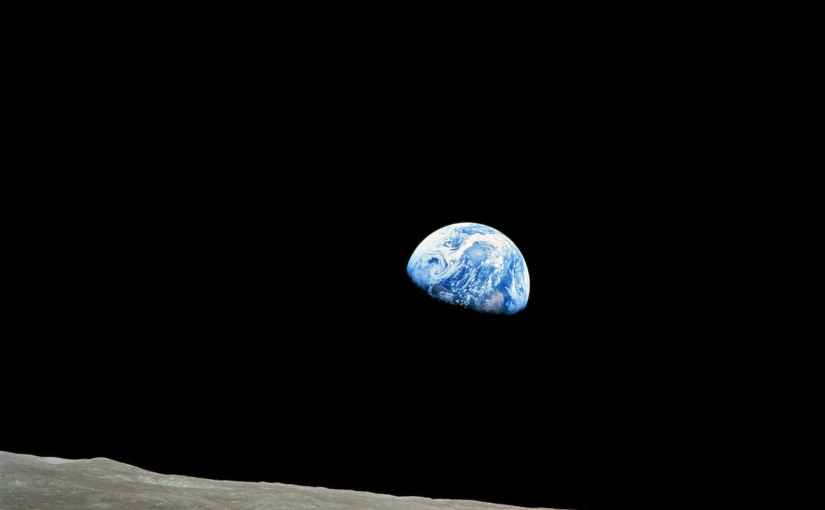
the first Earth-rise above a lunar landscape

broke all the old mythology to pieces as we realized:

Earth and heaven are no longer separate:

Earth is floating in the heavens

Earth is a heavenly body

Earth is no longer the center of the universe –

cosmological centers are now everywhere!


Therefore, we can surrender

all our anxieties and ambitions

to the God who is everywhere –

God is no longer “Our Father who art in heaven”

but right here/right now

and therefore will provide what we need

right here/right now

to be happy and holy and loving

of this pale blue dot

this goddess, “Our Mother Earth.”


LOVE KNOWS NO HIERARCHY

In Japan, the traditional sects:

Pure Land/Nichiren/Zen Buddhism dwindle

and new ones faithful to Buddhist teachings

try to humanize Japanese culture

alienated by technology and debilitating wealth


in Japan, like many countries and religions

hierarchy dominates and is a dirty word for many

but both oppressive/dominator/political

and growth/actualization/psychological hierarchies

exist – and the latter serve us

by showing us the road to human development


in ancient Greece, even love had (age-related) hierarchies:

philia – the bond of family and friends when you are young

eros – the bond of lovers when you are adult

storge – the bond of empathy when you are broken by life

agape – the bond of God-love when you finally surrender


the supreme love – the love of God

was preceded for Augustine by the “love of wisdom” –

“philo-sophia” or “philosophy” which he discovered

thru the Roman philosopher Cicero’s book Hortentius –

love of wisdom turned Augustine away from his sinful life

and toward God


philia is love expressed in family and community –

brotherly/sisterly/communal love –

eros is love longing to be one with the other

storge is love feeling what the other feels

agape is love repaying evil with good

agape loves those broken/rejected/marginalized


but according to Carl Jung agape begins with self-knowledge –

a religious undertaking because it involves

getting to know your shadow – all the rejected/lost parts of your soul –

embracing your shadow is the main path to healing

and to the unconditional love of God – how can you believe

God unconditionally loves you

if you don’t unconditionally love yourself?


Spinoza, a philosopher, agrees with Erich Fromm, a psychologist:

proper love of the soul/self-love/self-affirmation/courage

and proper love of others and God are all interdependent

and so all loves are part of each other – all loves are one.

MANIFEST TRANSFORMATION

Buddhists talk about rebirth not reincarnation

but things are not born nor do they die –

they are manifest/remanifest/transformed –

flowers are manifest (latent) within sun/soil/rain/seed

remanifest in flowers of stunning creativity/color

transformed into soil when they wither –

reality contains no birth/death/being/nonbeing/

no something out of nothing/no nothing out of something

things are always everywhere all at once


but things do emerge – the new paradigm/scientific story

of the universe expands our imagination/causes us to let go

of anthropocentric views of God and humans

allowing us to embrace the entire cosmos


we all emerge as apprentices – we learn everything we do

by imitation: smiling/laughing/walking/eating/feeling


“We all long to be filled with endless joy and bliss

for we are made for this”

– Julian of Norwich


we all long for the happiness

the Beatitudes of Jesus made manifest

and God is the only one who can remanifest us in bliss


in the Incarnation God completes what God began

with the creation of the cosmos

and crowns it with eternal significance –

the Incarnation is the realization

of what is manifest in human nature –

union with God


in the Second Vatican Council the Catholic Church

reminded us the Holy Spirit

is active in the whole world/cosmos –

in all religions/art/science/technology/politics

and most of all in peoples’ consciences

where the still small voice of God

subtly transforms our minds/hearts/actions/

communities/civilizations

transforming hate into love

war into peace

that surpasses all understanding.


UNIVERSAL COMMUNION

With relativity and quantum mechanics

scientists began to see the oneness of all things/

got rid of former Newtonian dualisms/

such as separation of observer and what is observed/

came to see the whole

as energy penetrated by consciousness

just as all mystics do –

science started to catch up with mysticism!


“God creates light/dark/well-being/woe –

there is only one God

not a god who creates light and well-being

and another god who creates darkness and death

as in dualistic Manichaeism”

– Deutero-Isaiah


the Center of the World which unites all things

may be the Tree of Life

or the World Navel

or a Cosmic Human

like Buddha or the Son of God –

wherever the Energies of Eternity

break into the Everydayness of Time


we need some kind of mythology/deep truth to live –

Carl Jung’s personal mythology of meaning

expressed also in Western mystics

was that God made us

to become more and more conscious

so that God could become more and more conscious

and more fully penetrate the whole Cosmos


Jung’s view was that the future of Christianity

lay in the realization of the Cosmic Christ within each person –

this involves not making a person into a “God”

but rather helping them to consciously discover

the True Self/Christ-Self within each one of us


 thus the bread and wine are not just symbols –

they contain God/Ultimate Reality/the Ground of All

just as we do –

the Church calls us to mindfulness in the Eucharist –

that God is in the Eucharist

just as God is in us.

ALONE WITH THE ALONE

Buddhist teaching states that even if you are fully enlightened

difficulty and pain are still inevitable – you will experience

aging/illness/death/

sorrow at losing what you love –

youth/health/life


you are also going to experience loneliness, a universal feeling –

and when we are not enlightened we naively believe

a sexual relationship will take away our loneliness

but unless there is heart and soul communication

sex just makes us more lonely


loneliness is different than solitude –

solitude can correct the tendency of codependents

to look outside themselves for their identity –

solitude provides us with an opportunity

to discover/know/embrace intimacy

with our true self


but we have to be careful – to not get sucked in

by our false self – our ego – an illusion because it exists

outside of God’s will/love/reality/life itself


still, if we are careful, we will find within

a secret/incommunicable/mystery/sanctuary

which the intrusions of self-assertion and violence

cannot penetrate – but on the other hand

if we are not careful, the ways of the world

can lure us out of our sanctuary

and slay us


but souls abandoned to God are protected

from their own ego because they take delight

in nothing but God – normal pursuits/activities

hold no delight – they want to be in solitude

alone with the Alone – the Only One

the Lonely One

who wants only to love and be loved


“God has created us for great things:

to love and be loved”

– Mother Teresa


NOBLE HEART AND SOUL

Religious questions used to be “What do you believe?”

“What happens in the afterlife?”

Now they are “How is belief possible in our secular age?”

“Who do you believe?” that is “Who is your authority

on questions of religion?” – less and less it is

popes/priests/catechisms

and more and more it is

Google/friends/social media


but in medieval times, Bonaventure’s theological method

was based on spiritual searching – a quest for truth –

not ideological confirmation of my biases

but something far greater – something

that binds us together despite our differences


if Bonaventure were alive today

he would include eastern religions

in his quest for truth because

contrary to most peoples’ presuppositions/biases

the First Buddhist Precept is a celebration of life

a reverence for living life to the full

cultivating compassion and vowing

to never kill anything


whereas some secular people kill their own soul

although they have not died physically

they have died the “second death” mentioned in Revelation –

their soul has been lost and destroyed –

they have cast themselves into hell –

a hell of their own making


but in Buddhism the “noble heart,” the “bodhichitta”

is always present in us no matter how

selfish/depressed/fearful we are –

like an unblemished jewel the bodhichitta

can always be rediscovered

and heal us


similarly, according to Henri Nouwen

the soul can always be refound

in solitude –

the great furnace of transformation –

where constantly happens

a great struggle with the devil

and a great encounter with God.

DRAWING ALL THINGS TOGETHER


Ken Wilber’s Integral Philosophy includes everything:

“I” equals self and consciousness

“It” equals body and organism

“We” equals culture and worldview

“Its” equals social systems and environment


Jesus also included everything:

he saw humans as creatures alongside other creatures

flowers/sparrows/foxes – Jesus saw humans as a very important

part of nature but not above or separate from it:

“All things bright and beautiful

all creatures great and small

all things wise and wonderful

the Lord God made them all”

– United Church of Canada children’s hymn


John Macquarrie, the great Anglican theologian, used objective natural law

to challenge the relativism/subjectivism of existentialists –

there needs to be a dialectical tension between subjective authenticity

which Buddhism/Confucianism/and particularly Jesus advanced

and objective/public/universal values derived from nature and its laws –

we need to include both subjectivism and objectivism


the Church and its sacraments were meant to be divine invitations

to meaningfully explore how everything is interconnected/related

but sometimes it devolves into just an institution

with rituals that command legal observance

and the objective dominates the subjective


it was Ambrose’s ability to subjectively/symbolically

interpret Old Testament passages about violence

Augustine had taken objectively/literally

that began to create cracks in Augustine’s Manichean/

anti-Catholic stance until he was converted to the Church


the objective physical sciences may see the movement of evolution

towards greater complexity and consciousness

as biogenesis or cosmogenesis

but in subjective Christian terms it is Christogenesis

the coming to be and unfolding of the Cosmic Christ


the Church as the Universal Beloved Community was meant to be

the instrument of, and integral to, Christogenesis

the drawing together of all creatures and all things–

the I/It/We/Its.

WAKING UP TO UNITY

David Bohm, the great physicist, proposed an “Implicate Order”

the undivided oneness/wholeness of all things:

“All things are internally related, which fits well with

quantum entanglement/non-locality/ spooky action at a distance”


A basic principle of quantum theology: God/the Divine

is creative energy, which includes and transcends

all traditional theology/everything previously said about God


Buddhists get their creative energy/peace/wisdom/joy/bliss

from practicing mindfulness and their joy has the power

to transform others


We are not transformed by sitting in a pew for an hour

once a week and listening to a sermon –

people learn any faith by hands-on training

as a novice/apprentice/journeyman/master


And Jesus, of course, was a master –

“Jesus inherited his father’s carpentry business

he was a master of the spirituality of business

and therefore was of the middle class, not poor –

out of compassion he became an outcast by choice”

– Albert Nolan


We normally begin the journey towards wholeness

by becoming baptized as an infant – by becoming an outcast

of godless society but part of the Beloved Community, the Church

“God can divinize us through baptism” – Gregory of Nazianzus


We can become part of the Implicate Order

the Universal Beloved Community

by experiencing God’s grace through all the “sacraments”

through all the “visible signs of God’s invisible love and grace”

which are constantly all around us

and through realizing our oneness with

God/others/nature


All we have to do is

wake up from our godless society’s

godless slumber.


PEACE THRU INTEGRATION

Science is going thru a major paradigm shift

from seeing nature as mechanical and inanimate/dead

to seeing it as organic and alive


The physical sciences noted

the dissolution of energy in entropy

but ignored increasing complexity/consciousness

which is building energy up and up – it is this increase

that gives the whole cosmos its purpose and direction


Believers claim the resurrection of Christ integrates

the whole cosmos and all people into God

which is God’s purpose/direction/flow for everything:

union and transformation in God


It is good to include all religions and thus integrate everything

in a new way not the old way –

Buddhism can be part of cosmic integration

since it will not block the flow of God’s plan –

doing no harm to ourselves or others

is basic Buddhist teaching on nonaggression

which includes not killing/stealing/lying and the Christian commandments

of not doing harm in our heart/thoughts/speech/actions


However, Rosemary Radford Ruether, a great feminist theologian

pointed out that in traditional Judeo-Christianity there exists

a sacralised assumption of a divinely ordered patriarchy/hierarchy

from God to angels to men to women to animals –

this Great Chain of Being invented by men –

was the primary metaphysics for all cultures East and West

before science – and it placed women somewhere

between men and animals


No matter how we integrate everything – whether thru science

or religion or science and religion working together –

what people want most of all is to live in peace


Peace is all around us – in the world/nature/ourselves

when we live in the present moment – when mindfulness

whether Buddhist or Christian – is in us

the Holy Spirit and peace are in us –

this is not a matter of faith but of practice

and others will sense it and be transformed –

world peace begins in everyone’s heart.

IN PRAISE OF COMMUNITY – EAST AND WEST

The Shantivanam Ashram had a wide impact

because its founder, Bede Griffiths, embodied the marriage

of East and West – he was at one and the same time

the brilliant Christian intellectual and the Indian sadhu (holy man)

and he knew that Christianity and Hinduism

could meet at the mystical level.


Griffiths also knew every one of the eight billion inhabitants

of Earth is circumscribed by their context –

their culture and institutions dictate what

books/entertainment/freedom/moral values/political system/

religion they should follow.


However, healthy psychosocial development means

individuals are not only shaped by their context

they choose and shape their context –

in other words, healthy childhood/adolescence/adulthood

involves self-regulation and self-agency.


Christians have a special agency to play in politics:

to fight for the common good, that is, to show how

authority can be harmonized with freedom

diversity can be harmonized with unity

initiative can be harmonized with communal good.


Jesus taught women and included them freely

in the early Christian community/ecclesia

and would ordain them today.


The Buddha also was naturally oriented to justice –

he invited women to be active and teach

in the Sangha (Buddhist community/ashram).


Our culture and institutions used to be guided

through psychological perils by the symbols

and rituals of our religious inheritance.

But now that all mythology/gods/demons

have been rationalized out of existence

we now have no overarching myth that binds us all together

we have no protection – no community/church/sangha/ashram

to keep us warm/comforted/sustained/fighting for the good –

sadly, our impoverished/individualistic lives means

we have to face our daily perils on our own.