Deepening Spirituality: Wisdom from Modern Sages

The ideas below come from my ongoing reflections on the works of some of the greatest sages of the 20th and 21stcenturies, people like Carl Jung, Joseph Campbell, Thomas Merton, Ken Wilber, Karen Armstrong, and Richard Rohr. I think about their ideas until I make them my own, then rewrite them in my own words. Here are some of my favourites:

    A proof of God everyone can experience: we long for truth, freedom, goodness, and happiness and we long to have all these supreme goods to the max, which is what God is, so what we all long for is God.

    The loyalty of Jesus is not to Catholics or Protestants, Muslims or Buddhists, but to anyone who is suffering, whether believers or non-believers. Jesus is always on the side of the crucified.

    Religion gives wider meaning to our lives. It makes us realize we are children of God, not just producers and consumers.

    It is important to plumb the depths of at least one religious tradition. If you chase ten rabbits you catch none. If you dig ten shallow wells you never reach water.

    Full conversion is intellectual (wisdom), emotional (compassion), and moral (individual and social responsibility). Conversion is many-sided.

    Meaning is the bottom line in life, not money. Money is important, but life without meaning is not worth living.

    The truly religious do not take themselves too seriously. The ability to laugh at yourself is similar to humility. A sense of humour is a sign of spiritual health and holiness. It is the joy of the gospel.

    God does not want suffering. The only cause of suffering, beside human folly, is natural processes which are necessary in an evolving universe. Human folly is inevitable but unnecessary.

    Religion and spirituality are far more about intuition than reason. Theology is very rational, but reason is very limited. It does not understand the ways and reasons of the heart.

    Your relationship with others, particularly your partner, can be part of your spiritual practice.

    Your true self is love, peace, and joy, and so the only real sin is to act contrary to your true nature, to violate who you really are, to not let your own God-given holiness shine forth.

    Wisdom permeates everything, enters into our souls, and urges us to be friends of God. 

    God must be very familiar with letting go, because humans insist on being in control. God very seldom gets what God wants. This explains most of the problems of the world.

    The purpose of evolution is to bring everything to the point where compassion and wisdom can be born through humans, so that the survival of only the fittest no longer applies.

    Humans only live fully if freely joined to God. Therefore, God works by invitation not force.

    Jesus chose a child as the model of discipleship. If we lose the qualities of our inner child: humility, innocence, playfulness, creativity, and genuineness, we have essentially lost our soul.

    Mysticism, the profound experience of God, gives us the courage and energy to do justice.

    Our desires are God-given gifts meant for living life to the full. Contrary to Buddhist teaching, desire is not evil. It is good to desire good things. This is the Holy Spirit working in us.

    Most atheists think religious people are out of touch with reality. Most religious people think God is Reality, and therefore, atheists are out of touch with reality.

    What matters is not so much doctrine as internal transformation. Kindness and goodness are praised by all religions, humanists, and atheists. These virtues are what unite all people.

    Let no one delude themselves that knowledge of the path is an adequate substitute for walking in it. To know spiritual truth is one thing, to live it is quite another.

Bruce Tallman is a spiritual director and an educator of adults in religion. http://www.brucetallman.com

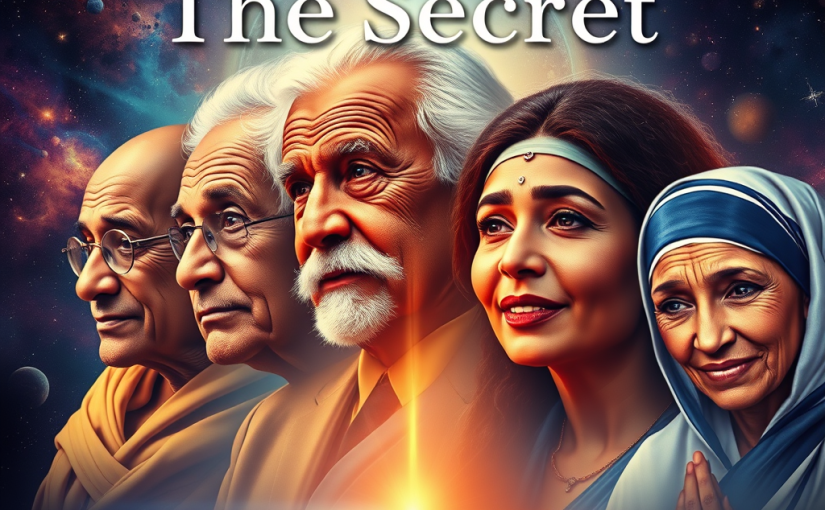
The Secret: Understanding the Law of Attraction and Its Flaws

The Secret was a book by Rhonda Byrne that became a self-help phenomenon because it was cleverly mass-marketed as “the secret to life” that all the greatest people down through history have known – now being revealed to the public! It promised greatness for everyone, Oprah Winfrey endorsed it, and so it was a mega-bestseller.

       The Secret is “the law of attraction” – whatever you focus on, positive or negative, you draw to yourself. In general, this law is true: if you focus on becoming a doctor, your chances of becoming one are much greater than if you focus on being an airline pilot. If you worry all the time about becoming ill, you may make yourself sick.

       The problem with the Secret, from a Christian point of view, is that it takes things too far. Advocates of the Secret tell you that whatever happens to you in life, you have drawn to yourself. The underlying message is that you are totallyresponsible for your life. If you are homeless, for example, it is because you want to be homeless. It has nothing at all to do with corporations cutting wages and downsizing jobs while the government simultaneously lifts rent controls so that your income disappears while your expenses skyrocket.

       This philosophy allows us to conveniently blame the victim. That way, you do not need to be compassionate towards anyone because whatever has happened to them, they brought upon themselves, whether they are refugees, battered wives, or schizophrenics.

       The disturbing thing is that this philosophy also infects a lot of Christians. It’s part of the “prosperity gospel,” that is, if you have worldly success, it must be because God is blessing you, whereas if things are not going well, you must have drawn it upon yourself.

       One of my directees (person receiving spiritual direction) has chronic fatigue syndrome. She has tried repeatedly to identify what sin in her past God is punishing her for but can’t come up with anything that deserves such a severe illness. She laughs, “If tomorrow they found a pill that would cure this, would that suddenly make me a righteous person?”

       The Book of Job in the Jewish scriptures was meant to end all simplistic reward/punishment religious thinking. Until then, the thinking was that your external life was a sign of God’s blessing or wrath. 

       Job suddenly loses all his wealth and his family and becomes sick. His religious friends tell him that it must be due to some unconfessed sin in his life, but Job protests his innocence. We learn that God agrees Job is an innocent man, and there is no necessary correlation between what happens to you in life and where you stand in God’s eyes. 

       In the end, God reveals God’s glory to Job, showing him that there are things that utterly transcend human understanding. As John Henry Newman wrote in his famous prayer, “Perhaps my sickness serves God, though I know not how.” Perhaps our faithfulness under trials will inspire someone else to hope in God.

       Jesus always struggled with the Pharisees to have them put compassion before their purity laws. His story of the Good Samaritan is a classic example of this, where the religious leaders refuse to compassionately treat a man who has been robbed and beaten because it would make them ritually impure. So, they avoid him, whereas a man from Samaria, a land considered full of heretics, goes out of his way to take care of the injured man.

       At one point, Jesus says to the Pharisees, “Do you think those laborers upon whom the tower of Siloam fell were any more evil than anyone else?” Things happen that defy rational explanation. Other parts of Scripture state that the righteous can expect trials and persecution if they do not follow the crowd. Thus, virtue can actually attract suffering to us.       

    Job is meant to be a foreshadowing of Jesus, the totally righteous man who has the worst injustice fall upon him: being publicly humiliated and put to death as a criminal and heretic. The crucifixion is the ultimate demonstration that very bad things can happen to very good people through no fault of their own.

      Being responsible for our actions is important, and the Secret has some good points, but the main problem from a Christian point of view is that it exalts personal responsibility over compassion.

Bruce Tallman is a spiritual director and educator of adults in religion. http://www.brucetallman.com.

Exploring the God Debate: Proofs for and Against Existence

THE GOD DELUSION: FACT OR FICTION?

    In 2003, a new book by Richard Dawkins, The God Delusion, was climbing the bestseller charts and giving atheists everywhere powerful fuel for attacking religion. On November 9 eighty people attended a debate sponsored by the Humanist Association of London and Area on “Is There A Loving Creator God?” Here are the key points by the debaters Dr. Goldwin Emerson and Dr. Bruce Tallman.

    EMERSON: NO. THERE IS NO LOVING CREATOR GOD

    The Christian God is reputed to be an all-knowing, all-powerful, benevolent, supreme being who created the universe, answers prayer and influences events on Earth. He is also believed to have sent his son to Earth for the purpose of atoning for the sins of humankind. This description causes skeptics to ask the following:

  1. If the deity is all-knowing, he would know when disasters such as earthquakes and hurricanes are about to happen, and if he is all-powerful, why does he not stop these catastrophes and prevent the death of innocent people? 

2. If this deity is powerful and benevolent, why does he allow humans to be born with defects and incurable diseases? 

3. Millions of believers pray to their deity, asking that he intervene in events on Earth. Why are so many prayers not answered? 

4. Why do Christians claim that Jesus is divine, requiring worship, when no other monotheistic religions make this claim for their prophets? 

 5. As scientific knowledge advances, we learn that many of the world’s problems of pollution, war, global warming, hunger, and disease are human-made problems which, if they are to be solved at all, will need to be solved by human-made solutions. Why is it that Christians claim that God is necessary for ethical behaviour?  Effective ethical codes were established in various early civilizations prior to the existence of Christianity. 

    When asked why their omnipotent, loving God allows so much misery in the world, believers say God moves in mysterious ways, or the universe is unfolding as it should.  These answers are hardly satisfying to skeptics, and one is tempted to side with Sigmund Freud (1870-1937), who said: “A personal god is nothing more than a father figure: desire for such a deity sprang from infantile yearnings for a powerful, protective father, for justice and fairness and life to go on forever. God is simply a projection of these desires, feared and worshiped by human beings out of a sense of helplessness.  Religion belongs to the infancy of the human race; it has been a necessary stage in the transition from childhood to maturity.  It has promoted ethical values which were essential to society. Now that humanity has come of age, however, it should be left behind.”                                                                  For non-theists, the conclusion is that there is no God. On the other hand, there are alternative ways of viewing what has been called God. In the seventeenth century, the Dutch philosopher Spinoza proposed that the belief in God’s activity in the world was merely a way of describing the world’s mathematical and causal principles. For Spinoza there was no need for the concept of divine law: the best guidance is the eternal laws of nature. The famous physicists Stephen Hawking, Albert Einstein, and many more recent scientists and philosophers have expressed a similar view.

     Others may think of God as a quality within themselves, the Ultimate Reality or the Ground of All Being, instead of believing in the traditional Christian concept of God.

     Most liberal Christians accept the firm scientific evidence that the universe is billions of years old and that life on Earth evolved over millions of years; nevertheless, they may still believe that, in some mysterious way, God is a prime mover in this evolution. While religious people also credit God with the origin and existence of love, humanists believe love is a product of evolution. The emotion of love, particularly in mammals, enhances the survival potential of offspring. Considering God as a creator begs the obvious question: Who or what created God?  For humanists, the answer is simple: humans created God.

     It seems that primitive peoples looked for explanations of how the world works and created numerous spirits and gods to account for natural happenings. Over the centuries, many different gods were invented by ancient civilizations, including Egypt, Greece and Rome. One exception was the monotheistic God of the Hebrews. We now accept that the multitude of ancient pagan gods were created in the minds of humans. It is reasonable to conclude that Yahweh was also created in the minds of the Hebrews and became entrenched in the myths contained in the book of Genesis. Thus, humans created God in their own image rather than the other way around.

     Humanists are guided by the principles of rational thought, scientific inquiry, responsibility, ethics, compassion, fairness, and equality, and find it difficult to believe in the Christian concept of God. Instead, we believe that he was created in the minds of early Hebrews. Rather than worshiping the Christian God, humanists celebrate the opportunity of living on our wondrous planet and having the privilege of enjoying the many good fortunes available to us. In other words, they try to follow a philosophy of loving and revering life like believers love and revere God.

TALLMAN: YES. THERE IS A LOVING CREATOR GOD

    Nonbelievers usually do away with the idea of a Creator by ascribing God-like qualities such as infinity and eternity to the universe. However, Albert Einstein and Isaac Newton, the two greatest scientists who ever lived, both believed that the universe is finite, and modern astronomers all agree that the universe began with a Big Bang about fourteen billion years ago. They have also done computer projections that show that the universe will end in about one hundred billion years. Monotheistic religions believe that nothing caused God to exist, God exists infinitely and eternally by God’s own nature, and God caused the Big Bang.

    Believing scientists like Pierre Teilhard de Chardin, an expert on the fossil remains of evolution, have noted that evolution on our planet has proceeded from matter (rocks and water) to life (plants and animals) to thought (humans) to spirit (the great religions that continue to spread across the world) because humans are “homo religiousus,” that is, “hardwired for God”. The fact that the whole natural world has evolved in a spiritual direction, from matter to life to thought to spirit, is evidence that God is directing the whole evolutionary process.

    Many nonbelievers say they only believe in things for which there is scientific evidence. Although we cannot scientifically prove there is a God, there is evidence of the creativity of a Creator all around us: the sun, lightning, rainbows, flowers, mountains, peacocks, giraffes, children, and on and on. It’s as if the whole creation is shouting, “There is a God!” As one contemplative said, “ If you want to see God, just open your eyes and wake up!”

    Just as there is plenty of evidence that there is a creator God, the evidence of a loving God is all around us. First of all, there is far more good than evil in the world. Evil is always only a corruption of something that was originally good. For example, illness is always only a corruption of original health. 

    Doctors estimate that only about three percent of the population has a major illness at any one time; health predominates by far. If there is seven percent unemployment, it means there is ninety-three percent employment. Criminologists estimate only two percent of the population are criminals, the other ninety-eight percent are law-abiding citizens. So good is foundational, and evil is secondary. We take the good for granted because it is just so everyday and commonplace. Again, we need to open our eyes.

    The greatest proof that there is a loving God is that love is the central thing in life. This requires no argument since lovers, poets, philosophers, and mystics have been proclaiming it for centuries, and we all know in our hearts that it is true. If there is no God of love, why is good far more predominant than evil, and why is love the central thing in life? Atheists have no good explanation for this.

    Although God is loving, all-powerful, and all-knowing, God is also self-limiting. Natural laws serve us well the vast majority of the time, so God chooses not to interfere with them. If God interfered with them every time they might cause suffering, the world would be chaotic. Similarly, God chooses not to take away our free will, even when we misuse it and cause suffering, because otherwise, we would be robots, and there would be no real love in the world.

    God constantly works within us, trying to motivate us to love one another, prevent suffering, and bring greater good out of evil. Indeed, life is full of the overcoming of suffering. However, sometimes, we disobey God and cause suffering on a massive scale, such as killing millions of innocent people in the twentieth century. The real question here is not “How can God allow suffering?” but “How can human beings allow it?”             

    God does allow suffering, but only so that the highest human virtues: compassion, wisdom, heroism, service to others, and self-sacrifice, can emerge in response. If God took away all suffering life would lose its profundity.

    The crucifixion of Christ is the great symbol that God suffers with us and is right in the center of our pain, trying to alleviate it. And the resurrection of Christ is the great symbol that all suffering is finally overcome by God in heaven.

    Life on Earth is evolving in a spiritual direction; religion and spirituality constantly spring up everywhere because we are hardwired for God, good is foundational, love is central, and there are answers to suffering. All these things testify that there is indeed a loving, creator God.

Concluding Remark

    The two statements represent different ways of viewing our universe. One is religious, the other non-religious. These two positions are offered so that readers may better understand both and make their own choices on these important concerns.

The Power of Wisdom in an Internet Age

Wise people value wisdom above all for it is the source of peace in the midst of information chaos. Knowledge now doubles every six months, and this overwhelming barrage of information makes it increasingly difficult to discern what has lasting value. However, by holding to principles of wisdom that have withstood the test of time, our future-shocked culture can survive.

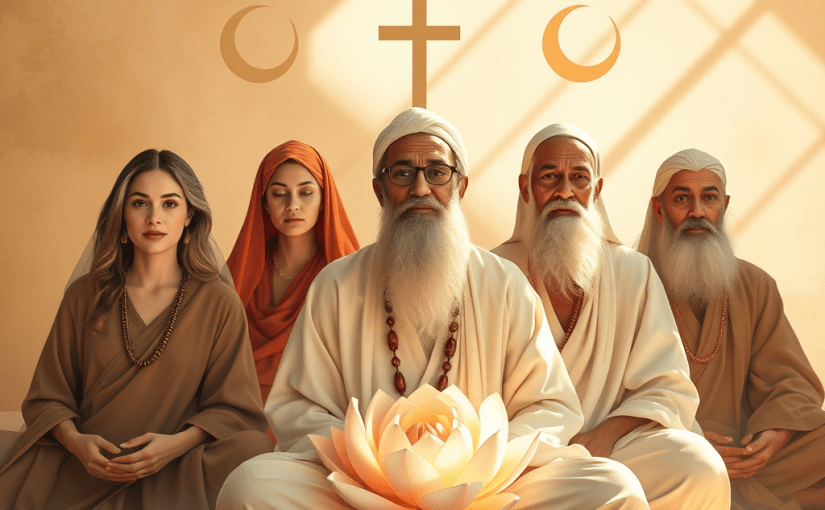
    Jesus, Buddha, King Solomon, and Socrates, all revered as exceptionally wise men of the ancient world, have some particularly relevant thoughts for our present age. They all agree that wisdom is more precious than money or anything else you could desire because it is the source of all truly good things. Wisdom, not information, is what is ultimately important.

    Studying wisdom cross-culturally reveals seven key principles.

1. God Exists. Many scientists, including Einstein, believe that anyone who pursues science with their whole heart inevitably comes to the conclusion that there must exist an Intelligence behind everything that is vastly superior to the human mind. 

    God constitutes the source, sustenance, and goal of all things whether in the scientific age, information age, new age, or any age. The wisdom literature of western religion repeats over and over “The fool says in their heart ‘There is no God’”.

2. Accept Your Humanity. The three great monotheistic religions, Judaism, Christianity, and Islam, agree that the ancient message of the Garden of Eden remains true: all our problems begin with pride, with denying our place in the scheme of things, with wanting to be like God.

    Through the Internet we have fifty million computers at our fingertips. This gives us the god-like quality of instant knowledge about anything, which can tempt us to think we have all the answers and are, in fact, God. Bloated with information, we have no room for wisdom.

    False pride easily blinds us to our limitations, creatureliness, and humanness, but all major religions agree that the essence of wisdom consists in forgiving yourself for being human. If the first principle of wisdom is “There is a God”, the second one is “You are not God”. If pride causes all our problems, humility, that is, accepting our humanity, is the solution.

3. All Wisdom Comes From God. King Solomon states over and over that wisdom begins and ends with recognition of God’s supreme wisdom. You may not understand things, but God does. Similarly Socrates maintains that intellectual humility marks the first quality of the wise person: the realization that you lack wisdom and do not have all the answers. The wise listen much more than they speak.

4. All Things Pass Away Except God. Like Jesus, Buddha taught that everything passes away, and sorrow derives from putting too much stock in this world. 

    The epidemic of depression in our culture stems, at least partly, from ever-accelerating change in which we constantly lose people, things, lifestyles, and beliefs we had clung to. Instant access to infinite information has only sped up the change/loss process. Many find they cannot keep up.

    Therefore, hold everything lightly: your health, spouse, children, friends, job, wealth, reputation, ambitions, ministry, and theology, for they all inevitably change. Wisdom teaches that true joy and peace comes from clinging only to God, for God alone lasts.

5. Purify Your Desires. God wants lasting love, truth, and peace but the commercialization of the Internet places all the treasures, pleasures, and temptations of the world before us in an unprecedented way. We must use the great gift of this technology wisely, to bring us what is truly good and life-giving rather than the ever-increasing hawking of earthly wares and human bodies.

6. Wisdom Means Compassion. Christ exhorted us to love our enemies. Similarly, Buddha stated that compassion, even for adversaries, arises when we realize the suffering of all beings. Many people have become news addicts and, through an endless parade of woe in the media, anesthetized to other peoples’ pain. However, in spite of “compassion fatigue” we still need to reach out and try to comfort those who are suffering.

7. Wisdom Sees the Oneness of All Things. Wisdom thinks constantly in terms of unity, and realizes that whatever we do to others we do to ourselves. Therefore it always strives to create community and to take care of all people, creatures, and the Earth. Social and environmental justice are natural outflows of wisdom. The information age tends to fragment people into ever smaller interest groups. We need to use the world wide web to bring people with divergent views together in dialogue.

    In conclusion, there are three main ways to gain wisdom: pray for it, study it, and imitate it. Every major religion has a body of wisdom literature, a collection of reflections of its founders, greatest saints, and prophets whose lives can be emulated. In particular , we could all grow spiritually by imitating Jesus, who is considered by Christians to be the Wisdom of God in the flesh. Only by following the wisdom of the ancients will we transform the information age into an age of true peace and love. 

Bruce Tallman is a spiritual director and educator of adults in religion. http://www.brucetallman.com.    

On God and Suffering: Dialogue with an Atheist

After completing his PhD in religious studies, my friend Leon became an atheist! 

    After that, he and I got into debates over the existence of God that would rage on for whole weekends, but it all seemed to get down to the problem of suffering. Given the wonders of our world, belief in a Creator would be easy if it were not for all the suffering. 

    Here is a summary of Leon’s toughest questions and my best answers on God and suffering.

Leon: How can you believe in a good God when there is so much suffering and evil in the world?

Bruce: I believe good is foundational, and suffering and evil are secondary. Evil is always only a corruption of something that was originally good. For example, illness is a corruption of original health. War is a corruption of original peace. God created everything good in the beginning. Good, not evil, is the bottom line in life.

Leon: If God is the Creator, God is the cause of everything. God must, therefore, cause suffering. 

Bruce: God does not want or cause suffering and evil. Secondary causes, that is, natural laws and human freedom, cause suffering. So that we would not live in chaos, God created the laws of nature, which normally serve us well. 

    However, nature blindly follows its laws, much as an avalanche obeys gravity, whether humans are in the way or not. Also, you can’t have true love without freedom of choice, so God created humans with free will. But sometimes, we make wrong choices and sin. If most of the suffering in the world is caused by our wrong choices, the question is not “How can God allow suffering?” but rather “How can humans allow it?”

Leon: If God does not want suffering, what does God do to alleviate it? I don’t think God cares.

Bruce: The Bible teaches us how to overcome evil and suffering by obeying God’s laws. It also teaches us that we can call upon God at any time for help with suffering and that true happiness lies in having a loving relationship with God.

Leon: But if there is a loving and all-powerful God, why would there be any suffering?

Bruce: Paradoxically, although suffering is the main reason people don’t believe in God, God is the ultimate answer to suffering. If there is a loving and all-powerful God, then suffering must make sense, although we may not immediately understand it. Trust in God’s goodness provides hope in the midst of suffering, thus eliminating the worst suffering, that is, meaningless suffering.

Leon: I still think there is more suffering than good, which disproves there is a loving God.

Bruce: Beyond foundational goodness, there is “secondary goodness”, that is, our response to suffering. This is how all the helping professions arose: medicine, law, psychology, social work, etc. All progress is a response to suffering. Good abounds, and God is in charge.

Leon: But if there is a loving God who is in charge, why would he allow suffering?

Bruce: God does not normally allow us to suffer and only allows suffering and evil so that higher values and attitudes such as humility, compassion, forgiveness and wisdom might emerge.

Leon: I still don’t see a God anywhere out there helping us with suffering. Where is God anyway?

Bruce: God is invisible, but we can see that God has created us with great defences against suffering. Everyone comes with some built-in, standard equipment: a brain, the greatest problem-solver in the world, and the human spirit, the great urge to fight against suffering. 

    God has also given us people who aid us in avoiding suffering and who are great supports when we do suffer: parents, spouses, and friends. Through people and angels, God either protects us from suffering and evil or helps us to get through it. God comforts us, encourages us, carries us through suffering, and works with us to bring secondary goodness out of suffering and evil.

Leon: I still don’t think God actively cares. God just sits up there and watches us suffer.

Bruce: The Christian belief is that God suffers when we suffer. If God is everywhere (including within us) and knows everything, and we are God’s children, then God knows and feels our pain. God is not some detached sky-god. The Cross is the great symbol that God suffers with us.

Leon: Suffering is so horrible, though. Life is so hard and so meaningless. What’s the point of it?

Bruce: Christ on the Cross transformed suffering, showing that suffering can have meaning. He showed us that to suffer for others is the deepest love.

Leon: I still don’t think there is any final answer to suffering.

Bruce: Often, all you can do is accompany the suffering person, not give them your answers, but if there is a final answer, it is that God overcomes all suffering in heaven forever. God gives believers ultimate and eternal joy, peace, happiness, and love. Things began as “very good” (Genesis 1:31), the end is even better, and the middle is good in spite of negative news reports. All is well that ends well, but you have to have faith to see the goodness of God in all things.

Bruce Tallman is a spiritual director and author: http://www.brucetallman.com

Is Trump or Harris Anti-Christ or Scapegoat?

Kamala Harris has been accused by Trump of being the “anti-Christ.” Subsequently, some of his followers have argued that Harris, if elected President of the United States, will be responsible for the slaughter of millions of children as she tries to get Roe vs Wade reinstated. She has also allowed millions of illegal aliens to flood across the US border, and they are all rapists and murderers.

    On the other hand, the Harris camp points out that, in the Christian scriptures, the devil is called the “Father of Lies,” and Trump is seen as an unrepentant liar. He has deceived half the population of the United States with his lies, spews racism and hatred, is obsessed with power, wants to be the most powerful person in the world, and tried to destroy democracy by inciting the January 6 attempt to overthrow the US government.

    In either case, although both claim to be Christian, they are promoting the exact opposite of Christ’s teaching to “love your enemies.” They both are preaching the anti-gospel by demonizing their opponents.

    Rene Girard (1923-2015), a French philosopher, claimed that whenever things go wrong in a society, the political leaders will try to gain or hold onto power by scapegoating some group, that is, proclaiming the group is the cause of all the society’s problems. Therefore, the solution is to banish or kill off that group, and then all will be well again. This was Hitler’s basic strategy in the Second World War: the Jewish race was the cause of all of Germany’s problems and, therefore, must be eliminated.

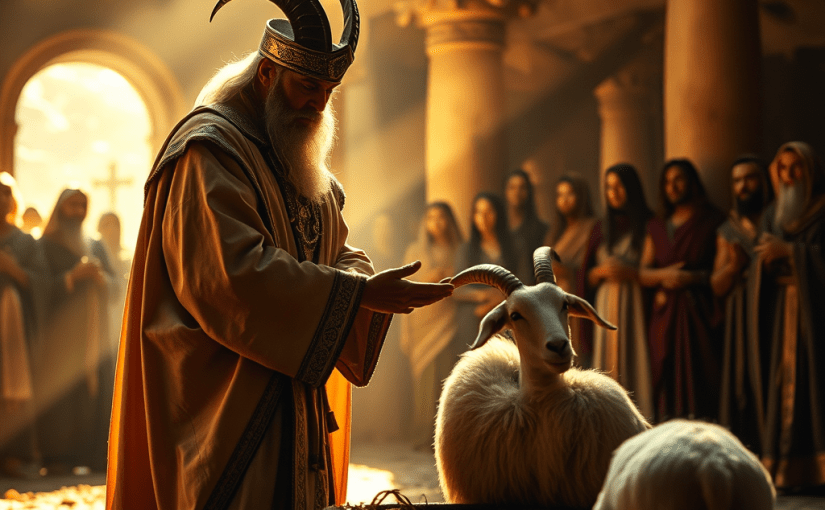
    “Scapegoat” is an interesting word. Its roots come from the ancient Jewish practice of, once a year, having the High Priest pray and lay his hands on the head of a goat, thus symbolically transferring all the sins of the Israelites from the previous year onto the goat, which was then banished to die in the desert. Then, everyone celebrates being cleansed of their sins – until their sins start to cause problems again.

    Scapegoating works in a perverse way in any culture because it allows all the pent-up fear, anger and hatred of that culture to be focused on a persecuted and usually defenceless and innocent minority group. It also conveniently allows the persecuting group to escape looking at their own sins as the cause of the culture’s problems and take responsibility for the culture’s flaws.

    The first step in scapegoating is to dehumanize your chosen enemy by calling them denigrating names such as ”anti-Christ.” So, they are both scapegoating the other party. Neither Trump nor Harris is the anti-Christ. They are limited human beings like the rest of us who are convinced their own point of view is right and simultaneously choosing not to see anything positive in their opponent. 

    The Trump camp has been emphasizing as their main argument that when Trump was president, there were no wars and no inflation, as if Joe Biden and Kamala Harris were personally responsible for the wars in Ukraine and Israel, and as if inflation was not a consequence of the government giving out billions of free dollars to keep the economy afloat during the Covid shutdown.

    The Harris camp has been pressing as their main argument that Trump is a fascist, and if he is elected with total legal immunity, it will be the end of women’s rights and of democracy.

    It is far too late, but it might have helped if both of them had meditated on and tried to follow Jesus, the ultimate scapegoat, who Christians claim took away the sins of the whole world by sacrificing himself on the cross. In this case, he is both the High Priest and victim of our scapegoating, both the G.O.A.T. (Greatest Of All Time) and the goat. 

    However, this approach only works if Christians do not use Christ’s redeeming work on the cross as an excuse to let themselves off the hook of owning their own sins and scapegoating as the cause of all their problems. God takes away our sins, but that doesn’t mean we don’t have to change our lives.

    Christians, and all of us, need to own how often we do not love our enemies.

Bruce Tallman is an educator of adults in religion. http://www.brucetallman.com

SCIENCE/STOICS/FEAR/LOVE

What the ancients called the ‘soul’

or the essence of personhood

emerged thru billions of years 

of converging and complex evolution

giving rise to ever greater consciousness:

matter/plants/animals/humans/

religions/sciences/Internet/smart phones/AI

but some religious people ignore common sense/

empirical science and develop utopian visions

and some scientists ignore the direction of evolution/ 

personal experience/religious wisdom

reducing humans to objects or machines

and some humanists in their quest

for self-fulfillment ignore the communal dimension/

traditional teachings about human nature –

dialogue between religion/science/humanism

is necessary for all of us to avoid our delusions

for everyone new knowledge can seem like an assault 

on our cherished idolatrous concepts –

even Einstein resisted the new knowledge

his own theories pointed to

however, he later admitted his resistance

to God playing dice with the universe

was his biggest mistake

Einstein claimed time and space are mental constructs –

its all going on in our minds, therefore

the only thing that makes things fearful is the fear itself – 

the fearfulness of things is in us not in them

as Seneca the Roman Stoic philosopher claimed

“Nothing is terrible in things except fear itself”

and Epictetus the Greek Stoic philosopher claimed

“It is not death or hardship that is a fearful thing

but the fear of death and hardship”

and Henri Nouwen the Roman Catholic mystic claimed

“Our greatest fear is intimacy with ourselves

and the greatest paradox is: 

the heart is where we are most ourselves 

and most alienated from ourselves

and since God is beyond even paradox 

and cannot be thought but only loved

we can approach God only in a cloud of unknowing.”

SECRET SOCIETIES

Spirit is not something that goes on in time forever

but rather is a Timeless Moment, an Eternal Now

a Pure Present that never ends

and is timeless yet holds all time in its hands

across the aeons, the Holy Spirit

who John MacQuarrie refers to as “Unitive Being”

has been the principle linking the macro and micro –

the Cosmic Christ and Jesus of Nazareth

Karl Marx would criticize the above as just religious philosophy

since he criticized philosophers as a group

that just interprets the world but never changes it

changing the world takes courage and persistence

which is why boys who want to become men

must go through rituals of initiation

be separated from the Mother

experience an ordeal of pain such as circumcision

in order to be admitted 

into the Secret/Sacred Society of Men

girls on the other hand are naturally initiated

into the Secret/Sacred Society of Women

through the pain of childbirth

philosophy may seem useless to some

but Integral Theory gets its hands dirty with Earth

by linking the three main schools of environmental ethics:

– the bioequality school: all creatures have equal value

– the animal rights/Whiteheadian school: not all creatures

have equal intrinsic value – there exists a hierarchy of values

– the stewardship school: those with a higher intrinsic value

have greater responsibility for taking care of all creatures

but right-wing Christians would think this was too “communal”

too close to “communism” – acting like a community of care

so, our biggest threat comes not from secular atheists 

but from fundamentalists, Protestant or Catholic

whose absolute certainty about their beliefs

based on their belief in the infallibility of scripture or the pope

has made them into a Secret Society of Religious Atheists

so secret they don’t realize what they have done 

and what they have become

because they have stripped God of all mystery.

RELIGION AND RATIONALITY

Established religion must adapt to revolution

or become irrelevant

for, authentic religion: resonates with people

consoles them in their suffering

answers their existential questions

and changes with the culture

without changing its own sacred core

this is what the Second Vatican Council (1962-65) did


Gaudium et Spes, a document of the Council

said that “All the faithful possess a freedom

of inquiry/thought/expression, freedom of the mind

in matters in which they have competence”

thus throwing the Vatican door wide open

to Catholic scholarly and intellectual freedom

however, scientists who

since the so-called “Enlightenment”

chose as their spirituality “scientism” –

the faith that only science has all the answers –

which is ironically not provable scientifically –

these scientists could not brook other spiritualities

and totally repressed them

zealots of any spirituality, including scientism

do not clear their heart

they try to clear the world –

to hate and get rid of anyone who is not of their tribe –

and the tribe is simply the ego writ large

on the other hand, traditionalism can give religious tradition

a bad name – many people have abandoned religion

because of traditionalists stuck in the past –

God is a God of the living and the NOW

moreover, the media only recognizes spirituality

as pre-rational and puts trans-rational religion –

religion which transcends the limits of rationality –

into the same garbage pail

as the traditionalists and pre-rationalists

religious faith is only a problem when it sees itself

as a means to an end such as heaven

since true faith is its own end

and means you are in heaven NOW.

BUDDHA’S DILEMMA

Science has discovered that chaos is everywhere

and has a necessary role in universal life –

chaos creates creativity –

and the consequent struggle to survive

results in unexpected benefits

when you ask “Why is my life not working?”

and discover your shadow beneath the “persona” –

the mask you and everyone wears – the “smiley face”

you can discover your True Self beneath the mask


the pharisaic equation: holiness = perfection

results in denial of the shadow

so the shadow functions autonomously

and, having a mind of its own

comes out sideways and causes scandals

when those attempting to be righteous

least expect it – they find themselves

with their pants down

in the glaring light of publicity

which exposes their shame

for all to see


Descartes was a philosopher

who never faced his shadow –

he lived totally in his head –

nothing is more alien to shadow-work

than Descartes’ famous dictum –

the foundation of western philosophy –

“cogito ergo sum” – “I think therefore I am” –

the statement of an alienated being

so divorced from his True Self

that he must seek proof of his own existence

in the fact that he thinks


Buddha long ago went a step further –

feeling the idea of “atman” (self) –

the foundation of Vedic beliefs –

was responsible for the corruption of Vedic priests

and the underlying caste system

which caused untold suffering of millions –

so Buddha taught “anatman” (no self) –

there is no separate/individual/independent self –

and so Buddhists started worshipping “emptiness”

until Buddha found that was worse than worshipping atman.