On God and Suffering: Dialogue with an Atheist

After completing his PhD in religious studies, my friend Leon became an atheist! 

    After that, he and I got into debates over the existence of God that would rage on for whole weekends, but it all seemed to get down to the problem of suffering. Given the wonders of our world, belief in a Creator would be easy if it were not for all the suffering. 

    Here is a summary of Leon’s toughest questions and my best answers on God and suffering.

Leon: How can you believe in a good God when there is so much suffering and evil in the world?

Bruce: I believe good is foundational, and suffering and evil are secondary. Evil is always only a corruption of something that was originally good. For example, illness is a corruption of original health. War is a corruption of original peace. God created everything good in the beginning. Good, not evil, is the bottom line in life.

Leon: If God is the Creator, God is the cause of everything. God must, therefore, cause suffering. 

Bruce: God does not want or cause suffering and evil. Secondary causes, that is, natural laws and human freedom, cause suffering. So that we would not live in chaos, God created the laws of nature, which normally serve us well. 

    However, nature blindly follows its laws, much as an avalanche obeys gravity, whether humans are in the way or not. Also, you can’t have true love without freedom of choice, so God created humans with free will. But sometimes, we make wrong choices and sin. If most of the suffering in the world is caused by our wrong choices, the question is not “How can God allow suffering?” but rather “How can humans allow it?”

Leon: If God does not want suffering, what does God do to alleviate it? I don’t think God cares.

Bruce: The Bible teaches us how to overcome evil and suffering by obeying God’s laws. It also teaches us that we can call upon God at any time for help with suffering and that true happiness lies in having a loving relationship with God.

Leon: But if there is a loving and all-powerful God, why would there be any suffering?

Bruce: Paradoxically, although suffering is the main reason people don’t believe in God, God is the ultimate answer to suffering. If there is a loving and all-powerful God, then suffering must make sense, although we may not immediately understand it. Trust in God’s goodness provides hope in the midst of suffering, thus eliminating the worst suffering, that is, meaningless suffering.

Leon: I still think there is more suffering than good, which disproves there is a loving God.

Bruce: Beyond foundational goodness, there is “secondary goodness”, that is, our response to suffering. This is how all the helping professions arose: medicine, law, psychology, social work, etc. All progress is a response to suffering. Good abounds, and God is in charge.

Leon: But if there is a loving God who is in charge, why would he allow suffering?

Bruce: God does not normally allow us to suffer and only allows suffering and evil so that higher values and attitudes such as humility, compassion, forgiveness and wisdom might emerge.

Leon: I still don’t see a God anywhere out there helping us with suffering. Where is God anyway?

Bruce: God is invisible, but we can see that God has created us with great defences against suffering. Everyone comes with some built-in, standard equipment: a brain, the greatest problem-solver in the world, and the human spirit, the great urge to fight against suffering. 

    God has also given us people who aid us in avoiding suffering and who are great supports when we do suffer: parents, spouses, and friends. Through people and angels, God either protects us from suffering and evil or helps us to get through it. God comforts us, encourages us, carries us through suffering, and works with us to bring secondary goodness out of suffering and evil.

Leon: I still don’t think God actively cares. God just sits up there and watches us suffer.

Bruce: The Christian belief is that God suffers when we suffer. If God is everywhere (including within us) and knows everything, and we are God’s children, then God knows and feels our pain. God is not some detached sky-god. The Cross is the great symbol that God suffers with us.

Leon: Suffering is so horrible, though. Life is so hard and so meaningless. What’s the point of it?

Bruce: Christ on the Cross transformed suffering, showing that suffering can have meaning. He showed us that to suffer for others is the deepest love.

Leon: I still don’t think there is any final answer to suffering.

Bruce: Often, all you can do is accompany the suffering person, not give them your answers, but if there is a final answer, it is that God overcomes all suffering in heaven forever. God gives believers ultimate and eternal joy, peace, happiness, and love. Things began as “very good” (Genesis 1:31), the end is even better, and the middle is good in spite of negative news reports. All is well that ends well, but you have to have faith to see the goodness of God in all things.

Bruce Tallman is a spiritual director and author: http://www.brucetallman.com
Is Trump or Harris Anti-Christ or Scapegoat?

Kamala Harris has been accused by Trump of being the “anti-Christ.” Subsequently, some of his followers have argued that Harris, if elected President of the United States, will be responsible for the slaughter of millions of children as she tries to get Roe vs Wade reinstated. She has also allowed millions of illegal aliens to flood across the US border, and they are all rapists and murderers.

    On the other hand, the Harris camp points out that, in the Christian scriptures, the devil is called the “Father of Lies,” and Trump is seen as an unrepentant liar. He has deceived half the population of the United States with his lies, spews racism and hatred, is obsessed with power, wants to be the most powerful person in the world, and tried to destroy democracy by inciting the January 6 attempt to overthrow the US government.

    In either case, although both claim to be Christian, they are promoting the exact opposite of Christ’s teaching to “love your enemies.” They both are preaching the anti-gospel by demonizing their opponents.

    Rene Girard (1923-2015), a French philosopher, claimed that whenever things go wrong in a society, the political leaders will try to gain or hold onto power by scapegoating some group, that is, proclaiming the group is the cause of all the society’s problems. Therefore, the solution is to banish or kill off that group, and then all will be well again. This was Hitler’s basic strategy in the Second World War: the Jewish race was the cause of all of Germany’s problems and, therefore, must be eliminated.

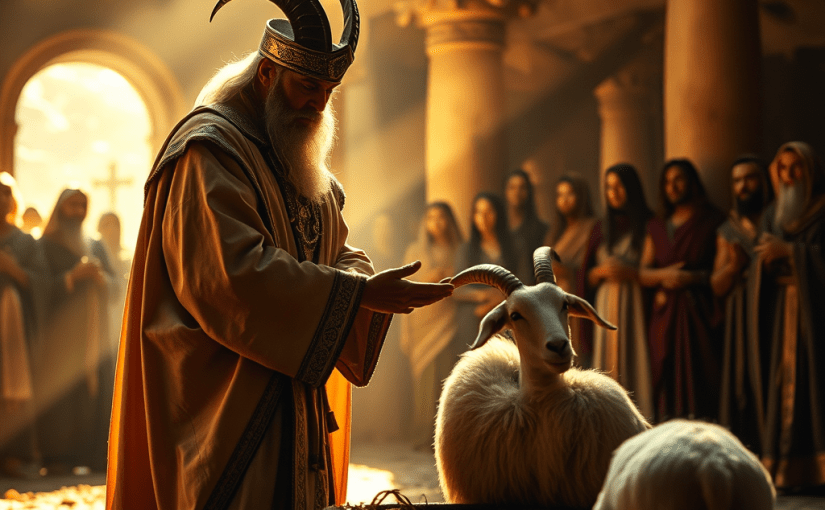
    “Scapegoat” is an interesting word. Its roots come from the ancient Jewish practice of, once a year, having the High Priest pray and lay his hands on the head of a goat, thus symbolically transferring all the sins of the Israelites from the previous year onto the goat, which was then banished to die in the desert. Then, everyone celebrates being cleansed of their sins – until their sins start to cause problems again.

    Scapegoating works in a perverse way in any culture because it allows all the pent-up fear, anger and hatred of that culture to be focused on a persecuted and usually defenceless and innocent minority group. It also conveniently allows the persecuting group to escape looking at their own sins as the cause of the culture’s problems and take responsibility for the culture’s flaws.

    The first step in scapegoating is to dehumanize your chosen enemy by calling them denigrating names such as ”anti-Christ.” So, they are both scapegoating the other party. Neither Trump nor Harris is the anti-Christ. They are limited human beings like the rest of us who are convinced their own point of view is right and simultaneously choosing not to see anything positive in their opponent. 

    The Trump camp has been emphasizing as their main argument that when Trump was president, there were no wars and no inflation, as if Joe Biden and Kamala Harris were personally responsible for the wars in Ukraine and Israel, and as if inflation was not a consequence of the government giving out billions of free dollars to keep the economy afloat during the Covid shutdown.

    The Harris camp has been pressing as their main argument that Trump is a fascist, and if he is elected with total legal immunity, it will be the end of women’s rights and of democracy.

    It is far too late, but it might have helped if both of them had meditated on and tried to follow Jesus, the ultimate scapegoat, who Christians claim took away the sins of the whole world by sacrificing himself on the cross. In this case, he is both the High Priest and victim of our scapegoating, both the G.O.A.T. (Greatest Of All Time) and the goat. 

    However, this approach only works if Christians do not use Christ’s redeeming work on the cross as an excuse to let themselves off the hook of owning their own sins and scapegoating as the cause of all their problems. God takes away our sins, but that doesn’t mean we don’t have to change our lives.

    Christians, and all of us, need to own how often we do not love our enemies.

Bruce Tallman is an educator of adults in religion. http://www.brucetallman.com

Understanding God: Beyond Fundamentalism

Dear Friends,

On October 12 the London Free Press published my article below under the title “Broad interpretations of God are important”

It is 670 words, so when you have 2 minutes, why not give it a quick read?

Blessings and peace,

Bruce Tallman

Spiritual Director

www.brucetallman.com

Fundamentalists need a broader interpretation of God and scripture

     It is important for contemporary Christians to have a broad interpretation of God, Jesus, scripture, and theology since fundamentalism can be a dangerous force in our world, denying science, evolution, vaccines, and climate change.

    In this regard, it is important to understand that God is both apophatic and cataphatic. Apophatic means God is beyond human understanding, while cataphatic refers to the concrete, understandable dimension of God. The primary example is God becoming human in Jesus, so we would have some way of understanding the apophatic God. 

    Christians need to hold onto both these dimensions. If you lose the apophatic dimension, you can become arrogant in your certainty about God and believe you must force your narrow understanding on others. But if you lose the cataphatic dimension, God becomes completely unknowable, and you may as well stop talking about God.

    A third important dimension of God is the Holy Spirit, who is incarnate in every person as love, wisdom, joy, peace, and humility. Wherever you find those spiritual qualities, whether in Muslims, Hindus, Buddhists, humanists, or atheists, the divine Spirit is present, leading them to a closer relationship with God. They don’t need you to convert them, God is already doing it..

    People who believe in the supremacy of scripture usually mean the supremacy of their own interpretation of scripture. So, to avoid fundamentalism, it is important to realize that scripture is interpreted in many ways. 

    The Bible did not fall out of the sky. It came to us through a church, and there is no historical break between present-day Catholicism and the early church. Christ gave Peter and the rest of the apostles the authority to properly interpret scripture when he said, “You are Peter, and upon this rock I will build my church, and the gates of hell shall not prevail against it” (Matthew 16:18).

    Catholic bishops, the apostles’ successors, then organized early church councils that decided which books should go in the Bible and which should be excluded. The New Testament is a Catholic document.

    However, Catholicism recognizes the supremacy of everyone’s conscience. You should study church teaching and Catholic interpretations of scripture before making moral decisions. However, if you cannot agree in good conscience with these sources, you are free to follow your own conscience. You are ultimately accountable to God, not to the Catholic church. 

    Also, many fundamentalists subscribe to a narrow fall/redemption theology which many theologians now disagree with as it ignores the first and second chapters of the Bible, where God created humans and everything as “very good” (Genesis 1:31). Instead, this theology focuses exclusively on the third chapter, the fall of humans into evil, and the redemptive work of Jesus on the cross, which conquers our fallenness.

    In addition to scriptural narrowness, fall/redemption theology gives us a horrific picture of God – a God who is wrathful, violent, and demands blood and death, or his anger won’t be satisfied, a god who consigns people to eternal torture if they don’t believe in this narrow theology. A different interpretation is that we create our own hell by our bad decisions.

    Fall/redemption theology also lets Christians off the hook—they don’t have to change their lives to be saved. All they must do is believe in Jesus’s redemptive sacrifice on the cross. This diminishes Jesus’s life and teachings, which are often ignored, and which accounts for the hypocrisy and failure of many Christians to follow Jesus genuinely.

    A poster in my home office says, “Why and from what does Jesus save us? To form a more perfect world, Jesus saves us, by example, from living only for ourselves.” This requires interaction between God and humans; we cannot do it alone.   

     However, as scripture says, “faith without works is dead” (James 2:17-26). God gives us faith, but we must do the work. We are saved by following Jesus’ example of loving God and others. Jesus says, “Do this, and you will inherit eternal life” (Luke 10: 25-28).

Bruce Tallman is a London an educator of adults on religion. http://www.brucetallman.com

EVOLUTION AND CONSCIOUSNESS

Dear Friends,

On September 7 the London Free Press published my article below under the title “Evolution leads to cosmic consciousness”

It is 689 words, so when you have 2 minutes, why not give it a quick read?

Blessings and peace,

Bruce Tallman

Spiritual Director

www.brucetallman.com

Mystics give us a bigger vision of where we are evolving

    Sri Aurobindo was a Hindu mystic. Teilhard de Chardin was a Christian mystic. They never knew of the other’s work. Despite this, they both came to the same momentous conclusion. The direction of evolution is toward divinization. This means God is fully alive in every human being.

    In books like The Future Evolution of Man (Aurobindo) and The Phenomenon of Man (Teilhard), they both outlined the earthly process. It moves from rocks and water (matter) to plants (sensitivity). Then it progresses to animals (feelings), leading to humans (thought). Finally, it reaches the spread of the great religions (spirit). The goal of evolution is greater and greater consciousness, from matter to spirit. We are heading towards God (Cosmic Consciousness) being all in all.

    Of course, since we have free will, if we choose hate and war over love and peace, we could destroy ourselves. The planet might be destroyed with us. Divinization is not a guaranteed process.

    In the past one hundred or so years new technologies such as radio, television, Internet, smartphones, and now artificial intelligence have been growing our consciousness at light-speed. These are all new stages of the world-wide evolution of humanity.

    Mystics and scientists have come to the same conclusion: everything is interconnected and one. The pandemic also forced unitive thinking on us: we are all in this together. As well the climate crisis forces us to see our interconnectivity: our energy use affects everything else.

    Richard Rohr, a Franciscan priest, has written about order, disorder, and re-order. For hundreds of years white males have dominated the planet, making decisions affecting everyone. The modern means of communication, particularly the Internet, have gradually dissolved this domination, allowing suppressed voices to speak: women, blacks, indigenous, and LGBTQ2SA+ people. All these new voices have also expanded our consciousness. Domination by white males is rapidly becoming a thing of the past.

    Our consciousness is expanding. We are now aware of stages of faith. The group stage loves order and simply believes what others say. The personal stage loves asking questions and deconstructing everything, particularly religion. At this stage people often feel they are losing their religion and leave their church, synagogue, mosque, or temple. This stage however is in danger of getting stuck in disorder. And disorder is the case for many young people today – they have never experienced even the group stage of faith and so have no spiritual foundation to build their lives on. 

    The final stage of faith is mysticism where you accept that those previous stages had their role to play. As Rohr says, you need somewhere to discover that some things are holy, and church is a good place to start. But the mature person grows their consciousness beyond that and eventually realizes that everything is holy: every creature is a face of God. The local church still has a role to play however: starting people on the road to oneness, holiness, justice, and mysticism.

    White male domination now senses that all these new voices are creating disorder and is trying to re-establish their authority and order, for example, “Make America Great Again,” or by arch-conservative bishops in the Catholic church trying to take the church back to the 1950s, before Vatican II (1962-65), which they perceive as disorder. But history always works as a spiral: two steps forward, one back, but ever onward (unless we destroy it).

    The Spirit of God is moving us inexorably towards re-order – towards unity, mysticism, and justice for all voices. This is what people like Aurobindo, Teilhard, Thomas Merton (a Catholic monk), Rohr, Matthew Fox (an Anglican priest), Brian McLaren (a Protestant minister), and Ilia Delio (a Franciscan sister and expert on Teilhard), advocate in their many books.

    Pope Francis also advocates this in his attempt to make the church “synodal,” that is, one where lay Catholics have a voice in church governance, not just priests and bishops. Despite this being opposed as disorder by some bishops, the church will likely continue on its road to inclusion, unity, and mysticism as this seems to be where God is leading it, and all of evolution.

Bruce Tallman is a London spiritual director and religious educator of adults. http://www.brucetallman.com

Repentance and Glory: Transformative Christian Values

Making room for not knowing

is more important than certainty –

we think something is going to bring us pleasure

or misery/be a disaster or a great adventure

but we really don’t know

one thing we do know for certain:

inferior goods such as silver and gold/

temporal honors and power

have their temporary delights

but they are nothing compared to God

who made them all –

true delight and joy rests in God

“Ultimate Reality is at hand –

change your mind and believe such good news!”

– Richard Rohr’s translation of 

“The kingdom of God is at hand

repent, and believe in the gospel” (Mark 1:15)

to repent is to change your mind –

to be baptized into Christ’s death and resurrection

means that you have died to the values

of the Roman or American Empire

and been born into Christian values

of peace/charity/justice/nonviolence

which sometimes involves suffering like Christ 

who said to Francis of Assisi

“I have given you the stigmata

the five wounds in my feet/hands/side

the emblems of my Passion

so that you may be my Standard-Bearer”

but Francis tried to hide these wounds

which in truth were his glory

but then again, God hides God’s glory:

“God’s glory is to be in all God’s creatures

giving them their being/breath/everything

living in their midst as unknown

for if we could see how unlike our glory

is to God’s glory

we would die for love of God.”

– Thomas Merton

Three Truths of Wisdom: Confucianism and Christianity Explored

Confucian wisdom has three components:

cultivation of the person

meaningful action nourished by heavenly splendor

harmony of one’s wisdom with the wisdom of others

Christian wisdom knows the soul needs three truths:

knowledge of God’s goodness

knowledge of self

cure for the world’s woes in constant/humble/prayer

in Confucianism, filial piety

does not equal blind obedience/subservience

to age and authority –

a son will correct his father 

when he knows his father is wrong

similarly, the minister will correct the prince 

when the prince is wrong

in Christianity the beginning of wisdom 

and nondual consciousness

involves seeing not only the goodness of things

but also their weakness/failure/dark side

the ‘prosperity gospel’ on the other hand

tries to see only the good side of things

and divides everything into either/or

good/bad – there is no realism/

no middle ground

and so the ‘prosperity gospel’ weaves 

Christianity and the American dream of wealth together

breeding fanaticism and unbalance

the Second Vatican Council (1962-1965)

recognized that the institutions/laws/

modes of thinking of earlier generations

were not well adapted to contemporary realities

but the Council Fathers/Bishops/Archbishops

wanted to aid those trying to preserve three truths:

the holiness/natural dignity/greatness

of ordinary life and its superlative value

much as Confucianism does.

Spiritual Warriors: Beyond Patriarchy and Pleasure

In medieval royal courts, the joker/jester

was seen as a symbol of Christ –

pricking the balloon of patriarchal pomposity

overturning people’s applecarts

and worldviews –

Christ was and still is the glittering joker

dancing in the dragon’s jaws –

laughing at the precariousness of life

when Eternity is at hand

when we let go of patriarchy

we do not abandon ourselves to evil

we come home to a relational God

who created relational human beings

who enjoy pleasure

but “If we abandon ourselves to pleasure alone

the pleasure principle leads to despair 

since life becomes meaningless” 

– Seneca, Stoic philosopher

we also need to reclaim the warrior archetype 

from the military

we need to fight against the war machine and injustice

for the true warrior is spiritual –

true mystics and prophets are spiritual warriors

Mohammed was a spiritual warrior

and, by the grace of God, a genius of literature –

it is not just the message

but the fusion of poetry and prose

that makes the Quran a masterpiece

Mohammed, like Moses and Jesus

created not just a ‘revival’ but also an ‘awakening’ –

revivals are personal/emotional conversions 

of individuals –

awakenings are cultural revitalizations

that restructure not only social institutions

but also the very purposes and goals 

of civilizations.

The Cosmic Christ: Love as the Universe’s Creative Force

“Passion is the true stuff of the universe –

erotic attraction is the primary creative force in the universe –

the universe itself is erotic” – Teilhard de Chardin

the reason for the Incarnation was love not sin –

the primacy of Christ comes before the primacy of sin –

“All things have been created through and for the Cosmic Christ –

he is before all things and in him all things hold together” – Col. 1:16-17

– particularly in Eastern Orthodoxy

many theologians disagree with Anselm’s notion 

that sin is the primary reason for the Incarnation

“Jesus, the Cosmic Christ incarnate

is our only source of information about divinity –

if anyone wants to know what God is like

or what God might do, they can look at Jesus 

this is what it means to accept Jesus as our God” – Albert Nolan

love and wisdom are gifts of the Spirit of God –

the love of God is poured into us by the Holy Spirit

and love leads to wisdom

which transcends reason –

“The heart has reasons of its own” – Blaise Pascal

the spiritual journey means moving

from unconscious to conscious loving –

the Christian ‘Way’ (Tao) as Christ showed us

is loving others in our daily lives

and to the degree that we love

God makes us whole/healed/holy

Rumi said “Make friends with your emotions”

this simply means give negative emotions 

your whole-hearted attention

rather than being ignorant of them

denying or struggling against them 

feeling guilty or ashamed of them

which gives them power –

once you give them your full attention

you discover their insubstantial nature

and dissolve their power over you –

you are free to fully love the Whole Creation.

Understanding Spirituality Through Great Thinkers

Martin Buber was the great spiritual interpreter of relationships

Gustavo Gutierrez of liberation

Karl Rahner of ordinary experience

Paul Tillich of cultural trends

Ken Wilber of everything

Wilber and Tillich:

everyone has a spirituality: an ultimate concern:

– archaic spirituality (food/sex/survival)

– magic spirituality (rituals/voodoo/Santeria)

– mythic spirituality (fundamentalism/literalism/exclusivism)

– rational spirituality (reason/materialism/science)

– pluralist spirituality (postmodernism/relativism/skepticism)

– systems spirituality (deep ecology/Gaiaism/interconnectedness)

– integral spirituality (inclusivism/developmentalism/

inner and communal transformation)

Buber: “Spirituality and life is about community 

not the lone individual”

in a Christian society, people produce goods and services

for the good of all/the common good

not for the profits of the owners

all work is done for a transcendent purpose:

building the kingdom/queendom/kindom of God 

where all people and creatures are taken care of

However, Christianity is not the only place of God’s rule:

Chakravartin, the universal Hindu king in India

Ashoka, the first Buddhist monarch in Buddhism

Shih Tuang Hi, the first Taoist emperor of a united kingdom in China

all governed by Heaven’s Mandate

under Heaven’s Law

so Mother Teresa taught her sisters

never to try to convert a Muslim/Hindu/Buddhist

by talking about Jesus

or promoting Christianity

but rather by being Jesus to them.

Unity Consciousness in Spiritual Experience

If you are spiritual you cannot ignore the flesh

you cannot pretend we don’t need the body

to live/breathe/move/see/hear/think/contemplate God

without the body and its senses there would be no spirituality

contemplation allows us to connect scriptures to life

to see how the God who liberated the Israelites

from slavery

wants to liberate us 

from slavery

to addictions/codependency/consumerism/victimhood

however, “Shame and aggression are central

in the human psyche, particularly men –

and these are the universal ‘original wounds’

not ‘original sins’ – and they are hard to shake”

– Otto Rank

but prayer heals

and translates religion/doctrines/dogma

into vital spirituality

and we pray in the first person

subject-to-subject

our soul to God’s soul

we say, “Lord, I am sad/joyful” 

not “Lord, he/she/it is sad/joyful”

Carl Jung’s personal myth of meaning

which he also found expressed in the Western Mystics

was the myth that God needs us 

to become more and more conscious

so that God can become conscious of the whole

which is what the Spirit is leading us to

the core of spiritual experience 

is the same in all religions:

unity consciousness

which is not a phantasmagoric mystical experience

but rather a life-changing sense 

of the unity of all things –

no more separation

we are all one

with God/others/ourselves

the whole Creation.