PROPHETS CRYING

In The Integral Vision, the greatest book of the 21st century

because it puts all knowledge together in a single system,

Ken Wilber asserts that all human potential

can be simplified to five essential elements:

quadrants (I/We/It/Its)/ levels (of consciousness)/

lines (of development)/states (of experience)/

types (of personality) which are existential realities

not theoretical concepts – we can experience all of them


similarly, all Christology has to be experiential

not just academic because prophetess Ilia Delio claims

all mystics arrive at a profound experience

of Christ in the universe – Christ experienced in daily life

as millions of believers testify


by the end of the 17th century our experience

of our place in the cosmos had radically shifted:

humans no longer occupied the center of the universe

and since spots were discovered on the surface of the sun

we knew the heavenly realm had blemishes

and so the heavenly and earthly realms

were no longer distinctly different –

there was no longer “a perfect realm up there”

versus “an imperfect realm down here”


Pierre Teilhard de Chardin was a prophet

crying in the wilderness of a scientific/evolutionary age

“Make way for the Lord”

as well as a Desert Father

working lifelong in China’s vast deserts

telling us about new ways to look at Christ

which the Church had difficulty embracing


staunch Catholic tradition was unbroken/unbreakable

and behind/underlying/in front of contemporary Catholicism

Franciscans today carry on the tradition of St Francis of Assisi

and Catholic philosophers wrestle today

with similar problems to St Thomas Aquinas –

 spirituality and religion still search for the sacred

not ego-based values of health/happiness/success

but for a person/law/principle that transcends the self –

spirituality in the world but not of the world

not purely imminent pantheism nor purely transcendent theism

but imminent and transcendent panentheism –

prophets still cry for the human/God or God/human.
BEING/EMPTYING VS SUFFERING

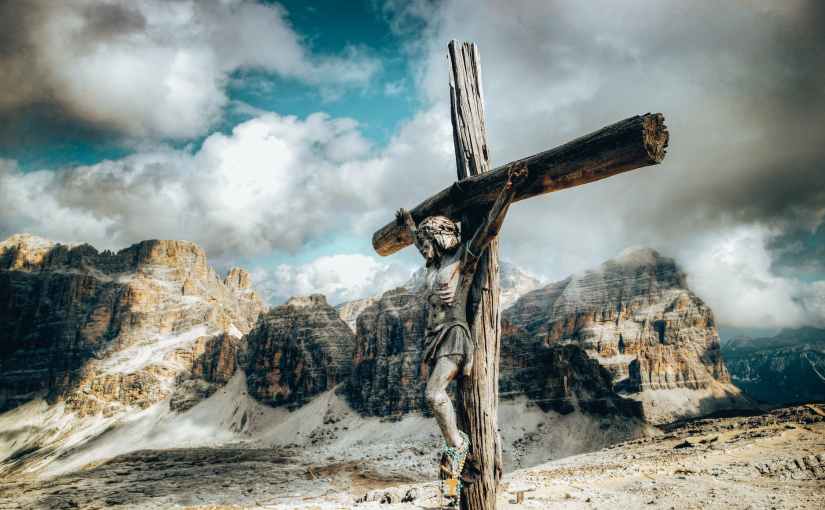
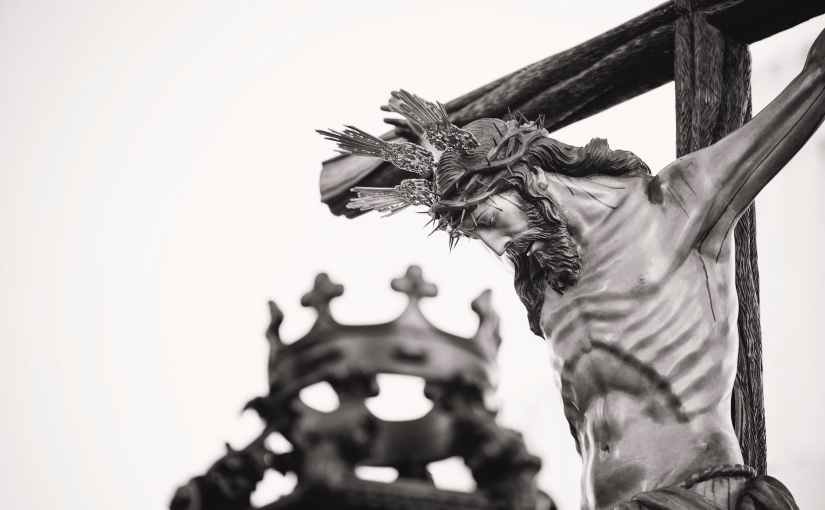
The Cross and Resurrection are the Christian solution

to the problem of evil – this is far more satisfying

than Carl Jung’s solution of making evil part of God

Zen Buddhists love the “kenosis” passage (Philippians 2:7)

where Christ empties himself – even to death –

death on a cross –

because Zen is all about emptying oneself 

of all attachments/passions/thoughts

and learning to just sit for hours or days

to “waste time with God”

as Christian monks call it –

like old friends who don’t need to speak

they just enjoy BEING together –

this is all God asks of us: “Please BE with me” –

“To just BE alive is sacred, to just BE is holy”

– Abraham Heschel

besides emptying, part and parcel of Zen  

is awareness of suffering

caused by peoples’ unmindful speech/inability to listen

Buddhists therefore vow 

to cultivate loving speech/deep listening 

that alleviates suffering

the intellectual nature of the human person 

is perfected by wisdom 

for the intellectual drive 

is not confined to observable data alone – 

wisdom gently leads all our drives 

beyond the visible world to what is invisible –

what is honestly true/honestly good

without this humble inner quest

without interior spiritual integration

even something as spiritual as a pilgrimage

can turn into a divisive/destructive/alienating journey

just as forsaking of self/emptying of ego 

unites you to God

so giving up external things

brings you peace.

UNIVERSAL COMMUNION

With relativity and quantum mechanics

scientists began to see the oneness of all things/

got rid of former Newtonian dualisms/

such as separation of observer and what is observed/

came to see the whole

as energy penetrated by consciousness

just as all mystics do –

science started to catch up with mysticism!


“God creates light/dark/well-being/woe –

there is only one God

not a god who creates light and well-being

and another god who creates darkness and death

as in dualistic Manichaeism”

– Deutero-Isaiah


the Center of the World which unites all things

may be the Tree of Life

or the World Navel

or a Cosmic Human

like Buddha or the Son of God –

wherever the Energies of Eternity

break into the Everydayness of Time


we need some kind of mythology/deep truth to live –

Carl Jung’s personal mythology of meaning

expressed also in Western mystics

was that God made us

to become more and more conscious

so that God could become more and more conscious

and more fully penetrate the whole Cosmos


Jung’s view was that the future of Christianity

lay in the realization of the Cosmic Christ within each person –

this involves not making a person into a “God”

but rather helping them to consciously discover

the True Self/Christ-Self within each one of us


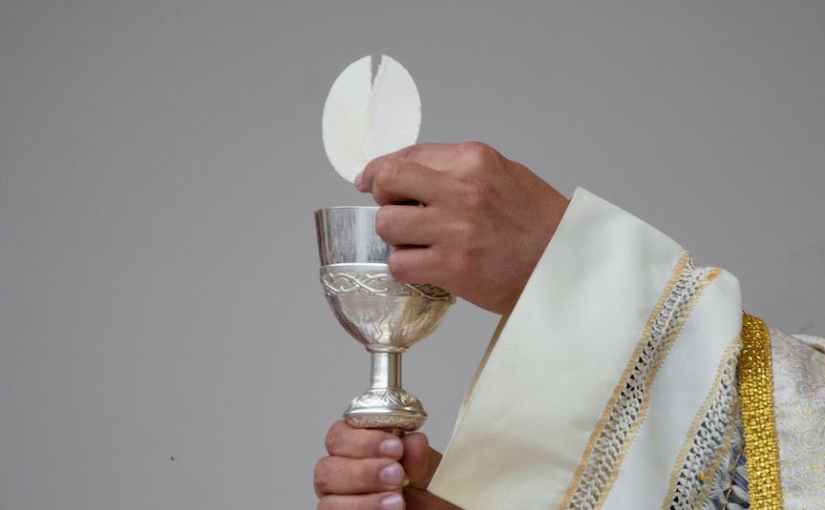
 thus the bread and wine are not just symbols –

they contain God/Ultimate Reality/the Ground of All

just as we do –

the Church calls us to mindfulness in the Eucharist –

that God is in the Eucharist

just as God is in us.

LIGHT IN A DARK AGE

Thanks to the 18th century philosopher David Hume

we have made believing into a technocratic thing

having to do with true or false opinions:

“I believe (or do not believe) in climate change” –

belief now has nothing to do with trust/relationship/heart

“Believing is a modern concept and the great heresy

of the church today” – Wilfred Cantwell Smith


blasphemy is usually thought of as taking God’s name in vain

but it could include priests blessing nuclear weapons/

imams indoctrinating youth into political martyrdom/

religious leaders like Joel Osteen living in palaces/

being multi-millionaires/with private jets –

just like Jesus


we can only grasp the meaning of Christ today

and what is heresy and blasphemy

thru the lens of the evolution of human consciousness

to a new level thru technology/television/the Internet

facilitating world-wide consciousness


for example, Afro-American theology finds solidarity

with liberation theology/liberation movements

in Asia/Africa/Latin America


God is always connected to humans/the world/the cosmos

and in medieval times anthropology/theology/cosmology

were all one


however, since Copernicus and Galileo’s heliocentrism

the cosmology has changed and traditional ideas

of humans and God have been marginalized

to the point where we now live on an infinitely small dustmote

called “Earth” spinning in a vast godless cosmos


but there is light at the end of the Dark Age –

marks of a coming Interspiritual/New Axial Age:

  • friendships between many in various religious traditions
  • promotion of world-centric consciousness thru climate change
  • a vision of humans as one life form connected to all others
  • widespread receptivity to meditation/contemplative practices


The Cosmic Christ is not done with us yet.


DRAWING ALL THINGS TOGETHER


Ken Wilber’s Integral Philosophy includes everything:

“I” equals self and consciousness

“It” equals body and organism

“We” equals culture and worldview

“Its” equals social systems and environment


Jesus also included everything:

he saw humans as creatures alongside other creatures

flowers/sparrows/foxes – Jesus saw humans as a very important

part of nature but not above or separate from it:

“All things bright and beautiful

all creatures great and small

all things wise and wonderful

the Lord God made them all”

– United Church of Canada children’s hymn


John Macquarrie, the great Anglican theologian, used objective natural law

to challenge the relativism/subjectivism of existentialists –

there needs to be a dialectical tension between subjective authenticity

which Buddhism/Confucianism/and particularly Jesus advanced

and objective/public/universal values derived from nature and its laws –

we need to include both subjectivism and objectivism


the Church and its sacraments were meant to be divine invitations

to meaningfully explore how everything is interconnected/related

but sometimes it devolves into just an institution

with rituals that command legal observance

and the objective dominates the subjective


it was Ambrose’s ability to subjectively/symbolically

interpret Old Testament passages about violence

Augustine had taken objectively/literally

that began to create cracks in Augustine’s Manichean/

anti-Catholic stance until he was converted to the Church


the objective physical sciences may see the movement of evolution

towards greater complexity and consciousness

as biogenesis or cosmogenesis

but in subjective Christian terms it is Christogenesis

the coming to be and unfolding of the Cosmic Christ


the Church as the Universal Beloved Community was meant to be

the instrument of, and integral to, Christogenesis

the drawing together of all creatures and all things–

the I/It/We/Its.

RELIGION TRANSCENDS REASON

Life and religion are deeper than rationality

and Christianity is not the only seemingly irrational religion:

“The first/most elementary fact about Zen

is its abhorrence of the dualistic division

between matter and spirit – body and soul are one.”

– Thomas Merton

Many of the beliefs of Christianity can be fully understood

only by contemplatives who know nondual consciousness

and its paradoxes: “Jesus is fully human and fully divine”

“Mary is both virgin and mother”

“Bread is still bread and yet it is Jesus.”

No wonder this faith seems irrational to the secular mind!


Bernard Lonergan, a brilliant Canadian theologian

thought it was ironic that scholastics exaggerated

the objectivity of truth since Thomas Aquinas

the Father of Scholasticism thought truth

was in the mind of God and in human minds

so Lonergan spent his life’s work emphasizing

the importance of subjective experience –

the internal mental processes by which we discern truth.


The truth of most spirituality tells us

we have forgotten who we are

therefore the main task of religion is to remind us

that we are original blessings: daughters and sons of God.


“Without God, what am I

except a guide to my own self-destruction.”

– Augustine


Naskapi Indians have always been guided

by their “Great One” – their soul

who appears to them in their dreams

and instructs them about when to hunt or lay low.

Lies/dishonesty they have found

drive their Great One away

and honesty/generosity draw the Great One near.


This shows the Cosmic Christ like life itself

transcends rationality and can be contemplated and found

in the joy of everything/everywhere/everyone

all at once.


WHAT CONTEMPLATIVES KNOW

God is real, unlike the mythical gods

who have no existence at all.

But God is no body and no soul

God is the life of the soul

which is the life of the body –

God is the Life of lives.


Until the 1960s, people were taught meditation

as an exercise of the rational mind

drawing upon the three powers of the soul:

memory/understanding (reason)/will.

There was no training in contemplation –

the experience of the living God in silence.


The contemplative person eventually realizes

s/he no longer knows what God is

because God is not a thing but a Thou

who constantly says “I AM”

which allows me to constantly say “I am, too!”

God makes me real.


All the contemplative knows is: God is Love –

the core energy of evolution and its goal.

Love-energy is the most universal/tremendous/

mysterious of all cosmic forces –

“The physical structure of the universe is love” –

Teilhard de Chardin


But what gets in the way of love is anxiety –

“Anxiety is the greatest evil that can befall a soul, except sin” –

Saint Francis de Sales


To combat anxiety we need to stay focused on God

particularly the Incarnate God, the Christ

who shows us “Perfect love casts out fear” (I John 4:18).

Indeed, the hymn in Colossians 1: 15-20 makes Christ’s divinity

as great or greater than the prologue of John’s Gospel

(John 1: 1-18) which declares that

Jesus is not only God

as the Cosmic Christ

He created the whole cosmos

and is its goal: The Beginning and the End –

the Alpha and the Omega.


STATES OF CONSCIOUSNESS/UNITY/LOVE

Brother Teasdale, a monk mentored by Bede Griffiths

had a vision that nondualism would create

a Christian Renaissance.


Beyond that, Ken Wilber believed

the great Wisdom Traditions: Christian Mysticism/

Vedanta Hinduism/Vajrayana Buddhism/

Jewish Kabbalah/Islamic Sufism could be united

in seeing the three ordinary states of consciousness

waking/dreaming/deep sleep

as treasure troves of spiritual awakening

if we learned how to utilize these common states.


Beyond even that, unity could go beyond this world

to what Anthony Burgess refers to as “exoChristianity” –

assuming there are trillions of Earth-like planets

outside our solar system and assuming

there would be intelligent life on many of these “exoplanets”

which would be fulfilled in unique incarnations

of the Cosmic Christ, then the primacy/significance of Christ

would be raised to a new level.


Radical amazement at all this results in contemplation

which catches us up in the Love of the Creator

who lavishes love in us/on us/around us/as us.


By its very nature, Divine Love begets

institutions like marriage and churches which are ordained

toward the embodiment and spreading of Love

in procreation and spiritual education of children

who are the ultimate crown

of any healthy institution.


The Love of God is in life-giving individuals and couples

and points towards eternal life as the whole coin

of which death is just a small part – there is physical dying

but no eternal death – everything and everyone is energy

that goes through multiple states: life/death/rebirth

and can never be destroyed.


EASTERN AND WESTERN WAYS TO GOD

Buddhists should not leave the Sangha, the community

just like Christians should not leave the Church

for it is hard to practice the faith without others.

The Sangha has arhats similar to Christian saints –

both arhats and saints can help us live fully.


But Sangha and Church leaders can serve or dominate you –

dominator hierarchies such as caste systems

exploit people and prevent individual/collective growth.

Growth/developmental/actualization hierarchies

lead humans from ego/ to ethnic/ to world/ to cosmos-centrism.


Many people, particularly men, are stuck in their lives:

afraid of introspection/pleasure/repressed emotion

disconnected from their bodies

asleep in patriarchal theocracies

but starting to wake up to their vulnerability/sensitivity.


Fear of being human

and information overload, a total head trip

is making Western Civilization neurotic –

the Asian belief in the richness of silence/

wordless wisdom/human wonder

is necessary and appealing

but fast disappearing.


However, bad discontent and good discontent exist in the West –

discontent with never having enough possessions/

always wanting more

and discontent with all the injustices in the world

that call one to take action.


In the East there are three main ways to God:

the way of the head – the way of intellect/knowledge/truth

the way of the heart – the way of emotion/devotion/beauty

the way of the gut – the way of will/action/goodness.


To Jurgen Moltmann, a European theologian

Christ’s death and resurrection, according to Colossians

reconciles and unites all three ways/all Creation/all creatures

so that the Cosmic Christ flows through all

and Creation, as Eastern Orthodox theologians say

is deified/filled with/fulfilled through

the Divine.

MYSTICISM AND POLITICS

Mysticism is direct experience of God

but most mainline pastors are sceptical about experience

because they believe faith must have intellectual content –

and it must involve social justice –

true faith is not simply pentecostal or mystical.


Johann Metz’s theology of politics was influenced by

Catholic theologian Karl Rahner

existentialist philosopher Martin Heidegger

marxist philosopher of hope Ernst Bloch

Jurgen Habermas’s critique of modern consciousness

liberation theologian Gustavo Gutierrez

and the base communities who

practically and politically implemented

the ideas of all these thinkers.


If Metz were alive today he would include scientists and mystics

since mysticism explores consciousness

and understanding consciousness is

the next big frontier for science.


What most pastors miss or forget

is that Divine Co-creativity works

within the evolutionary process

and within us –

the Spirit works primarily through

our mind/heart/gut’s consciousness and experience

rather than as an external agent of cause-and-effect.


“The universe is the primary Sacred Reality

and we become sacred by participating in it” –

Thomas Berry


This is how we get wholeness/salvation –

salvation by participation in the universe

since the whole cosmos was designed and created

with a view to the Cosmic Christ

the noble goal/perfection/center of the universe.


This is the starting point for Johann Metz

in his theology of politics.