Hypocrisy: not just religion!

People may refuse to attend religious institutions for a multitude of reasons, but in my spiritual direction practice, if I ask Christians if they belong to any spiritual community, they often reply they don’t go to church because churches are full of hypocrites. I imagine people of other faiths have the same reason for not going to synagogues, mosques, or temples. 

       What is hypocrisy? It’s pretending to be what you aren’t. It’s espousing high ideals (compassion and generosity) on Sunday, and then living by a different set of values (competition and greed) the rest of the week. Hypocrisy is the opposite of authenticity and sincerity.

        Non-religious people usually do not mind religious people who are authentic and sincere, who “walk their talk.” What they do mind are religious people who engage in hypocrisy. In this they are in good company. The only thing that made Jesus angry was hypocrisy. 

       Jesus handled hypocrisy in three basic ways. He used vitriol, blasting self-righteous religious people: “You hypocrites, you brood of vipers! You are like whitewashed tombs: beautiful on the outside but full of corruption within!” Or he got physical, clearing the temple of moneychangers and demanding to know why the religious authorities had allowed God’s house of prayer to become a den of robbers? Or he used humour: “Friend, why do you try to remove the sliver of wood in your brother’s eye, when you haven’t removed the log in your own?”

       I am often tempted to use humour in my practice: “Don’t let your idea that the church is full of hypocrites stop you from coming. There’s always room for one more!” Although I don’t use it, this joke might make the non-churchgoer think because it implies that perhaps they are not living in complete accord with their highest ideals either.

       The person who judges another as a hypocrite must have high ideals and be living up to those ideals themselves, or they have no right to make that judgment. However, our society as a whole, not just the church, is filled with hypocrisy. 

       We tell our children not to gossip or drink and then do it ourselves. We say we love our spouses in Valentine’s cards and then treat them badly the rest of the year. Unions say they are going on strike to serve the public better when it seems like their real motive is even higher pay. Corporate advertising is often deceptive. Politicians espouse high ideals and then fight for power.

       A helpful way to look at all this might be: hypocrisy and authenticity are on a continuum, and everyone, both in religion and society, is somewhere on the continuum. In both religion and society, the actions of some do not match their ideals at all, and for some, their actions and ideals are totally integrated. The latter are called “saints” in religion, and “together” in society.

       Churches, like the rest of society, do have hypocrites. However, no church I know of claims to be a society of the perfect. Going to church does not mean you no longer have human weaknesses and are not exposed to temptations like the rest of us. Most churchgoers I know are very aware of their imperfections and go because they need God’s help and the support of a religious community in living their faith. In other words, they go out of humility, not pride.

       In short, to those who judge churchgoers as hypocrites, I would only ask two questions: “Friend, where are you on the continuum?” And “Have you removed the log in your own eye?”

Bruce Tallman is a London spiritual director and educator of adults in religion.

Seeing God and Humans at Work in All Avoids Pitfalls

If you understand that God works with, in, and through things without violating their essential nature, you can avoid many contemporary pitfalls. 

    To begin at the beginning, God created laws of nature, such as the law of complexity/consciousness, which means God and nature constantly co-create more complex, conscious, and free creatures. 

    John Polkinghorne, a physicist and Anglican priest, stated in his “free-process defence” of the existence of God in spite of evil: God allows nature a certain amount of freedom because it is better to have a creative world free to make mistakes than a mechanical world ruled by a cosmic tyrant.

    Evolution is so full of false starts that it would be easy to conclude it is just a random process. However, it is a divine/natural process that, overall, is heading in a spiritual direction: from matter to life to thought to spirit. We can see this in the movement from our planet’s original chemical soup to plants, animals, humans, and religions. Sri Aurobindo (Hindu), Pierre Teilhard de Chardin (Christian), and Ken Wilber (Buddhist) all agree about spiritual evolution.

    The increasingly free natural world co-created with God free human beings. God made humans with free will because it is better to have a world with people who make mistakes than one of perfectly programmed machines. Robots cannot love. For love, you need freedom. This is the “free-will defence” of God’s existence despite evil.

    With nature, God co-created humans with the intrinsic law of love: a deep desire for absolute goodness, truth, beauty, and love. In other words, what everyone wants is God, whether they know it or not. It would be easy to get so caught up with all the sins of humans that you miss our overall goodness: most people want to love and be good. On the other hand, you could get so caught up with the goodness of humans, as the human potential movement often does, that you could naively miss our sins and need of God.

    Similarly, the writing of scripture is a divine/human process. God co-created the scriptures with the human authors without violating their freedom. On the one hand, you could get so caught up with all the scientific and historical errors in scripture that it would be easy to conclude it is all a human fabrication, as John Spong and Marcus Borg have done.         

    On the other hand, you could get so caught up with the divine inspiration of scripture that you make it infallible in all things and fail to see that, while it may be inerrant on matters of faith and morals, it is not a science or history textbook, it is a faith document. Believing in the absolute infallibility of scripture closes people off from science, makes them fundamentalists, and contributes to the rise of scientific atheism in our culture.

    Similarly, Jesus was and is a divine/human person. The Spirit never violated the essential human and divine nature of Jesus but co-created his life, death, and resurrection with him. It would be easy to get so caught up searching for the historical Jesus that you miss his overall divinity. On the other hand, it would be easy to get so caught up in his divinity that you miss his humanity and his message of social justice, as Christians have largely done until the last hundred years or so.

    Churches are also divine/human co-creations. No church, synagogue, or mosque is a society of the perfect. Even Christian saints, such as Peter and Paul, and Jewish heroes, such as Abraham and Moses, were as full of human foibles as present-day imams. You could get so caught up in church scandals that it would be easy to miss the overall goodness of churches and conclude they are just an all-too-human enterprise. Most of the time, churches quietly go about doing good, but this rarely gets in the news. 

    On the other hand, you could focus so fully on the divine side of churches that you become triumphalist and believe the church has all the answers and doesn’t need to learn from science, psychology, history, and other religions. God works with churches, letting them make mistakes, but also guiding churches, other religions, and people who are “spiritual but not religious” towards the reign of Spirit. 

    At this crucial time in human history, in spite of all the doomsday predictions about the climate and economy there also seems to be a massive outpouring of Spirit going on in peoples’ hearts and souls. So, we need to avoid the pitfall of despair, as if God was not involved with and through the whole process. Again, God does not violate our freedom to make mistakes and wise decisions. God draws and invites us rather than forcing and driving us. 

Bruce Tallman is a London spiritual director and educator of adults in religion. http://www.brucetallman.com

Navigating Modern Marriage: Beyond the Perfect Partner Myth

Paradoxically, the Internet, despite all its dating sites, has made it harder to get and stay married. 

    One site is called “Plenty of Fish.” The problem is choosing between infinite “fish” (potential partners) in the sea. People hoping to get married make a list of qualities of the ideal spouse and hunt for this mythical person on the Internet. This is making people much more choosy and less willing to accept imperfection.

       Fifty years ago, there was limited choice in a spouse, and you had to work with your partner’s imperfections, knowing you were not perfect either. The present emphasis on finding the perfect mate results in people who are looking for love getting locked in the prison of their own ego.

       This is the polar opposite of what marriage is about. For centuries, wedding vows involved vowing before God and other people that you would love your partner in sickness and in health, for richer or poorer, for better or worse. In other words, the wedding vows were about unconditional love, not about rejecting people who fail to meet one of the conditions on your list. True marriage is about freedom from your ego through a commitment to something bigger than your ego, that is, marriage.

       God designed marriage to be two soulmates sharing life and love. So why do we so often fail at it? Why is the divorce rate for first marriages in Canada thirty-five percent and sixty-five percent for second marriages? Quite simply, marriage is one fallible human being having to cope day after day with another fallible human being. People seeking marriage should compare their lists with my lists of the hundreds of things couples fight over, from how to cut up the carrots to whether we should start having children.

       All marriage experts agree there are four distinct stages of marriage: romance, disillusionment (or ‘reality check’), misery, and true love. This is not what people expect when contemplating marriage. Despite the fantasies created by the wedding industry, in marriage, you have to go through the hard stuff to get to the good stuff. You have to go through the crucifixion of your ego in misery to get to the resurrection of true love. This is normal marital reality, but the list makers will not survive disillusionment, let alone misery. They will never experience true love.

       God allows conflict in marriage to challenge us to love and accept someone who is different from us, someone who is ‘other’ than our ego. To survive and thrive in marriage, you have to get out of your ego and grow in a whole list of spiritual virtues such as patience, trust, honesty, respect, acceptance, service, compassion, forgiveness, and commitment. God intended marriage to help you and your partner grow in mutual wholeness or holiness.

       Unconditional love and commitment and developing these spiritual virtues is a tall order. This is where prayer and the power of God come in. You cannot do these things on your own. You must call upon God’s grace to help you love as God loves. Faith is essential for a truly fulfilling marriage.

       Your spouse is made in the image of God (Genesis 1: 27-28), and since marriage is the most intimate of all relationships, the closest you get to God in the flesh is your marriage partner. The way you treat your spouse is the way you treat God. If you can’t love your spouse who you can see, how can you say you love God who you can’t see (I John 4:20)? Therefore, growing in spiritual virtues with your spouse is an essential part of spirituality. Treating the person closest to you badly is false spirituality.

       If there is prolonged or severe emotional or physical abuse, neglect, or infidelity, it probably was not God’s will that the two of you be married in the first place, and you should get out. However, short of that, prayer, commitment, and counselling can overcome almost any obstacle to love.

      Before and during engagement examine your partner’s character, his or her attitudes and values. If you are going to make a list do so wisely, putting at the top not how rich or good-looking he or she is, but is this a person who can help you grow spiritually? Is this someone with whom you can fulfill the goal of marriage, that is, mutual holiness, not ego-gratification? Putting spiritual growth first is foundational for a truly happy marriage.

Bruce Tallman is a London spiritual director and marriage coach. http://www.brucetallman.com  

The Secret: Understanding the Law of Attraction and Its Flaws

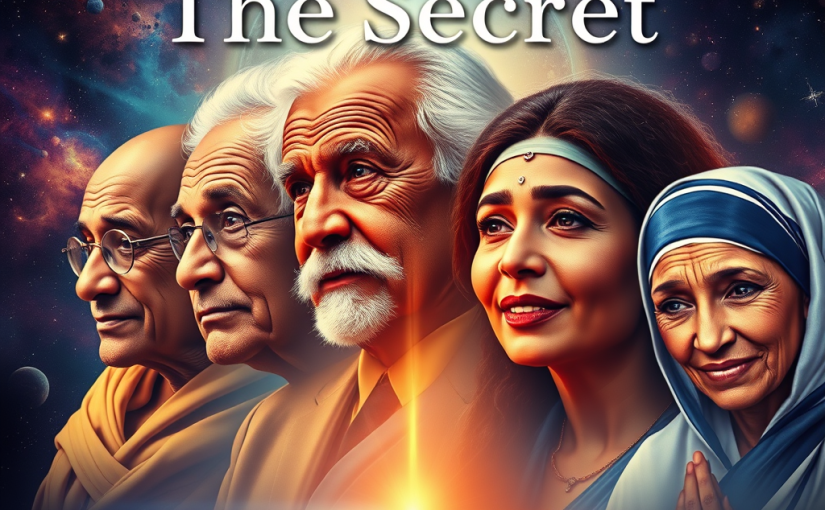
The Secret was a book by Rhonda Byrne that became a self-help phenomenon because it was cleverly mass-marketed as “the secret to life” that all the greatest people down through history have known – now being revealed to the public! It promised greatness for everyone, Oprah Winfrey endorsed it, and so it was a mega-bestseller.

       The Secret is “the law of attraction” – whatever you focus on, positive or negative, you draw to yourself. In general, this law is true: if you focus on becoming a doctor, your chances of becoming one are much greater than if you focus on being an airline pilot. If you worry all the time about becoming ill, you may make yourself sick.

       The problem with the Secret, from a Christian point of view, is that it takes things too far. Advocates of the Secret tell you that whatever happens to you in life, you have drawn to yourself. The underlying message is that you are totallyresponsible for your life. If you are homeless, for example, it is because you want to be homeless. It has nothing at all to do with corporations cutting wages and downsizing jobs while the government simultaneously lifts rent controls so that your income disappears while your expenses skyrocket.

       This philosophy allows us to conveniently blame the victim. That way, you do not need to be compassionate towards anyone because whatever has happened to them, they brought upon themselves, whether they are refugees, battered wives, or schizophrenics.

       The disturbing thing is that this philosophy also infects a lot of Christians. It’s part of the “prosperity gospel,” that is, if you have worldly success, it must be because God is blessing you, whereas if things are not going well, you must have drawn it upon yourself.

       One of my directees (person receiving spiritual direction) has chronic fatigue syndrome. She has tried repeatedly to identify what sin in her past God is punishing her for but can’t come up with anything that deserves such a severe illness. She laughs, “If tomorrow they found a pill that would cure this, would that suddenly make me a righteous person?”

       The Book of Job in the Jewish scriptures was meant to end all simplistic reward/punishment religious thinking. Until then, the thinking was that your external life was a sign of God’s blessing or wrath. 

       Job suddenly loses all his wealth and his family and becomes sick. His religious friends tell him that it must be due to some unconfessed sin in his life, but Job protests his innocence. We learn that God agrees Job is an innocent man, and there is no necessary correlation between what happens to you in life and where you stand in God’s eyes. 

       In the end, God reveals God’s glory to Job, showing him that there are things that utterly transcend human understanding. As John Henry Newman wrote in his famous prayer, “Perhaps my sickness serves God, though I know not how.” Perhaps our faithfulness under trials will inspire someone else to hope in God.

       Jesus always struggled with the Pharisees to have them put compassion before their purity laws. His story of the Good Samaritan is a classic example of this, where the religious leaders refuse to compassionately treat a man who has been robbed and beaten because it would make them ritually impure. So, they avoid him, whereas a man from Samaria, a land considered full of heretics, goes out of his way to take care of the injured man.

       At one point, Jesus says to the Pharisees, “Do you think those laborers upon whom the tower of Siloam fell were any more evil than anyone else?” Things happen that defy rational explanation. Other parts of Scripture state that the righteous can expect trials and persecution if they do not follow the crowd. Thus, virtue can actually attract suffering to us.       

    Job is meant to be a foreshadowing of Jesus, the totally righteous man who has the worst injustice fall upon him: being publicly humiliated and put to death as a criminal and heretic. The crucifixion is the ultimate demonstration that very bad things can happen to very good people through no fault of their own.

      Being responsible for our actions is important, and the Secret has some good points, but the main problem from a Christian point of view is that it exalts personal responsibility over compassion.

Bruce Tallman is a spiritual director and educator of adults in religion. http://www.brucetallman.com.
Archetypes underlie all religions

Given all the religion-based conflict in the world, perhaps it would help if we tried to emphasize the similarities between religions rather than the differences tha t drive us apart and cause bloodshed. Archetypes provide a valuable common ground since they underlie all faiths.

   Carl Jung, one of the great psychologists of the twentieth century, noticed that certain patterns kept coming up, not only in his patients’ dreams, but also in literature, mythology, history, religion, and daily life in all cultures and all ages.

    From this he surmised that all humans must share in a level of the psyche even deeper than the subconscious mind that his mentor, Sigmund Freud, discovered. Jung called this deeper level the collective unconscious, and the contents of this part of the psyche or soul he called archetypes

    Archetypes are spiritual energy centers and part of the imago Dei, the image of God that God created in the soul, to guide us to fulfilling lives. Jung and others claim that these primordial images are like instincts in that they subconsciously control everything we think, feel, and do.

    Four key archetypes that form the basic structure of the human soul in men and women everywhere are the sovereign, warrior, seer, and lover. Franciscan priest Richard Rohr, Robert Moore, Carol Pearson, Caroline Myss, Robert Bly, and others have written extensively about these four heroic archetypes.

    The sovereign is the benevolent leader or person in charge, the warrior is the one who fights for goodness and justice, the seer is the wise man or woman, and the lover is the one who is passionate for others whether it is a partner, friend, the poor, or the earth.

    As an example of how the sovereign appears everywhere and in every age, consider that throughout history there have been kings, queens, maharajahs, sultans, tsars, emperors, presidents, and prime ministers in various countries, as well as chiefs in native American, Canadian, Brazilian, Australian, and African tribes. The sovereign is also manifest in daily life in the chief executive officer or manager at work, or the father or mother at home.

    There are also anti-heroic or “shadow” archetypes which involve complete possession or complete dispossession by the sovereign, warrior, seer, or lover. For example, if a person is completely possessed by the sovereign archetype, he or she becomes a tyrant. Complete dispossession means the person becomes an abdicator. The other anti-heroic archetypes are the sadist and masochist (warrior shadows), manipulator and fool (seer shadows), and the addict and frigid (lover shadows). 

    These negative archetypes, working subconsciously, can cause great misery in our lives. In fact, the whole post-911 world can be explained in terms of archetypes in the form of tyrants (George W. and Saddam) and sadists (Osama and other terrorists). 

    Negative archetypes can also affect church leadership in the form of bishops and priests who are tyrants ruling with an iron fist, abdicators who don’t teach justice, sadists who condemn everyone’s spirituality and morality but their own, masochists who don’t take care of themselves, manipulators who make the laity fearful, fools who subtly block the ministry of any talented lay person, addicts who abuse children for their own sexual pleasure, and frigids who are burned out, emotionally dead, and cynical.

    People in archetypal roles have great power because they activate the numinous archetypal energies of our souls. This explains the aura that surrounds seers such as the medical doctor, medicine man or woman, shaman, guru, imam, rabbi, priest, or minister. This also explains why the pope and dalai lama draw huge crowds wherever they go. They have double the fascinating numinous power since they are in both the sovereign and seer role.

    The Bible is eternally appealing to the human soul because it is an archetypal book, full of heroic and anti-heroic sovereigns, warriors, seers and lovers. Think, for example, in the Jewish scriptures/Old Testament of King David, Queen Esther, King Saul, Queen Jezebel, Goliath, Samson, Delilah, Samuel, Solomon, Isaiah, Ruth, and the lovers in The Song of Songs.

    The New Testament likewise is full of heroes and anti-heroes. There is Peter (the spiritual abdicator and later, spiritual sovereign), Paul (the spiritual warrior if ever there was one), King Herod, Queen Herodias, Pilate (the political abdicator), centurions and zealots, magi (seers), good and bad priests, John the Baptist, Judas (the manipulator), contemplatives (lovers of God) like Stephen and John the beloved disciple, and so on.

    Churches use archetypal language all the time, whether they know it or not, when they refer to Christ as priest, prophet, king, and supreme lover. Certainly he was in warrior mode when he cleared the moneychangers out of the temple, and there is a graphic, symbolic description in the book of Revelation (19:11-21) of Christ leading the armies of heaven against the forces of evil. To Christians, Jesus had the four foundational archetypes in perfection.

    Since these archetypes are hardwired into the human psyche, they appear in other religions as well. No Muslim would dispute the fact that Mohammed is the sovereign leader of Islam, that he was a physical and spiritual warrior in the wars against the polytheists, and a great seer in receiving the Quran from the archangel Gabriel. 

    Hindus could point to Krishna as a lover when he danced with the gopi cowgirls, Arjuna as a warrior, and great seers like Sri Aurobindo, Vivekananda and others. All Buddhist monks and nuns would come under the seer archetype, and boddhisattvas would be examples of agape lovers, sacrificing their own entrance into nirvana until all sentient beings are enlightened.

    Anyone interested in ministry or leadership in any religion, or in spirituality in general, would do well to familiarize themselves with the heroic and anti-heroic archetypes which have the power to fulfill or destroy any individual, religious tradition, or even whole societies.

Bruce Tallman is author of Archetypes for Spiritual Direction: Discovering the Heroes Within (Paulist Press 2005). See http://www.brucetallman.com.

On God and Suffering: Dialogue with an Atheist

After completing his PhD in religious studies, my friend Leon became an atheist! 

    After that, he and I got into debates over the existence of God that would rage on for whole weekends, but it all seemed to get down to the problem of suffering. Given the wonders of our world, belief in a Creator would be easy if it were not for all the suffering. 

    Here is a summary of Leon’s toughest questions and my best answers on God and suffering.

Leon: How can you believe in a good God when there is so much suffering and evil in the world?

Bruce: I believe good is foundational, and suffering and evil are secondary. Evil is always only a corruption of something that was originally good. For example, illness is a corruption of original health. War is a corruption of original peace. God created everything good in the beginning. Good, not evil, is the bottom line in life.

Leon: If God is the Creator, God is the cause of everything. God must, therefore, cause suffering. 

Bruce: God does not want or cause suffering and evil. Secondary causes, that is, natural laws and human freedom, cause suffering. So that we would not live in chaos, God created the laws of nature, which normally serve us well. 

    However, nature blindly follows its laws, much as an avalanche obeys gravity, whether humans are in the way or not. Also, you can’t have true love without freedom of choice, so God created humans with free will. But sometimes, we make wrong choices and sin. If most of the suffering in the world is caused by our wrong choices, the question is not “How can God allow suffering?” but rather “How can humans allow it?”

Leon: If God does not want suffering, what does God do to alleviate it? I don’t think God cares.

Bruce: The Bible teaches us how to overcome evil and suffering by obeying God’s laws. It also teaches us that we can call upon God at any time for help with suffering and that true happiness lies in having a loving relationship with God.

Leon: But if there is a loving and all-powerful God, why would there be any suffering?

Bruce: Paradoxically, although suffering is the main reason people don’t believe in God, God is the ultimate answer to suffering. If there is a loving and all-powerful God, then suffering must make sense, although we may not immediately understand it. Trust in God’s goodness provides hope in the midst of suffering, thus eliminating the worst suffering, that is, meaningless suffering.

Leon: I still think there is more suffering than good, which disproves there is a loving God.

Bruce: Beyond foundational goodness, there is “secondary goodness”, that is, our response to suffering. This is how all the helping professions arose: medicine, law, psychology, social work, etc. All progress is a response to suffering. Good abounds, and God is in charge.

Leon: But if there is a loving God who is in charge, why would he allow suffering?

Bruce: God does not normally allow us to suffer and only allows suffering and evil so that higher values and attitudes such as humility, compassion, forgiveness and wisdom might emerge.

Leon: I still don’t see a God anywhere out there helping us with suffering. Where is God anyway?

Bruce: God is invisible, but we can see that God has created us with great defences against suffering. Everyone comes with some built-in, standard equipment: a brain, the greatest problem-solver in the world, and the human spirit, the great urge to fight against suffering. 

    God has also given us people who aid us in avoiding suffering and who are great supports when we do suffer: parents, spouses, and friends. Through people and angels, God either protects us from suffering and evil or helps us to get through it. God comforts us, encourages us, carries us through suffering, and works with us to bring secondary goodness out of suffering and evil.

Leon: I still don’t think God actively cares. God just sits up there and watches us suffer.

Bruce: The Christian belief is that God suffers when we suffer. If God is everywhere (including within us) and knows everything, and we are God’s children, then God knows and feels our pain. God is not some detached sky-god. The Cross is the great symbol that God suffers with us.

Leon: Suffering is so horrible, though. Life is so hard and so meaningless. What’s the point of it?

Bruce: Christ on the Cross transformed suffering, showing that suffering can have meaning. He showed us that to suffer for others is the deepest love.

Leon: I still don’t think there is any final answer to suffering.

Bruce: Often, all you can do is accompany the suffering person, not give them your answers, but if there is a final answer, it is that God overcomes all suffering in heaven forever. God gives believers ultimate and eternal joy, peace, happiness, and love. Things began as “very good” (Genesis 1:31), the end is even better, and the middle is good in spite of negative news reports. All is well that ends well, but you have to have faith to see the goodness of God in all things.

Bruce Tallman is a spiritual director and author: http://www.brucetallman.com

Is Trump or Harris Anti-Christ or Scapegoat?

Kamala Harris has been accused by Trump of being the “anti-Christ.” Subsequently, some of his followers have argued that Harris, if elected President of the United States, will be responsible for the slaughter of millions of children as she tries to get Roe vs Wade reinstated. She has also allowed millions of illegal aliens to flood across the US border, and they are all rapists and murderers.

    On the other hand, the Harris camp points out that, in the Christian scriptures, the devil is called the “Father of Lies,” and Trump is seen as an unrepentant liar. He has deceived half the population of the United States with his lies, spews racism and hatred, is obsessed with power, wants to be the most powerful person in the world, and tried to destroy democracy by inciting the January 6 attempt to overthrow the US government.

    In either case, although both claim to be Christian, they are promoting the exact opposite of Christ’s teaching to “love your enemies.” They both are preaching the anti-gospel by demonizing their opponents.

    Rene Girard (1923-2015), a French philosopher, claimed that whenever things go wrong in a society, the political leaders will try to gain or hold onto power by scapegoating some group, that is, proclaiming the group is the cause of all the society’s problems. Therefore, the solution is to banish or kill off that group, and then all will be well again. This was Hitler’s basic strategy in the Second World War: the Jewish race was the cause of all of Germany’s problems and, therefore, must be eliminated.

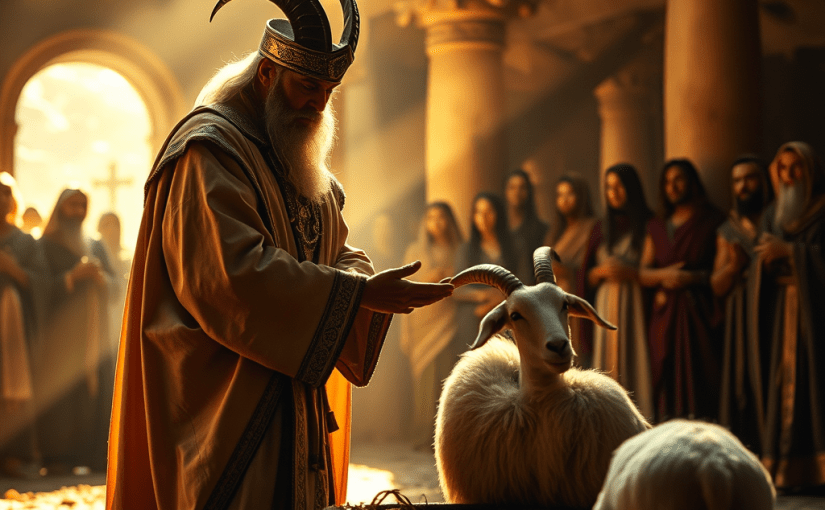
    “Scapegoat” is an interesting word. Its roots come from the ancient Jewish practice of, once a year, having the High Priest pray and lay his hands on the head of a goat, thus symbolically transferring all the sins of the Israelites from the previous year onto the goat, which was then banished to die in the desert. Then, everyone celebrates being cleansed of their sins – until their sins start to cause problems again.

    Scapegoating works in a perverse way in any culture because it allows all the pent-up fear, anger and hatred of that culture to be focused on a persecuted and usually defenceless and innocent minority group. It also conveniently allows the persecuting group to escape looking at their own sins as the cause of the culture’s problems and take responsibility for the culture’s flaws.

    The first step in scapegoating is to dehumanize your chosen enemy by calling them denigrating names such as ”anti-Christ.” So, they are both scapegoating the other party. Neither Trump nor Harris is the anti-Christ. They are limited human beings like the rest of us who are convinced their own point of view is right and simultaneously choosing not to see anything positive in their opponent. 

    The Trump camp has been emphasizing as their main argument that when Trump was president, there were no wars and no inflation, as if Joe Biden and Kamala Harris were personally responsible for the wars in Ukraine and Israel, and as if inflation was not a consequence of the government giving out billions of free dollars to keep the economy afloat during the Covid shutdown.

    The Harris camp has been pressing as their main argument that Trump is a fascist, and if he is elected with total legal immunity, it will be the end of women’s rights and of democracy.

    It is far too late, but it might have helped if both of them had meditated on and tried to follow Jesus, the ultimate scapegoat, who Christians claim took away the sins of the whole world by sacrificing himself on the cross. In this case, he is both the High Priest and victim of our scapegoating, both the G.O.A.T. (Greatest Of All Time) and the goat. 

    However, this approach only works if Christians do not use Christ’s redeeming work on the cross as an excuse to let themselves off the hook of owning their own sins and scapegoating as the cause of all their problems. God takes away our sins, but that doesn’t mean we don’t have to change our lives.

    Christians, and all of us, need to own how often we do not love our enemies.

Bruce Tallman is an educator of adults in religion. http://www.brucetallman.com

Understanding God: Beyond Fundamentalism

Dear Friends,

On October 12 the London Free Press published my article below under the title “Broad interpretations of God are important”

It is 670 words, so when you have 2 minutes, why not give it a quick read?

Blessings and peace,

Bruce Tallman

Spiritual Director

www.brucetallman.com

Fundamentalists need a broader interpretation of God and scripture

     It is important for contemporary Christians to have a broad interpretation of God, Jesus, scripture, and theology since fundamentalism can be a dangerous force in our world, denying science, evolution, vaccines, and climate change.

    In this regard, it is important to understand that God is both apophatic and cataphatic. Apophatic means God is beyond human understanding, while cataphatic refers to the concrete, understandable dimension of God. The primary example is God becoming human in Jesus, so we would have some way of understanding the apophatic God. 

    Christians need to hold onto both these dimensions. If you lose the apophatic dimension, you can become arrogant in your certainty about God and believe you must force your narrow understanding on others. But if you lose the cataphatic dimension, God becomes completely unknowable, and you may as well stop talking about God.

    A third important dimension of God is the Holy Spirit, who is incarnate in every person as love, wisdom, joy, peace, and humility. Wherever you find those spiritual qualities, whether in Muslims, Hindus, Buddhists, humanists, or atheists, the divine Spirit is present, leading them to a closer relationship with God. They don’t need you to convert them, God is already doing it..

    People who believe in the supremacy of scripture usually mean the supremacy of their own interpretation of scripture. So, to avoid fundamentalism, it is important to realize that scripture is interpreted in many ways. 

    The Bible did not fall out of the sky. It came to us through a church, and there is no historical break between present-day Catholicism and the early church. Christ gave Peter and the rest of the apostles the authority to properly interpret scripture when he said, “You are Peter, and upon this rock I will build my church, and the gates of hell shall not prevail against it” (Matthew 16:18).

    Catholic bishops, the apostles’ successors, then organized early church councils that decided which books should go in the Bible and which should be excluded. The New Testament is a Catholic document.

    However, Catholicism recognizes the supremacy of everyone’s conscience. You should study church teaching and Catholic interpretations of scripture before making moral decisions. However, if you cannot agree in good conscience with these sources, you are free to follow your own conscience. You are ultimately accountable to God, not to the Catholic church. 

    Also, many fundamentalists subscribe to a narrow fall/redemption theology which many theologians now disagree with as it ignores the first and second chapters of the Bible, where God created humans and everything as “very good” (Genesis 1:31). Instead, this theology focuses exclusively on the third chapter, the fall of humans into evil, and the redemptive work of Jesus on the cross, which conquers our fallenness.

    In addition to scriptural narrowness, fall/redemption theology gives us a horrific picture of God – a God who is wrathful, violent, and demands blood and death, or his anger won’t be satisfied, a god who consigns people to eternal torture if they don’t believe in this narrow theology. A different interpretation is that we create our own hell by our bad decisions.

    Fall/redemption theology also lets Christians off the hook—they don’t have to change their lives to be saved. All they must do is believe in Jesus’s redemptive sacrifice on the cross. This diminishes Jesus’s life and teachings, which are often ignored, and which accounts for the hypocrisy and failure of many Christians to follow Jesus genuinely.

    A poster in my home office says, “Why and from what does Jesus save us? To form a more perfect world, Jesus saves us, by example, from living only for ourselves.” This requires interaction between God and humans; we cannot do it alone.   

     However, as scripture says, “faith without works is dead” (James 2:17-26). God gives us faith, but we must do the work. We are saved by following Jesus’ example of loving God and others. Jesus says, “Do this, and you will inherit eternal life” (Luke 10: 25-28).

Bruce Tallman is a London an educator of adults on religion. http://www.brucetallman.com

The Cosmic Christ: Love as the Universe’s Creative Force

“Passion is the true stuff of the universe –

erotic attraction is the primary creative force in the universe –

the universe itself is erotic” – Teilhard de Chardin

the reason for the Incarnation was love not sin –

the primacy of Christ comes before the primacy of sin –

“All things have been created through and for the Cosmic Christ –

he is before all things and in him all things hold together” – Col. 1:16-17

– particularly in Eastern Orthodoxy

many theologians disagree with Anselm’s notion 

that sin is the primary reason for the Incarnation

“Jesus, the Cosmic Christ incarnate

is our only source of information about divinity –

if anyone wants to know what God is like

or what God might do, they can look at Jesus 

this is what it means to accept Jesus as our God” – Albert Nolan

love and wisdom are gifts of the Spirit of God –

the love of God is poured into us by the Holy Spirit

and love leads to wisdom

which transcends reason –

“The heart has reasons of its own” – Blaise Pascal

the spiritual journey means moving

from unconscious to conscious loving –

the Christian ‘Way’ (Tao) as Christ showed us

is loving others in our daily lives

and to the degree that we love

God makes us whole/healed/holy

Rumi said “Make friends with your emotions”

this simply means give negative emotions 

your whole-hearted attention

rather than being ignorant of them

denying or struggling against them 

feeling guilty or ashamed of them

which gives them power –

once you give them your full attention

you discover their insubstantial nature

and dissolve their power over you –

you are free to fully love the Whole Creation.

Unveiling Mysticism: The Journey to Unitive Life and the Pursuit of Truth

Salvation does not equal ‘piety’ or ‘ethical propriety’

salvation has to do with God’s love 

for our deepest metaphysical nature –

our true self/the human person

which is beyond description/comprehension –

salvation is God’s ineffable love 

and our ineffable love of God 

and responsibility for our future

has now passed from God to us

“Our life and death are in our own hands

salvation is the realization and integration of this”

– Don Cupitt

“All history is a struggle against good and evil”

– Gaudium Et Spes (The Pastoral Constitution

on the Church in the Modern World, Vatican II)

Christ thus exhorts us to be holy

as God is holy

and God loves everyone

so to be holy is to love everyone

as God loves everyone – good or evil –

God allows sun and rain to fall on the just and unjust

Evelyn Underhill’s Mysticism has two parts:

1. The Mystic Fact: how mysticism relates 

to Henri Bergson’s Elan Vital

and to modern psychology

2. The Mystic Way: the awakening/purification/training

of the self in the ascent to the blessedness

of the Unitive Life

“A God-fearing person must follow the Truth

regardless of the consequences

even though it endangers their life –

they must trust that a good deed 

will have a good result –

they know it is better to die in the way of God

than to live in the way of Satan.”

– Gandhi