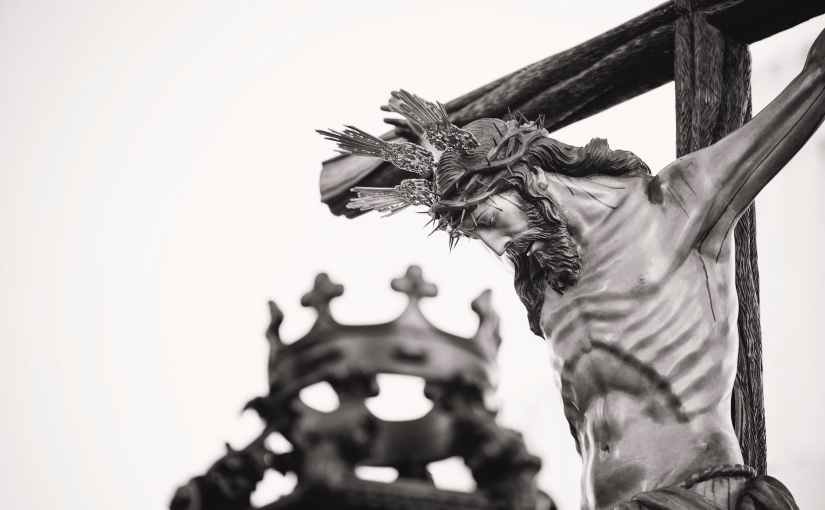
Deepening Spirituality: Wisdom from Modern Sages

The ideas below come from my ongoing reflections on the works of some of the greatest sages of the 20th and 21stcenturies, people like Carl Jung, Joseph Campbell, Thomas Merton, Ken Wilber, Karen Armstrong, and Richard Rohr. I think about their ideas until I make them my own, then rewrite them in my own words. Here are some of my favourites:

    A proof of God everyone can experience: we long for truth, freedom, goodness, and happiness and we long to have all these supreme goods to the max, which is what God is, so what we all long for is God.

    The loyalty of Jesus is not to Catholics or Protestants, Muslims or Buddhists, but to anyone who is suffering, whether believers or non-believers. Jesus is always on the side of the crucified.

    Religion gives wider meaning to our lives. It makes us realize we are children of God, not just producers and consumers.

    It is important to plumb the depths of at least one religious tradition. If you chase ten rabbits you catch none. If you dig ten shallow wells you never reach water.

    Full conversion is intellectual (wisdom), emotional (compassion), and moral (individual and social responsibility). Conversion is many-sided.

    Meaning is the bottom line in life, not money. Money is important, but life without meaning is not worth living.

    The truly religious do not take themselves too seriously. The ability to laugh at yourself is similar to humility. A sense of humour is a sign of spiritual health and holiness. It is the joy of the gospel.

    God does not want suffering. The only cause of suffering, beside human folly, is natural processes which are necessary in an evolving universe. Human folly is inevitable but unnecessary.

    Religion and spirituality are far more about intuition than reason. Theology is very rational, but reason is very limited. It does not understand the ways and reasons of the heart.

    Your relationship with others, particularly your partner, can be part of your spiritual practice.

    Your true self is love, peace, and joy, and so the only real sin is to act contrary to your true nature, to violate who you really are, to not let your own God-given holiness shine forth.

    Wisdom permeates everything, enters into our souls, and urges us to be friends of God. 

    God must be very familiar with letting go, because humans insist on being in control. God very seldom gets what God wants. This explains most of the problems of the world.

    The purpose of evolution is to bring everything to the point where compassion and wisdom can be born through humans, so that the survival of only the fittest no longer applies.

    Humans only live fully if freely joined to God. Therefore, God works by invitation not force.

    Jesus chose a child as the model of discipleship. If we lose the qualities of our inner child: humility, innocence, playfulness, creativity, and genuineness, we have essentially lost our soul.

    Mysticism, the profound experience of God, gives us the courage and energy to do justice.

    Our desires are God-given gifts meant for living life to the full. Contrary to Buddhist teaching, desire is not evil. It is good to desire good things. This is the Holy Spirit working in us.

    Most atheists think religious people are out of touch with reality. Most religious people think God is Reality, and therefore, atheists are out of touch with reality.

    What matters is not so much doctrine as internal transformation. Kindness and goodness are praised by all religions, humanists, and atheists. These virtues are what unite all people.

    Let no one delude themselves that knowledge of the path is an adequate substitute for walking in it. To know spiritual truth is one thing, to live it is quite another.

Bruce Tallman is a spiritual director and an educator of adults in religion. http://www.brucetallman.com
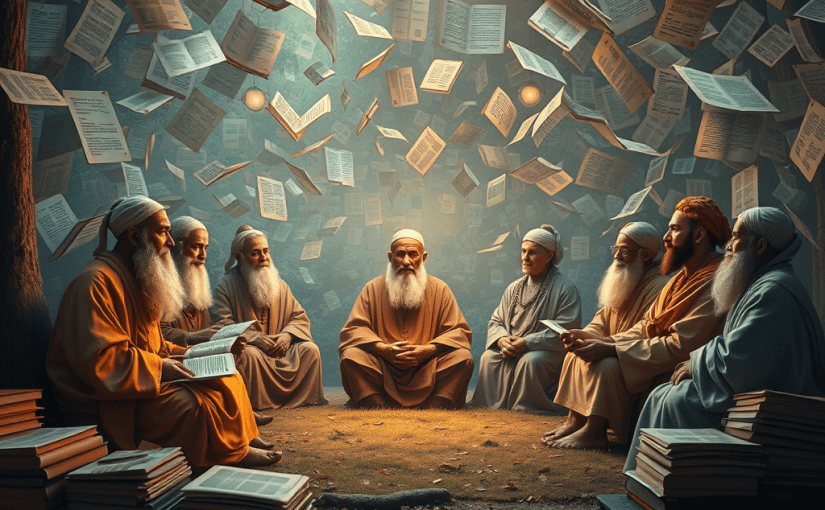

The Power of Wisdom in an Internet Age

Wise people value wisdom above all for it is the source of peace in the midst of information chaos. Knowledge now doubles every six months, and this overwhelming barrage of information makes it increasingly difficult to discern what has lasting value. However, by holding to principles of wisdom that have withstood the test of time, our future-shocked culture can survive.

    Jesus, Buddha, King Solomon, and Socrates, all revered as exceptionally wise men of the ancient world, have some particularly relevant thoughts for our present age. They all agree that wisdom is more precious than money or anything else you could desire because it is the source of all truly good things. Wisdom, not information, is what is ultimately important.

    Studying wisdom cross-culturally reveals seven key principles.

1. God Exists. Many scientists, including Einstein, believe that anyone who pursues science with their whole heart inevitably comes to the conclusion that there must exist an Intelligence behind everything that is vastly superior to the human mind. 

    God constitutes the source, sustenance, and goal of all things whether in the scientific age, information age, new age, or any age. The wisdom literature of western religion repeats over and over “The fool says in their heart ‘There is no God’”.

2. Accept Your Humanity. The three great monotheistic religions, Judaism, Christianity, and Islam, agree that the ancient message of the Garden of Eden remains true: all our problems begin with pride, with denying our place in the scheme of things, with wanting to be like God.

    Through the Internet we have fifty million computers at our fingertips. This gives us the god-like quality of instant knowledge about anything, which can tempt us to think we have all the answers and are, in fact, God. Bloated with information, we have no room for wisdom.

    False pride easily blinds us to our limitations, creatureliness, and humanness, but all major religions agree that the essence of wisdom consists in forgiving yourself for being human. If the first principle of wisdom is “There is a God”, the second one is “You are not God”. If pride causes all our problems, humility, that is, accepting our humanity, is the solution.

3. All Wisdom Comes From God. King Solomon states over and over that wisdom begins and ends with recognition of God’s supreme wisdom. You may not understand things, but God does. Similarly Socrates maintains that intellectual humility marks the first quality of the wise person: the realization that you lack wisdom and do not have all the answers. The wise listen much more than they speak.

4. All Things Pass Away Except God. Like Jesus, Buddha taught that everything passes away, and sorrow derives from putting too much stock in this world. 

    The epidemic of depression in our culture stems, at least partly, from ever-accelerating change in which we constantly lose people, things, lifestyles, and beliefs we had clung to. Instant access to infinite information has only sped up the change/loss process. Many find they cannot keep up.

    Therefore, hold everything lightly: your health, spouse, children, friends, job, wealth, reputation, ambitions, ministry, and theology, for they all inevitably change. Wisdom teaches that true joy and peace comes from clinging only to God, for God alone lasts.

5. Purify Your Desires. God wants lasting love, truth, and peace but the commercialization of the Internet places all the treasures, pleasures, and temptations of the world before us in an unprecedented way. We must use the great gift of this technology wisely, to bring us what is truly good and life-giving rather than the ever-increasing hawking of earthly wares and human bodies.

6. Wisdom Means Compassion. Christ exhorted us to love our enemies. Similarly, Buddha stated that compassion, even for adversaries, arises when we realize the suffering of all beings. Many people have become news addicts and, through an endless parade of woe in the media, anesthetized to other peoples’ pain. However, in spite of “compassion fatigue” we still need to reach out and try to comfort those who are suffering.

7. Wisdom Sees the Oneness of All Things. Wisdom thinks constantly in terms of unity, and realizes that whatever we do to others we do to ourselves. Therefore it always strives to create community and to take care of all people, creatures, and the Earth. Social and environmental justice are natural outflows of wisdom. The information age tends to fragment people into ever smaller interest groups. We need to use the world wide web to bring people with divergent views together in dialogue.

    In conclusion, there are three main ways to gain wisdom: pray for it, study it, and imitate it. Every major religion has a body of wisdom literature, a collection of reflections of its founders, greatest saints, and prophets whose lives can be emulated. In particular , we could all grow spiritually by imitating Jesus, who is considered by Christians to be the Wisdom of God in the flesh. Only by following the wisdom of the ancients will we transform the information age into an age of true peace and love. 

Bruce Tallman is a spiritual director and educator of adults in religion. http://www.brucetallman.com.    

Three Truths of Wisdom: Confucianism and Christianity Explored

Confucian wisdom has three components:

cultivation of the person

meaningful action nourished by heavenly splendor

harmony of one’s wisdom with the wisdom of others

Christian wisdom knows the soul needs three truths:

knowledge of God’s goodness

knowledge of self

cure for the world’s woes in constant/humble/prayer

in Confucianism, filial piety

does not equal blind obedience/subservience

to age and authority –

a son will correct his father 

when he knows his father is wrong

similarly, the minister will correct the prince 

when the prince is wrong

in Christianity the beginning of wisdom 

and nondual consciousness

involves seeing not only the goodness of things

but also their weakness/failure/dark side

the ‘prosperity gospel’ on the other hand

tries to see only the good side of things

and divides everything into either/or

good/bad – there is no realism/

no middle ground

and so the ‘prosperity gospel’ weaves 

Christianity and the American dream of wealth together

breeding fanaticism and unbalance

the Second Vatican Council (1962-1965)

recognized that the institutions/laws/

modes of thinking of earlier generations

were not well adapted to contemporary realities

but the Council Fathers/Bishops/Archbishops

wanted to aid those trying to preserve three truths:

the holiness/natural dignity/greatness

of ordinary life and its superlative value

much as Confucianism does.

The Cosmic Christ: Love as the Universe’s Creative Force

“Passion is the true stuff of the universe –

erotic attraction is the primary creative force in the universe –

the universe itself is erotic” – Teilhard de Chardin

the reason for the Incarnation was love not sin –

the primacy of Christ comes before the primacy of sin –

“All things have been created through and for the Cosmic Christ –

he is before all things and in him all things hold together” – Col. 1:16-17

– particularly in Eastern Orthodoxy

many theologians disagree with Anselm’s notion 

that sin is the primary reason for the Incarnation

“Jesus, the Cosmic Christ incarnate

is our only source of information about divinity –

if anyone wants to know what God is like

or what God might do, they can look at Jesus 

this is what it means to accept Jesus as our God” – Albert Nolan

love and wisdom are gifts of the Spirit of God –

the love of God is poured into us by the Holy Spirit

and love leads to wisdom

which transcends reason –

“The heart has reasons of its own” – Blaise Pascal

the spiritual journey means moving

from unconscious to conscious loving –

the Christian ‘Way’ (Tao) as Christ showed us

is loving others in our daily lives

and to the degree that we love

God makes us whole/healed/holy

Rumi said “Make friends with your emotions”

this simply means give negative emotions 

your whole-hearted attention

rather than being ignorant of them

denying or struggling against them 

feeling guilty or ashamed of them

which gives them power –

once you give them your full attention

you discover their insubstantial nature

and dissolve their power over you –

you are free to fully love the Whole Creation.

BEING/EMPTYING VS SUFFERING

The Cross and Resurrection are the Christian solution

to the problem of evil – this is far more satisfying

than Carl Jung’s solution of making evil part of God

Zen Buddhists love the “kenosis” passage (Philippians 2:7)

where Christ empties himself – even to death –

death on a cross –

because Zen is all about emptying oneself 

of all attachments/passions/thoughts

and learning to just sit for hours or days

to “waste time with God”

as Christian monks call it –

like old friends who don’t need to speak

they just enjoy BEING together –

this is all God asks of us: “Please BE with me” –

“To just BE alive is sacred, to just BE is holy”

– Abraham Heschel

besides emptying, part and parcel of Zen  

is awareness of suffering

caused by peoples’ unmindful speech/inability to listen

Buddhists therefore vow 

to cultivate loving speech/deep listening 

that alleviates suffering

the intellectual nature of the human person 

is perfected by wisdom 

for the intellectual drive 

is not confined to observable data alone – 

wisdom gently leads all our drives 

beyond the visible world to what is invisible –

what is honestly true/honestly good

without this humble inner quest

without interior spiritual integration

even something as spiritual as a pilgrimage

can turn into a divisive/destructive/alienating journey

just as forsaking of self/emptying of ego 

unites you to God

so giving up external things

brings you peace.

THE NONDUAL BEDROCK OF RELIGION

The modern/postmodern/secular world is often struck

by its own power, and raises anxious questions

about humanity’s meaning/role/destiny in the universe

so, Christianity needs to bring its own vast resources

to bear on these questions.


If Christianity’s mission is to dialogue

with all people, it must begin

by creating mutual respect/harmony with all churches –

interdenominational infighting makes Christians

hypocrites when they try to reach out.


As a chaplain in World War II, John MacQuarrie

saw the basic goodness of soldiers

and grace operating in Muslims

which challenged his Calvinist negativity

about human nature’s “absolute depravity”

and led to his conversion from Presbyterian to Anglican

letting go of Calvin’s exclusivism, he found grace

everywhere, and became the stellar Anglican theologian.


Jesuits in Japan hung out with Zen monks

and readily participated in the quasi-religious

“Tea Ceremony” which looks from the outside

like a non-spiritual ritual, but internally

is about disciplined silence/simplicity/

self-effacement/contemplation.


There may not be a universal religion

but there is a universal wisdom

which Aldous Huxley wrote about in 1945

in The Perennial Philosophy – all religions

value virtues like patience/humility/kindness/

compassion/peace. Like John Henry Newman

who was a major influence in Vatican II

Huxley believed God’s Plan included all religions.


The fact that nondualism is central

to three major religions: Taoism/Hinduism/Buddhism

and underlay Christian mysticism for sixteen centuries –

Jesus said “You are in Me and I am in you

and we are in God” – means nondualism

unites both Western and Eastern religion.


THE NEW SCIENCE AND THE DIVINE PLAN

The first theme of The Imitation of Christ by Thomas à Kempis

is dying to self. The second theme is detachment

because attachment to material things

is one of the great impediments to the spiritual life.


However, according to Matthew Fox

Meister Eckhart is as different from Thomas à Kempis

as compassion from sentimentalism

as passion from repression

as celebration from asceticism.


The new science should cause religious people to celebrate

because “radical amazement,” according to Abraham Heschel

is the primary characteristic of a religious attitude to life.


Ponder for a minute what the new science tells us:

the sun emits more energy in the form of light

in one second than all of humanity has consumed

in its whole history – four million tons of energy –

which is thirteen million times

the energy consumption of USA in a year.


Non-dual thinkers use knowledge like this

not to “puff up” but to build up/induce awe/transform others

starting with themselves.

They never use knowledge

to shame those who know less or control them –

they use knowledge to help us all

see reality with new eyes.


The birth of radical awe is good timing

because along with our new scientific/technical knowledge

comes awesome power

and so greater wisdom is absolutely necessary.


Humility/wisdom/compassion are needed

when it comes to science and technology

because humility/wisdom/compassion

are the only things that give us new eyes

to see the Holy Spirit/the Divine Knowledge/the Divine Plan

and according to Oscar Romero

“There are many things that can only be seen

through eyes that have cried.”


BEING ONE YET MANY

Christ’s fiery touch at Pentecost

brought our souls and the Church alive.

Christ’s touch separates us from others

and yet binds us to them

so that at the same time each Christian

is a hermit and the whole Church.


The challenge for us is to be one and many

as symbolized in the three-in-one Trinity:

Father/Son/Holy Spirit are all distinct yet one –

so we must be united to all and yet our self.

Nature can help us imagine this –

since it is a ‘process’ – a flowing whole movement

of interconnected organisms

not a series of independent mechanisms.


In Zen, spirit and matter are one not separate

and so it flumoxed Francis Xavier

that Zen Master Minsitshu

was not convinced he had a ‘soul’

as an object one can ‘have’ and ‘save.’


Xavier’s goal was to save Minsitshu

but we should have goals only for our self

not expectations for others, since this means

asking them to live up to our own self-centered ideals.


Being one yet many and having no goals/expectations

for others – loving them as they are

not as we want them to be – challenges us in relationships

particularly marriage, the most intimate of all relationships –

where we are called to be one with our partner yet our self.


Being one yet many also challenges us spiritually:

to be one with God yet not God –

wisdom has two basic tenets:

there is a God and

you are not God.


“Spiritual challenges can be overcome

by more prayer/meditation/self-examination/

penance/patience in desolation/

and humility in consolation.”

– Ignatius of Loyola

SEVEN PRINCIPLES FOR A NEW UNIVERSE

The Spirit who hovered over the waters before the Creation

is the same Spirit who created Jesus in Mary’s womb.

Creation and Mary’s womb were both an empty void

out of which a new universe came.

“The new universe’s three greatest principles are

unity/diversity/subjectivity.” – Thomas Berry

Subjectivity comes from ‘auto-poetic’ (self-organizing) systems

forming bodily centers or ‘selves’ in many forms.

The new, self-organizing universe is full of subjects, not objects

and the first principle is unity:

If we see that we are all one,

we naturally become interested in the ‘common good’ –

whatever is good for all is good for me.

Sharing land/wealth/possessions flows from this new worldview

as naturally as feeding our own children.

A fourth great principle is ‘mystery:’

“The most beautiful thing we can experience

is the mysterious. It is the source of all true

art/science/religion.

The one who can no longer pause to wonder

or stand wrapped in awe is as good as dead.”

– Albert Einstein

A fifth principle is ‘peace.’

The goal of early Christians was to conquer

the pagan Romans not by the power of the sword

but by the power of faith and compassion

the essence of the kingdom of God

and of the King/Messiah Jesus.

A sixth principle is ‘love.’

Lovingkindness (‘maitri’ in Buddhism)

needs also to be applied to our self

particularly the painful/shameful/ugly parts

our ‘winning’ society brands as ‘loser.’

The seventh and final principle is ‘trust.’

Ancient pilgrimages were always spiritual exercises

in ascetic homelessness and wandering

seeking solitude/exile/trust in and abandonment to

Providence alone.

The problem for the reign of God  

is that all these spiritual principles were overthrown

by Descartes who wanted to reverse

the displacement of humans from the center of the universe

by Copernicus and his sun-centered cosmos.

So, Descartes centered the certainty of knowledge

on his principle of ‘cogito:’ “I think therefore I am.”

However, this principle split spirit and matter

and replaced God with the individual human –

a major turning point.

The two poles of the so-called Enlightenment –

the ‘Egos’ (self-thinking individuals)

and the ‘Ecos’ (everything is holistic: 

systems/unified fields/implicate orders)

tend to ignore or disparage each other.

As a response to the chaos of Enlightenment

many Christians became rigid thinkers

because they were taught to follow

the ways of God is to create order.

They never learned wisdom/paradox/mystery

as the principles/essence/foundation of faith.

Chaos theory is not about chaos, that is, anti-order –

it focuses on how over time ‘strange attractors’ within systems

draw new order and new emergent properties

out of dynamic fluidity.

All these Enlightenment thought-displacements

caused Christians to re-think Christianity:

the new/old principles of Original Blessing emerged:

befriending darkness, letting go of images/idols of God,

emptying, letting pain/silence/nothingness be

pain/silence/nothingness, discipline not asceticism

befriending our creativity and divinity as co-creators with God.

These new principles are biblical

and there from the beginning.

Christianity as usual is not disappearing

in fact, worldwide it is rapidly growing

and adapting to make mysticism

which previously was only for monastic elites

available for all.

ONE COSMIC FAMILY

According to Heidegger’s

approach to Being

God is not a concept

not a transcendent 

Creator-God

but an activity in the world

a Self-Giving Presence.

All mystics agree

there is no magical/mythical Being 

who transcends the world

but there is Infinite Consciousness 

in the world.

According to Augustine

the wicked try to flee from God

but God is everywhere

God never abandons the wicked.

In particular

God, Infinite Consciousness

is meant to Be

“I Am” in the Church

the Beloved Community

born of Spirit, born of people

a Sacrament of Divine Liberation.

Although the anti-Paul 

author of Timothy I and II

wrote that women 

were to be silent, silenced in church

St. Thecla, second century celibate-ascetic

and Church-Leader

was more popular than the Virgin. 

Dualistic, black-and-white thinking

separating soul (good) from body (bad)

always made men uncomfortable

with women’s bodies and sexuality

but feminist theologians now

have reappropriated Wisdom

as Co-Creator at work in human bodies

to create right relationships

and they see God desires

daily intimacy, daily communion

with God’s Beloved People

and daily intimacy with Beloved God

and Beloved Community

is the foundation of spiritual life.

Christians and Buddhists

mindlessly practicing rituals 

find little joy because

humans are meant to be

evolution becoming aware of itself,

Infinite Consciousness 

becoming mindful.

Like Hindu, Buddhist and Taoist mystics

scientists now see the universe

as a unified web.

Like a spider’s web 

shimmering in the sun after rain

God has caught scientists 

in God’s web of life.

No longer pure observers

they now see everything

not as objects or idols

but as icons

of God’s Infinite Consciousness.

They now can see

Brother Sun and Sister Moon 

and all things as 

One Cosmic Family.