THE EXPANDED UNIVERSE AND THE COSMIC CHRIST

Meister Eckhart’s Creation Spirituality likely came from the Celts

who spread across Europe and may have come from India

where Hindus saw the divine in all of nature –

in trees/rocks/rivers/animals.


From the Patristics, the Church Fathers, to the Middle Ages

cosmology and theology were one

but then the heliocentrism (Sun-centerism) of Copernicus

gave a different cosmology than the Earth-centrism of the Church

so that cosmology and theology divorced

and God was separated from the universe

but this is “deism” not Christianity.


Contemporary theologians cannot ignore the new physics

which is the relativistic and revelatory context in our time –

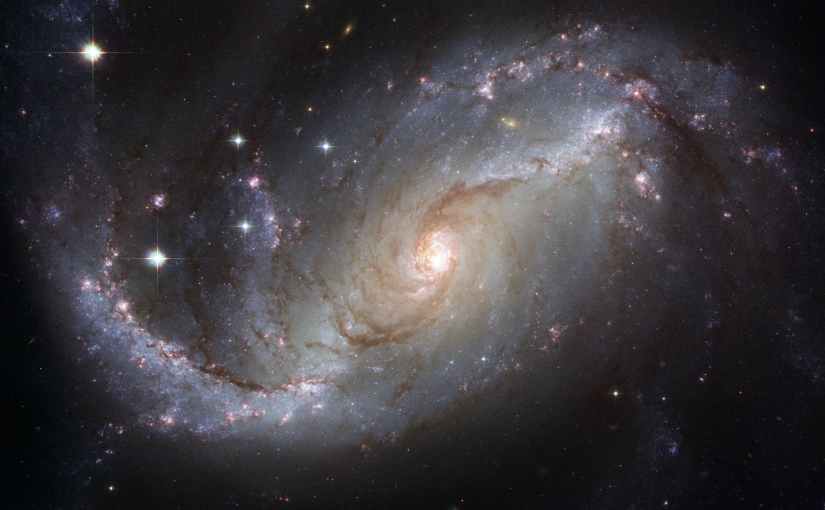
and the sacred story of the universe is being told by astronomy

with an unimaginable cosmology of billions of galaxies.


And evolution is the process by which Trinity becomes cosmos

and cosmos is Christified –

Unconditional Love (the Father) is poured into the Word (the Son)

forever breathed anew in the Holy Spirit.


Since love is the basis of all created orders

and the Cosmic Christ is first in God’s intention to love

“exoChristology” (the theology of Christ on exoplanets)

claims that planets outside our solar system will be related

to the Cosmic Christ and completed by an Incarnation –

Christ after all is the Alpha and the Omega

the Origin and End of all.


If Christians are to survive in this expanded universe

we need a bigger Jesus – there needs to be a shift

from a focus on the human Jesus of Nazareth

to a focus on Jesus as the incarnation of the Cosmic Christ –

for there might be incarnations of the Cosmic Christ

on exoplanets, incarnations not with the name of Jesus

but with other names

but they would still be the Cosmic Christ Incarnate.


I know this is mind-boggling but so is the new universe.

However, faith allows us to live in confident patience

that God will eventually fulfill all God’s promises

and we will one day understand it all.


EVER-ADAPTING CHRISTIANITY

In the triad of world/flesh/devil

it is almost always the sins of the “flesh”

that are attacked by churches –

birth control/adultery/abortion/pornography

and seldom do sermons preach about the sins of the “world” –

the lust for wealth and prestige that the ego loves.


But the difference between the True Self

and the False Self is the difference between

“True Centering” (on God) and “Ego Centering” (on Self).


In fact, the True Self can include the False Self

because the way we become whole as humans

is by embracing every aspect of our existence –

our weakness/failures/mistakes

by humility/not taking ourselves too seriously –

we grow by wholeness not by absolute moral purity

which we never reach anyway.


Still, we consign to the unconscious

all fantasy, all psychic associations connected with

words/numbers/stones/plants/animals –

but for primitives all these things had numinous power.


Friedrich Nietzsche dismissed all primitives

and fancied himself to be a Rational Existentialist –

one who has the courage to stare into the abyss of non-being

and discover complete loneliness, complete aloneness

if God is dead.


There have been many Rational Christian responses

that have deconstructed the “death of God” movement

and people like Marcus Borg and Bishop John Shelby Spong

have also helped us deconstruct Bibical Fundamentalism

and there are many Postmodern Christian thinkers

like Brian McLaren with his book A Generous Orthodoxy

and others have developed The Postmodern Bible

and The Cambridge Companion to Postmodern Theology.


As usual, Christianity has adapted to/learned from/gone beyond

whatever the world/the devil/the ego throws at us –

we always include and then transcend

all attempts to deconstruct the Truth.

THE NEW SCIENCE AND THE DIVINE PLAN

The first theme of The Imitation of Christ by Thomas à Kempis

is dying to self. The second theme is detachment

because attachment to material things

is one of the great impediments to the spiritual life.


However, according to Matthew Fox

Meister Eckhart is as different from Thomas à Kempis

as compassion from sentimentalism

as passion from repression

as celebration from asceticism.


The new science should cause religious people to celebrate

because “radical amazement,” according to Abraham Heschel

is the primary characteristic of a religious attitude to life.


Ponder for a minute what the new science tells us:

the sun emits more energy in the form of light

in one second than all of humanity has consumed

in its whole history – four million tons of energy –

which is thirteen million times

the energy consumption of USA in a year.


Non-dual thinkers use knowledge like this

not to “puff up” but to build up/induce awe/transform others

starting with themselves.

They never use knowledge

to shame those who know less or control them –

they use knowledge to help us all

see reality with new eyes.


The birth of radical awe is good timing

because along with our new scientific/technical knowledge

comes awesome power

and so greater wisdom is absolutely necessary.


Humility/wisdom/compassion are needed

when it comes to science and technology

because humility/wisdom/compassion

are the only things that give us new eyes

to see the Holy Spirit/the Divine Knowledge/the Divine Plan

and according to Oscar Romero

“There are many things that can only be seen

through eyes that have cried.”


SPIRITUAL PRIDE/RELIGIOUS VIOLENCE

Medieval pilgrimage was meant to be a cure for violence

but in the Crusades it became a consecration of violence –

if we believe God is only on our side

now we can kill in God’s name

and believe killing infidels is God’s will.


Religious violence comes from hubris –

proudly thinking we know all about God and God’s will

but for theologians like Meister Eckhart

God is better apprehended by negation than affirmation

God is an unspoken word/ineffable/

a light shining in silent stillness

which can be found in all religions

if you dig deep enough.


Hinayana Buddhism, the Lesser Wheel,

regards the Buddha as a human hero/a supreme sage/a saint

but Mahayana Buddhism, the Greater Wheel,

goes deeper and sees him as a world savior/an incarnation

of the principle of Enlightenment: silent light shining everywhere.


In Christianity, the Second Vatican Council (1962-1965)

reunited spirituality and theology so much

that its treatises are spiritual theology

and can be read as “lectio divina” – “sacred reading/sacred light.”


Jonathan Edwards, a Protestant philosopher and pastor

considered one of America’s most important

philosophical theologians, tried to discern

true religious affection from delusion.

He condemned both emotionalism and intellectualism

in religion because true religion

consists in “holy affections” from the heart

a unitary faculty of love and will

which cures the spiritual hubris

of thinking we can feel what God feels (emotionalism)

and think what God thinks (intellectualism)

which leads to religious violence.


“My ways are not your ways

and my thoughts are not your thoughts”

says the True Lord (Isaiah 55:8-9).


ONE RELIGION FOR ALL?

 A basic principle of Quantum Theology:

we must begin with the whole, the Unmanifest Source

of All that is within each part.


The obsession of science with objectivity/analysis/data

tells us nothing about reality and life

in its wholeness/depth/relationality –

these are mysterious forces of attraction in Nature

that cannot be explained by science alone.


Life transcends not only science/rationality/thought

but also our other big obsession, the pursuit of money:

play transcends money by reminding us

we are not just workers

and art transcends money by helping us see

hidden and deeper aspects of reality

than just producing and consuming.


Christianity became overly-rational

to oppose the over-rationalism of the Enlightenment –

in Europe this became highly academic theology

and in America fundamentalism – an over-reaction

to religious rationalism – but it left out reality

which includes everything – including inclusivity/

environmentalism/and other religions.


Some rationalism in religion is beneficial:

the Parliament of the World’s Religions

developed a “Global Ethic” – ethical guidelines

for all humans, religious or not

but this does not mean “a global ideology/

a single unified religion beyond all religions/

or a religion that dominates all others.”


The Parliament recognizes God’s love of diversity

and the Dalai Lama with his impish sense of humor

said that to have good interreligious dialogue

we need to honor the diversity of religions:

“To try to be Christian and Buddhist at the same time

is like putting a yak’s head on a sheep’s body.”


In short: it is impossible to reduce everything

to science/money/one religion.


EVERGREENING LEVELS OF CONSCIOUSNESS

The ever-expanding consciousness of the Israelites:

God is transcendent – available to all –

not just their Hebrew tribe –

and God is personal

all came to a head in Jesus

and a new level of consciousness was born

and continued in the Church.


A still higher level of consciousness

came in the 20th century with the discovery

that the human person is not a random accident

but the arrow of evolution – the constant movement

towards greater consciousness/love/freedom/creativity.


And a still higher level of consciousness is emerging:

being Christian not only involves taking care of earthly life

it discloses the true meaning of life on Earth

going beyond humanization to divinization –

God divinizes us – we share in God’s divinity.


The insights that connect us to the Holy One

do not come from discursive thinking

but from radical awe and wonder

and our awareness of mystery and the ineffable –

this is where great things happen in and to the soul.


As Christians we come to truth not just thru our minds

but also thru our bodies when we begin to trust

our own experience/our own intuition/our own heart.


This is because the real religion of human beings

is spirituality – indeed we all secretly know this –

that the spirituality of mystics

is the origin of all the world’s religions.


And so the beat of Jewish consciousness goes on

and this ever-growing consciousness is ‘tikun olam’ –

the constantly evolving/never-ending/evergreening

‘healing of the world.’


FALSE PROPHETS, ATHEISTS, PEACE, AND WHOLENESS


Separation from the primal union with the mother,

the Garden of Eden, causes a lot of suffering, but is inevitable.

However, it is crucial to remember that there was

and there still is, a Garden.


The suffering of Jews/Blacks/Indigenous

has deepened them and elevated them

above the meaninglessness and triviality of the white man.

This is the secret spiritual heritage

of the United States of America and many other countries.


Between 1999 and 2009, the number of people

who identified as ‘religious only’ fell from 54% to 9%

and those who identified as ‘spiritual and religious’

grew from 6% to 48% – a ringing endorsement

of the value of spirituality.


Spiritual transformation normally results

in transformed relational virtues –

more honesty/compassion/forgiveness –

or it may mean you become a prophet.

Like any true reformer/prophet today

Jesus critiqued Judaism from inside Judaism

by Judaism’s own criteria and holy values.


Today, atheists who attack Christianity do so

based on Christian values, but they do not realize this

because western civilization has marinated in Christian values

for so long these values have become subconscious.

However, false prophets, unlike Jesus,

always attack from the outside – therefore

the Four Horsemen of the Atheist Apocalypse –

Dawkins/Dennett/Harris/Hitchens –

are false prophets – they have no real understanding

of the depths of the religion they attack.


In critiquing Judaism’s over-emphasis on Law/morality

Jesus helped us replace our one-sided emphasis on goodness –

we are good, you are evil –

with a healthier ethic of wholeness –

looking at both our own goodness and brokenness

and seeing both the goodness and brokenness in others.

When Christians do this – take the logjam out of their own eye –

they bring peace to the world.


LOOKING EAST AND BACK WEST


In The Mystic Heart Brother Teasdale pictured a tree

in which the branches are all the religions of the world.

The main branches: Judaism/Christianity/Islam/Buddhism/Hinduism

and the minor ones: Sufism/Shintoism/Confucianism/Bahaism.

and the come-and-gone ones: Greek and Roman gods and goddesses/

Inca/Mayan/Aztec religion.


It is possible to learn and grow from all these traditions:

from Buddhism, Anthony de Mello, a Catholic mystic

learned “the fantasy of attending your own funeral”

and “the fantasy of your own corpse.”


Many Christians would have become Buddhists

but the tendency of eastern religions

towards world-denial and over-spiritualization

are pitfalls that prevent Christians from embracing the east

and prevent eastern traditions

from discovering the riches of the Incarnation and the Cross.


The intrinsic connection between the mystery of Incarnation

and the mystery of Creation means that in Jesus Christ

we discover the divine clue

not only to the structure and meaning of humanity

but also the entire universe.


Karl Barth’s massive Church Dogmatics

thoroughly Trinitarian and Christocentric

reminded us not to lose sight

of the central doctrines of the faith

while attempting to live Christianity out in the world.

Our image of God is central to our understanding

of how God acts in the world

and central to our attempts to transform this world

rather than deny/withdraw from it.


The question for Catholics at the contemporary crossroads:

do we deny modern theology/cling to old notions of God/

revert to the static medieval worldview

or do we grasp the dynamic evolutionary universe

that constantly raises consciousness

toward integral wholeness:

the unity of God/self/others/the world?


THE TRANS-PERSONAL MESSIAH


For the past 500 years, the scientific lens

in which everything is rational and testable

has been robbing us of the wonder

of the former magical/mythical era.

We should have integrated science and religion long ago

since they are both foundational to our makeup

of both body and spirit.


Immanuel Kant was on the right track –

he refused to let religion be reduced

to objective scientific explanation

because he demonstrated subjectivity

cannot be reduced to objectivity

and he was an enlightened Lutheran who believed

what contemporary theologians believe –

we are in a dynamic/trans-personal relationship with God.


Quantum theology today focuses on

‘sin’ as ‘missing the mark’

which implies a dynamic process of seeking

and flexible/multiple ways of arriving at the ‘mark’

rather than rigid/dualistic/mechanistic notions of right/wrong.


Scientific research shows three broad arcs

to human psychological growth:

pre-personal/pre-rational/pre-conscious

to personal/rational/conscious

to trans-personal/trans-rational/trans-conscious.


Scripture is tran-spersonal in Second Deutero-Isaiah

where we first hear that Yahweh is not just God of the Jews

but of all people, and we first hear of the Messiah

not just as the ideal king of the Jews

but as the Universal Ruler over all people.


The only way Buddhists and Christians

can keep Buddha and Christ alive today

is for their followers to live their teachings –

Jesus needs Christians to thoroughly practice

his central teaching, the Beatitudes

for, as Teresa of Avila said:

“The only feet/eyes/hands

God has are our feet/hands/eyes” –

The trans-personal Christ is mediated to the world through us.


A CULTURE OF LIES


Liberal Protestant theology has its roots

in Friedrich Schleiermacher who spoke of

the basic goodness of humans/the inevitable progress of culture/

the ethical imperative of love, and played down

sin/the judgment of God/the miracles of Jesus/the Resurrection –

Schleiermacher bought into secular beliefs in his landmark book

On Religion: Speeches to its Cultural Despisers.


But Schleiermacher was naïve:

so much of contemporary politics/advertising/sex

violates the Fourth Buddhist Precept of Mindful Speech –

people lie to start wars/get votes/sell products/have sex –

it’s a culture of lies that bows to the Father of Lies –

Schleiermacher should have titled his book

On Religion: Speeches to Cultural Liars.


According to Buddhism:

a Bodhisattva is not contained in the world –

rather she contains the world

and holds it in her jewelled hands.


According to Islam:

Mohammed supernaturally received fragments of the Koran

in a trance between 610CE and his death in 622CE –

he was illiterate so he simply recited what Allah taught.


According to Christianity:

doctrine saves no one

salvation comes from an existential confession

that for you, personally, “Jesus Christ is Lord!”

Christianity based on doctrine alone is dead –

Christians must be involved

in the suffering of the world.


To this end Jesus criticized the cultured men of religion –

the Pharisees – for their hypocrisy

and then attacked the cultured men of affairs –

the Sadducees – for their oppression of the poor –

Jesus wanted the leaders to model a spiritual kingdom

whereas the Pharisees and Sadducees

modelled the kingdom of Rome

a culture of lies just like our own.