KNOCKING ON THE PEARLY GATES

On all the key issues in spirituality:

the equality of men and women/

the harmony of body and soul/

the holiness of being/the goodness of humans/

the compatibility of mysticism and prophecy

Meister Eckhart exceeded the Aristotelian Thomas Aquinas

and so Eckhart was definitely not a Neo-Platonist

as he is often portrayed – he sought the unity of opposites –

the unity of Heaven and Earth.


But Newtonian physics separated all things –

and thinking of matter composed of     hard     separate     atoms

impacted our view of self – the individual against community

and our view of Spirit – as somehow opposed to material science

and our view of nature – as a product to be exploited for gain –

the result has been massive alienation

from self/God/nature.


The Jewish world of Jesus thought of all things

as created/hierarchical/anthropocentric/

governed by fixed laws with a fixed beginning and fixed end.

But modern evolutionary physics sees reality

as a dynamic interplay of chance/law/interconnection –

Aristotle’s fixed reality of matter and form

has been deconstructed by relativity and quantum mechanics

into a never-ending/interconnected/flow

of energy and information.


The creative union of God and matter

is not a metaphysical doctrine as much as a

pragmatic explanation of the universe –

the religious paleontologist Pierre Teilhard de Chardin

had an innate tendency/power to see God

not apart from the physical world

but in it/through it/as it.


The Kingdom/Queendom/Kindom/Presence of God

is within us and all around us

so we do not have to die

to get to the Pearly Gates

(owned, conspirists claim, by Bill Gates –

therefore the “Gates of Heaven”)

we only have to be fully alive with God

in this present spiritual/material world.

THE EROTIC UNIVERSE

In early Christianity, theology and prayer

were never divorced. Evagrius of Pontus (345-399 CE):

“The theologian is the one who prays

and the one who prays is a theologian.”


Later on, Thomas à Kempis wrote in The Imitation of Christ

“If you look at Creation, the Creator

withdraws his gaze from you.”

So, Christians have had an anti-Creation/

anti-body/anti-sexuality spirituality

which is ironically contrary to the Creation-centered

spirituality of the Bible.


But the theory of evolution changed all that –

evolution does not degrade humans

it shows us we are an integral part

of a vast web of earthly relationships.

But science only tells us ‘how’ we got here –

we need religion to tell us ‘why’ we are here – our purpose.


The idea of Christian cosmology

is in the Greek Fathers of the Church

particularly Irenaeus, who wrote that, in Christ,

the universe finds its meaning and goal.


The Uni-Verse, the One Verse, the One Poem

is thoroughly relational/communal/erotic –

wanting union even at the molecular level –

‘gravity’ is ‘mutual attraction between bodies’ – ‘eroticism’ –

its all part of the love that makes the Universe go round –

to ‘be’ is to ‘be with’ – the ‘we’ always precedes the ‘I’

just as the sexual union of a man and woman precedes children –

no one can say “I did it all on my own”

or “I did it my way – alone.”


Mantras are not words that mediate rational meaning –

they are vehicles that carry the spirit to one’s depths

and give us solitude to make us ‘uselessly present’ to God

which connects us to love in our depths

which connects us to others –

solitude is thus the erotic foundation

upon which community is built –

the purpose of life is the same as the purpose

of the Universe – to make love.

THE CHRIST-MIND OF BUDDHA

The nuclear physicist David Bohm clearly explains

how a “particle view of matter”

harms all the sciences

as well as how we think and live

and therefore harms society and its future.


The universe is not a static framework

of separate particles – therefore if Jesu

is the Christ and alive today we need a Christology

that is organic/interrelated/dynamic/cosmic.


Buddhists have this with their cosmic lineage

of wonderful/interconnected/universal Buddhas –

when they say they believe in the Buddha

their faith is in this lineage not in the one

historical Buddha – Gautama – of our era.


The Buddha-mind or Buddha-nature

can be compared to the Image of God within us

or having the mind of Christ (1 Corinthians 2:16)/

being one spirit with Christ/the Cosmic Christ within.

This Buddha-mind/Christ-mind/Image of God within

integrates Buddhism/Christianity/Judaism –

we are all talking about the same thing.


A key concept for Meister Eckhart was conformity

to the mind of Christ/conformity to God/deiformity –

this union with God within us transforms our knowledge

of God/births God into the world/transforms the world

so that “our hands become gloves for the hands of God”

– Frederick Buechner


But John of the Cross and Ignatius of Loyola agree:

mystics open themselves to cosmic forces of good

and evil – many locutions and visions from the devil

are similar to those of God, therefore

constant discernment of spirits is necessary:

is this ecstatic rapture from the Holy One

or from the Father of Lies

and Deception?

A PROPER VIEW OF GOD PROMOTES MENTAL AND SOCIAL PEACE

  The mistaken interpretation of the wrath of God in the Bible, the foundational book of western culture for most of its history, has caused many to live their lives in fear and guilt, moral rigidity, narrowmindedness, and a feverish need to proselytize (force their beliefs on others). In fact, some have used it as a justification for violence – if God is violent, violence against others must be acceptable in God’s sight.

    Is it possible to undo all this harm without simply throwing the baby (the scriptures) out with the bath water (the wrath of God)? An intelligent approach to biblical wrath of God would be a major way to promote mental health and social peace.

    Although many believe the Bible is inspired by God, it is important to understand it did not drop out of heaven. It came to us through human beings who were influenced by their culture, and so there were often two steps forward and one back in understanding what God is like, until we arrive at Jesus, who many believe gives us the best means of understanding God and the Bible.

    Humans have often lived in ego-based, divisive, reward and punishment cultures. There is a movement in the Bible from a vengeful God, which is what the ego wants, to the merciful God of Jesus, which is what the soul hopes for, a God who is gracious, overlooks human foibles, and responds to wrongs not by punishment but by love.

    Much of the wrath of God in the Bible was due to human authors failing to separate God and nature. Floods or poisonous snakes killing people must be from God, the authors believed, since they had no other explanation except that everything that happens must be from God. This mentality is still with us today when insurance companies refer to floods, hurricanes, tornadoes, and earthquakes as “acts of God.”

    However, God and nature are not the same. These so-called acts of God are not God’s will, but rather nature obeying natural laws about water, wind, and tectonic plates. The biblical writers knew nothing about science and the laws of nature.

    Despite occasional verses about the wrath of God, there are many biblical examples of God’s desire for restoration not punishment. In Ezekiel 33:11 God says, “I take no pleasure in the death of the wicked, but rather that the wicked turn from his way and live.” And the prophet Micah declares “Who is a God like you, who pardons iniquity? You will cast all our sins into the depths of the sea” (Micah 7:18). Isaiah 53:5-6 prophesied that God would restore us to love, peace, and justice through a Messiah.

    What then do we do with the “hard sayings” of Jesus that seemingly speak of God’s wrath? He says, for example, that it is better to cut off your hand if it causes you to sin, than to end up in hell (Matthew 5: 29-30) and the sheep (who took care of the poor) go to heaven and the goats (who didn’t care for the poor) go to hell (Matthew 25: 31-46).

    Context is important here. Jesus was speaking to Jews, Romans, and Greeks who were masters of rhetoric – the art of dramatic speech to make a point. Jesus knew it was not the hand but the heart that caused sin. He didn’t expect people to actually cut off their hand, as if that would solve anything. He is speaking dramatically here to make the point that sin and not taking care of the poor are extremely serious. They destroy human community and create hell on Earth. He knew people do not change easily, so he had to speak dramatically to make his point.

    Jesus also said other hard, countercultural things such as love your enemies, which is the essence of restorative justice: God conquers his enemies by loving them and making them his friends, not destroying them. This is the essence of wisdom not wrath.

    In conclusion, the proper interpretation of scripture leads us to a God of pure love, not a false god who is a mixture of love, punishment, and wrath. Approaching the Bible this way will eliminate a major source of fear, guilt, and violence and so be a great boon for mental health and social peace.


Bruce Tallman is a spiritual director and religious educator of adults. brucetallman.com btallman@rogers.com


THE EXPANDED UNIVERSE AND THE COSMIC CHRIST

Meister Eckhart’s Creation Spirituality likely came from the Celts

who spread across Europe and may have come from India

where Hindus saw the divine in all of nature –

in trees/rocks/rivers/animals.


From the Patristics, the Church Fathers, to the Middle Ages

cosmology and theology were one

but then the heliocentrism (Sun-centerism) of Copernicus

gave a different cosmology than the Earth-centrism of the Church

so that cosmology and theology divorced

and God was separated from the universe

but this is “deism” not Christianity.


Contemporary theologians cannot ignore the new physics

which is the relativistic and revelatory context in our time –

and the sacred story of the universe is being told by astronomy

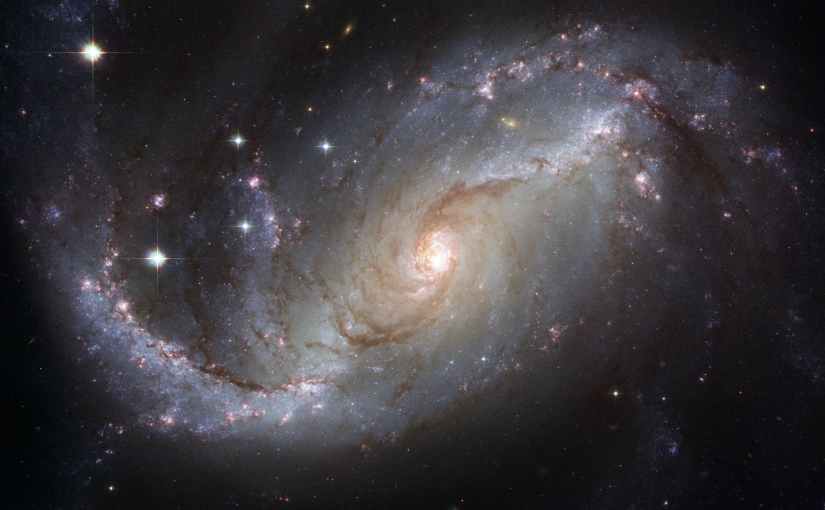
with an unimaginable cosmology of billions of galaxies.


And evolution is the process by which Trinity becomes cosmos

and cosmos is Christified –

Unconditional Love (the Father) is poured into the Word (the Son)

forever breathed anew in the Holy Spirit.


Since love is the basis of all created orders

and the Cosmic Christ is first in God’s intention to love

“exoChristology” (the theology of Christ on exoplanets)

claims that planets outside our solar system will be related

to the Cosmic Christ and completed by an Incarnation –

Christ after all is the Alpha and the Omega

the Origin and End of all.


If Christians are to survive in this expanded universe

we need a bigger Jesus – there needs to be a shift

from a focus on the human Jesus of Nazareth

to a focus on Jesus as the incarnation of the Cosmic Christ –

for there might be incarnations of the Cosmic Christ

on exoplanets, incarnations not with the name of Jesus

but with other names

but they would still be the Cosmic Christ Incarnate.


I know this is mind-boggling but so is the new universe.

However, faith allows us to live in confident patience

that God will eventually fulfill all God’s promises

and we will one day understand it all.


THE NEW SCIENCE AND THE DIVINE PLAN

The first theme of The Imitation of Christ by Thomas à Kempis

is dying to self. The second theme is detachment

because attachment to material things

is one of the great impediments to the spiritual life.


However, according to Matthew Fox

Meister Eckhart is as different from Thomas à Kempis

as compassion from sentimentalism

as passion from repression

as celebration from asceticism.


The new science should cause religious people to celebrate

because “radical amazement,” according to Abraham Heschel

is the primary characteristic of a religious attitude to life.


Ponder for a minute what the new science tells us:

the sun emits more energy in the form of light

in one second than all of humanity has consumed

in its whole history – four million tons of energy –

which is thirteen million times

the energy consumption of USA in a year.


Non-dual thinkers use knowledge like this

not to “puff up” but to build up/induce awe/transform others

starting with themselves.

They never use knowledge

to shame those who know less or control them –

they use knowledge to help us all

see reality with new eyes.


The birth of radical awe is good timing

because along with our new scientific/technical knowledge

comes awesome power

and so greater wisdom is absolutely necessary.


Humility/wisdom/compassion are needed

when it comes to science and technology

because humility/wisdom/compassion

are the only things that give us new eyes

to see the Holy Spirit/the Divine Knowledge/the Divine Plan

and according to Oscar Romero

“There are many things that can only be seen

through eyes that have cried.”


GENERAL AND SPECIAL REVELATION

Sir Isaac Newton thought the universe

was just dead matter. Now we know

it is like the Aurora Borealis –

alive/dancing/dying/resurrecting –

 a new star is born every 15 seconds!


Albert Einstein believed in general and special relativity.

In religious terms the unfolding process

of the evolution of the cosmos is general revelation –

things are heading towards absolute love and consciousness –

towards God and God’s kindom –

whereas formal/major/world religions

are simply parts of this general revelation –

they are special revelations.


But the heart of Christian mysticism

is transcultural and perennial – it covers all the bases

and goes beyond individual religions

and tries to unite them – the marriage

of eastern and western religion may be stormy

but it will be consummated and bear much fruit.


Teilhard saw that Christianity in its roots in Judaism

is a profoundly this-worldly religion

and sought to explain even the secular

as the divine milieu.


On the other hand, Johannes Metz

another Christian theologian believed that

secular individualism contains inherent contradictions –

we are more than cogs in societal wheels –

so he proposed a political Christianity

that draws upon “the dangerous memory of Jesus”

to bring about social transformation.


The meaning of Christ is summed up

in the Creation’s potential for self-transcending love.

God created the universe without a perfect form

which it cries out for and finds in Christ –

Christ is not an intrusion into the world

but rather its Reason for Being

and the Goal of Creation.


ONE RELIGION FOR ALL?

 A basic principle of Quantum Theology:

we must begin with the whole, the Unmanifest Source

of All that is within each part.


The obsession of science with objectivity/analysis/data

tells us nothing about reality and life

in its wholeness/depth/relationality –

these are mysterious forces of attraction in Nature

that cannot be explained by science alone.


Life transcends not only science/rationality/thought

but also our other big obsession, the pursuit of money:

play transcends money by reminding us

we are not just workers

and art transcends money by helping us see

hidden and deeper aspects of reality

than just producing and consuming.


Christianity became overly-rational

to oppose the over-rationalism of the Enlightenment –

in Europe this became highly academic theology

and in America fundamentalism – an over-reaction

to religious rationalism – but it left out reality

which includes everything – including inclusivity/

environmentalism/and other religions.


Some rationalism in religion is beneficial:

the Parliament of the World’s Religions

developed a “Global Ethic” – ethical guidelines

for all humans, religious or not

but this does not mean “a global ideology/

a single unified religion beyond all religions/

or a religion that dominates all others.”


The Parliament recognizes God’s love of diversity

and the Dalai Lama with his impish sense of humor

said that to have good interreligious dialogue

we need to honor the diversity of religions:

“To try to be Christian and Buddhist at the same time

is like putting a yak’s head on a sheep’s body.”


In short: it is impossible to reduce everything

to science/money/one religion.


COSMOS/THEOS/ANTHROPOS


Copernicus/Galileo/Newton opened the door

to the new cosmology – there is more to the universe

than Earth as its center, and gravity connects us

not only to Earth but to the stars. It is all one!


You can let the ki/chi/energy of the whole universe

flow thru your body

thru deep rhythmical abdominal breathing –

breath is central to all Asian forms of meditation

and in the mythology of some Asian religions

the universe was created

thru the intercourse of the gods.

Similarly, a Christian mystic in the fifth century

named Pseudo-Dionysius believed that

Creation is an outpouring of Divine Ecstasy –

the Big Bang is God’s Orgasm!


In the magical/mythical pre-rational religious stage

myths about God are taken literally

for example, God is an angry Old White Man

detached from humans and living far away in the sky.

In the post-rational (but not anti-rational) religious stage

God is Spirit – the unitive Ground of Being

a timeless Presence accessed by unity-consciousness.

These two religious stages were separated

by the renewal/new dawn of reason

in the so-called ‘Enlightenment.’


Christians need a new dawn too –

we must no longer stand with Saint Augustine

who separated grace from nature

causing our current environmental crisis

but with Saint Irenaeus who saw everything in this world

as good/a manifestation of God’s grace –

grace is in nature and therefore in human nature!


We cannot grow spiritually

if we separate our humanness from spirituality

and we cannot grow in humanness

if we separate out our spirituality –

good anthropology is foundational to good theology

and good theology is foundational to good cosmology.


THE TRANS-PERSONAL MESSIAH


For the past 500 years, the scientific lens

in which everything is rational and testable

has been robbing us of the wonder

of the former magical/mythical era.

We should have integrated science and religion long ago

since they are both foundational to our makeup

of both body and spirit.


Immanuel Kant was on the right track –

he refused to let religion be reduced

to objective scientific explanation

because he demonstrated subjectivity

cannot be reduced to objectivity

and he was an enlightened Lutheran who believed

what contemporary theologians believe –

we are in a dynamic/trans-personal relationship with God.


Quantum theology today focuses on

‘sin’ as ‘missing the mark’

which implies a dynamic process of seeking

and flexible/multiple ways of arriving at the ‘mark’

rather than rigid/dualistic/mechanistic notions of right/wrong.


Scientific research shows three broad arcs

to human psychological growth:

pre-personal/pre-rational/pre-conscious

to personal/rational/conscious

to trans-personal/trans-rational/trans-conscious.


Scripture is tran-spersonal in Second Deutero-Isaiah

where we first hear that Yahweh is not just God of the Jews

but of all people, and we first hear of the Messiah

not just as the ideal king of the Jews

but as the Universal Ruler over all people.


The only way Buddhists and Christians

can keep Buddha and Christ alive today

is for their followers to live their teachings –

Jesus needs Christians to thoroughly practice

his central teaching, the Beatitudes

for, as Teresa of Avila said:

“The only feet/eyes/hands

God has are our feet/hands/eyes” –

The trans-personal Christ is mediated to the world through us.