ARMCHAIR CATHOLICISM

As churches institutionalized, they professionalized

and a professional elite took over, the clergy

who focused on how to live the Christian life but lost the why –

the motivations of regular lay believers


Catholic clergy have been wrestling with laity forever:

when Catholicism fought the heretical monster

it labeled “modernism”

it condemned modernism’s chief architects:

Galileo/Darwin/Marx/Freud

all Christian and Jewish-atheist laymen

who threatened the church’s

classicism/Hellenism/Thomism


however, Bernard Lonergan’s “transcendental precepts”

that underlie his General Epistemological Method (G.E.M.)

that underlies all the hard and soft sciences:

attentiveness (paying attention)/intelligence (what seems to be happening?)/

reasonableness (is that accurate?)/responsibility (what should be done?)

gave Catholicism a new way of doing theology

that matched our fast-emerging world civilization


hopefully Lonergan’s work will not be subverted

because assertion and then subversion

of the good/true/beautiful

is the basic pattern of the Bible –

the nonviolent resistance of Jesus to the “normal” state

of his society – the violent Roman Empire –

is met with his murder


when individualism reigns in our society

Christian charity alleviates the suffering of individuals

but ignores the unjust structures/laws

made by the privileged to protect the privileged

that cause the suffering in the first place


“A Merchant Mentality destroys compassion and the soul –

and the sin behind all sin is dualism – splitting things apart”

– Matthew Fox


rather than meditating on God from our armchair

it would be more fruitful to actually unite

with “others” who are least like us

and find Jesus the Christ in them too.


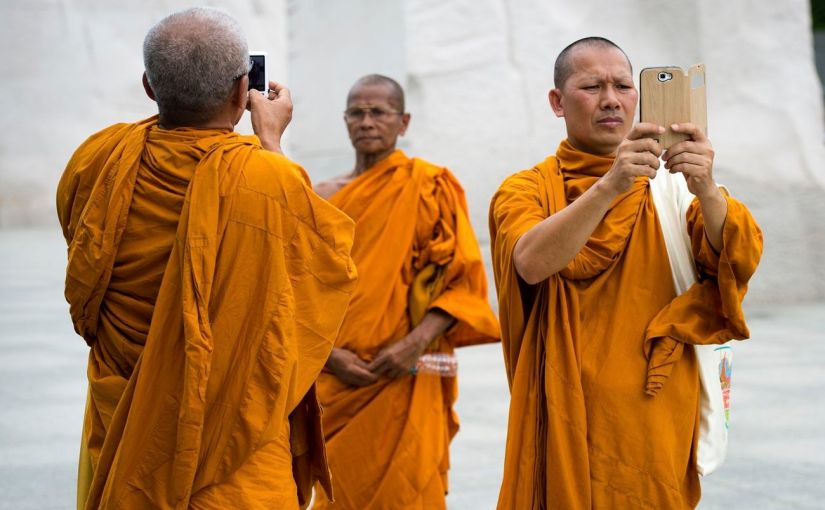
BEWARE THE CHEESE MONKS!

Modern values focus on individualism

postmodern values focus on relativism

and often both result in nihilism and meaninglessness.

We all have limitless wealth –

the whole Creation is given to us by God

but we get so caught up in individualistic or relativistic

competition/defeat/victory

that we no longer see

what is right in front of us.


A competitive society is violent

so the apparent passivity Jesus preached

in the Sermon on the Mount –

turn the other cheek – seems absurd

but is actually subversive resistance

which forces perpetrators to face

their own violence.


What Thomas Merton rejected in the “world”

was not wealth or ambition

but the world’s triviality –

its fads/advertising/masks of hypocrisy

which even his comrades he disparagingly called

the “cheese monks” got caught up in –

as if their true calling/purpose was to produce

excellent cheeses or liqueurs!


The Catholic Church got so off track

that sex scandals broke it –

one third of people raised Catholic

vacated the premises

and with the pandemic

another third departed.


If real transformation never happens for Christians

then for professional church staff

their work becomes just a career

and for lay people church becomes something

one just attends, an afterthought

instead of the living Body of Christ

which heals the “world” and its violence

by giving it profundity.


THE TEMPLE VS THE MARKET

Humans are integrally part of evolution

because they arise from it

but in reflecting on it they stand apart from it.

Teilhard would agree with Julian Huxley that

“We are nothing if not evolution becoming aware of itself.”


This is true, but the secular mythology of constant progress

is that the axial person moves

from the myth and magic of primitive humanity

to the rationalism of the great past civilizations

to the post-conventional stage of Jungian ‘individuation.’


However, Johann Baptist Metz, a German theologian

noted that the common theme in western culture is

not individuation but individualism

either by materialistic success for oneself

or by non-materialistic self-fulfillment/self-actualization –

the message is always that self-interest

is more important than the good of society.


If the world is a temple, everything is sacred

and has inherent value, which includes you and me.

If the world is a market, everything has market value only –

and spirituality is foolish and a dead end.


The ego, like the market

 always has an opportunistic agenda

driven by ideology/fear/or anger

which feeds the False Self

whereas the True Self/the Soul has no agenda

except to help you see reality as it is.


The solution to the polarization of western culture

caused by individualism is contemplation.

True meditation is to be mindful –

to concentrate and look deeply

into the nature and roots of your inner life

and so to find your True Self/Soul

the Love which loves

God/Truth/and the Common Good.

LOVE YOUR TRUE SELF

RECONCILING ANCIENT RELIGION AND MODERN SELF-HELP 

    All world religions would agree with St. Catherine of Sienna who said “Every evil is founded in self-love.” So how do we put ancient religion together with the modern self-help doctrine that you cannot love others if you don’t love yourself?

    When we are born, we are unitive thinkers: we sense our oneness with everything. However, as we develop we learn the word “no” from our parents trying to curtail our behaviour. We start to separate from our parents and others and develop our own identity. We learn we are a boy or girl and a human being not a dog or cat. Later we learn our race, nationality and everything else that separates us from others.

    Developing a sense of identity or ego is natural, healthy, and necessary to function in the world. However, if you think your ego, what separates you from everything, is all you are, it creates individualism, the source of all our problems. The illusion of separation transforms your ego into your false self, and life becomes every one for himself/herself.  

    Separation from others causes all social problems, and separation from nature is the root of all environmental problems. If you are really separate from others and the planet, what happens to them is not your concern. You can misuse them without any consequences. However, what happens to others and nature does impact us.

    I was pondering why, in indigenous paintings, there are fish, bears, and birds inside peoples’ bodies? Suddenly I got it: indigenous people are unitive thinkers – fish, bears, and birds are part of who they are. They and the environment are one.

    This is the solution to our environmental problems: the earth is us and we are the earth. Until we get that, we will continue to abuse the earth we depend on.

    Jesus was also a unitive thinker. He said “God and I are one,” and what we do to the least among us – people who are starving, naked, or homeless – we do to him.

    He also said the second greatest commandment, after loving God, is to love others as yourself. Perhaps he didn’t mean, as contemporary self-help would have it. “love others by first loving yourself,” but rather “love others because they are yourself.”

    God is everywhere and that includes inside you, in your depths. As Thomas Merton, a Catholic monk, frequently said “When you meet your deepest self you meet God.” 

    God is not only love, God is peace, goodness, wisdom, forgiveness, patience, and kindness, and so are you. Your true essence, your true self, is all these things. In this sense you and God are one. This is what being the “imago dei,” the image of God, means. You are not God, God is greater than you, but you and God are one in spirit. 

    That is why it is good to love your true self, your soul, the self that is love, peace, and goodness. When you love your true self, you are loving God within you, and since God is in everything, you are loving everything through God. When you love all the virtues of your true self, you are doing exactly what others and the earth need: people who love peace, goodness, and love.

    It is necessary to develop an ego, but it is also necessary to transcend the ego and realize that you have a larger, truer self. It is not healthy or wise to just love your ego, your false, illusory self. Loving just your ego is the root of all evil as St. Catherine said. She was thinking of love of the false self; contemporary self-help is presumably thinking of love of the true self, which is the foundation of all good.

    What we need now is a civilization built on love of the true self, the soul, our best self, our “better angels,” not one based on love of ego, our “worst demons.” This would solve many of our problems.

    As another holy woman, Mechthild of Magdeburg said:

“The soul is made of love and must ever strive to return to love. Therefore, it can never find rest or happiness in other things. It must lose itself in love. By its very nature it must seek God, who is love.”

Bruce Tallman is a London spiritual director, marriage coach, and religious educator of adults. www.brucetallman.com. For his weekly reflections on spirituality, see “The Big Picture” at https://brucetallmanblog.wordpress.com

3 Big Ideas for May 23, 2019

  1. The only way to understand the power of the message of Jesus is by imitating him and actually living the life of a disciple.
  2. The problem for most of us in the spiritual life is that we want to be a saint but we also want to experience all the sensations sinners have. If we become too angelic we can be no earthly good. And if we become too focused on the body alone we can become lower than the animals. It is always difficult to keep spirit and body integrated.
  3. The marriage of eastern and western religion may be necessary not only for the Church but also for the survival of civilization itself. Eastern religion emphasizes contemplation and western religion emphasizes social justice. Together they would keep the transcendence and immanence of God alive. Contemplation counters civilization’s obsession with consumerism and social justice counters it’s obsession with individualism.