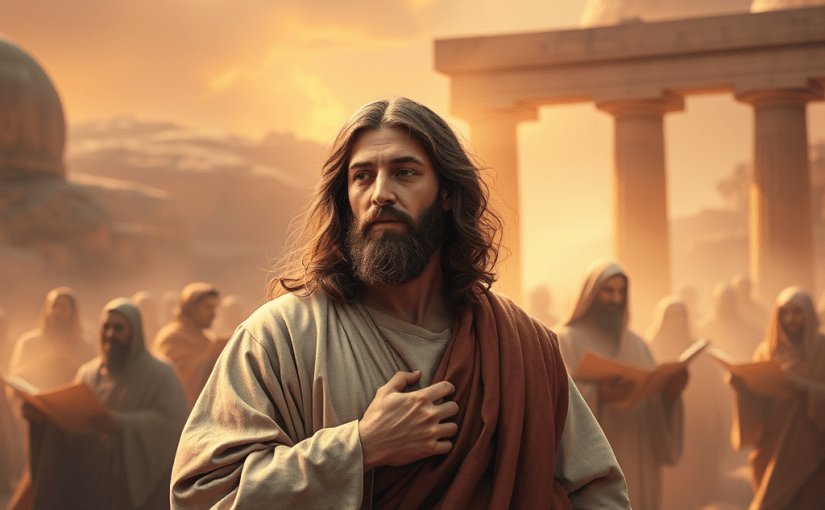
The Historical Reality of Jesus: Myths vs. Truth

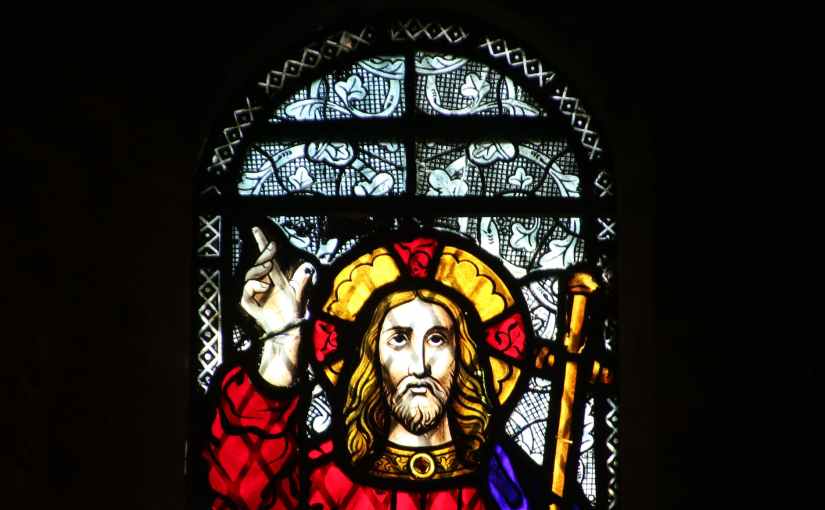
Within Christianity in the past thirty years, there have been persistent attempts to recast the basic tenets of Christianity itself. One of the most remarkable attempts came from Tom Harpur, who noted in The Pagan Christ that other cultures had myths about the dying and rising god, and therefore, the early church just made up a myth about the dying and rising Jesus. 

    Myths in many cultures have been powerful carriers of cosmic truths, and the early church knew this. However, according to Harpur, over the course of its first three hundred years, the church gradually came to claim that the myth they had made up was a historical reality called Jesus Christ.

    My sense is that Harpur is either not being true to himself or has somehow forgotten his theological studies as an Anglican priest. Every student of Christian theology is taught that the distinctiveness of the Jewish God was that this God acted in history. One of the most dramatic examples of this was when God liberated the Hebrew slaves from Egypt. God acted throughout Jewish history from the time of Abraham to the kings and prophets. 

    This experience of God acting in history simply continued in the most dramatic way of all when God became human in Jesus Christ. God acting in history was not a new idea that the early church made up. The church did not try to change a myth into a reality. Rather, it proclaimed that all the myths of other cultures suddenly became a reality when Christ was born. This was Paul’s basic approach when he told the Greeks and Romans that Jesus was their Unknown God.

    Harpur is right that God has always been incarnate in all of God’s creation, and therefore, there are many paths to God, but the traditional belief of the church has been that God was incarnate in a special way in Christ and therefore, Christ is a specialpath to God. This idea that the Infinite Ruler of the Universe can be in a specific location in a special way is, again, not a new Christian idea. Jews believed that God was present in a special way in the sanctuary of the temple. Catholics, Anglicans, and Lutherans have taken the special incarnation of God a step further in their belief that the cosmic Christ is incarnate in a very special way in the communion host.

    It makes sense that God would not just tell us how to live, as God did in the Ten Commandments, but God would also showus how to live by becoming human. In Christ, God gave us a three year audio-visual demonstration of what a true human being is and also what God is really like.

    There were many witnesses to the specialness of Jesus before, during, and after his life. First, there is the ancient scriptural record. Before the historical Jesus appeared, there were dozens of prophecies recorded in the Jewish scriptures of what the Messiah would be like: royal, suffering, and divine. Jesus fulfilled all these prophecies, particularly the ones by the prophet Isaiah, who said that a child will be born who will be called “Mighty God” and “Everlasting Father” and will have a kingdom without end (Isaiah 9: 6-8). This suffering servant will be “pierced for our sins”, but “by his wounds, we are healed” (Isaiah 53:5)

    Then there is the vision of the prophet Daniel of a man who was led into the presence of  God. God gave this man everlasting authority, sovereign power, and glory, and the people of every nation worshiped him (Daniel 7:13-14). There are many other Jewish prophecies like this.

    During Christ’s life, he gave great and sublime teachings such as the Sermon on the Mount, in which he first focused on the nature of true happiness in the Beatitudes. The rest of Christ’s teachings also extended and completed the spirit of the Law and the Prophets.

    Another witness is the astounding miracles: Jesus calming the raging sea, multiplying food for the hungry, healing all manner of illnesses, driving out evil spirits, and raising a man to life who had been dead for four days!

    Even if we overlook the miracles, there is the witness of the way Christ lived. His courage, integrity, wisdom, and compassion were so complete they must have had a supernatural source.

    There is the witness of the appearances of Christ after his resurrection to hundreds of disciples, and there is the New Testament record of miracles performed in the name of Jesus by these disciples.

    There is also the witness of people dying for their faith in Christ, the record of all the martyrs in the early church. No one would lay down their life for some mythical human being. Then there is the record of the ongoing growth of the church through the centuries and of so many present-day martyrs.

    Put all this together, and one is almost forced to conclude that in Jesus, something extremely special was going on. In fact, it all points to one reality: that God was in Christ, reconciling the world to God. In the birth of Christ, God gave us the greatest gift of all: God in the form of a human being.

Bruce Tallman is a London spiritual director and educator of adults in religion www.brucetallman.com  
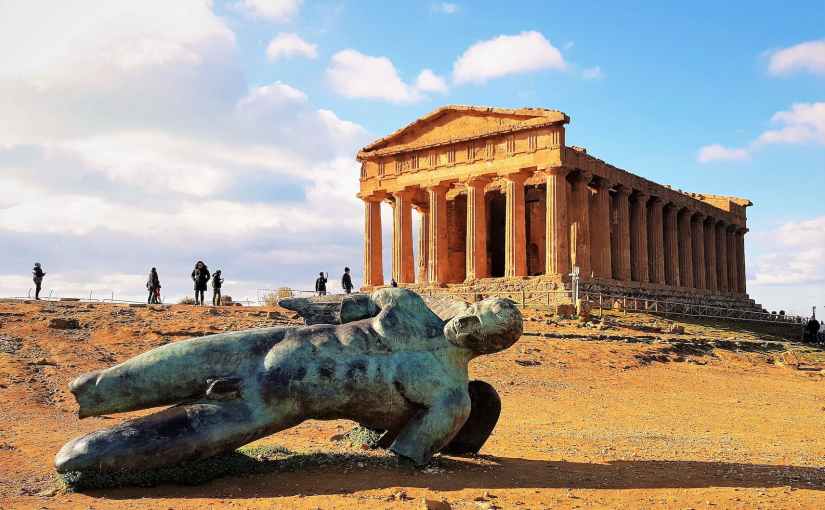
DEMYTHOLOGIZING: KILLING GOD SOFTLY

“Matter is just a minor pollutant in a universe

made of light” – Ilya Prigogine


“For the rest of my life, I want to reflect

on what light is” – Albert Einstein


but artists/philosophers/scientists say

their best ideas emerged spontaneously

out of their unconscious

out of archetypes

residing deeply in the collective unconscious

in the dark –

it is the dark which paradoxically gives light


the drug-user/druggie/droog

swims in the same water

as the mystic –

the water of universal archetypes –

of mythology –

arch-types are the same all over the world

in their essential form

though interpreted differently

in different cultures


biblical scholars kowtowing to our scientific age

tried to demythologize the Holy Bible

and get to the facts

but anthropologists hrecognize

beginning and ending stories in all cultures

that is, myths

and myths are far more important to a culture

and convey far deeper truths

than mere facts –

facts are superficial –

deeper universal truth can only be found

thru myths


demythologizing kills God and religion

because myths are more important –

meaning is more important

to peoples’ hearts –

than science

and facts.

CADUCEUS

God created humans in God’s image: male and female

God is both masculine and feminine energy

but once the male and female separated into separate forms

the fall began from perfection into duality

which was further exasperated by the discovery of good and evil

and the subsequent banishment from Paradise

where God walked with humans in the Garden


the disconnection of humans from the Cosmos

continued with Martin Luther the Protestant reformer

whose doctrine of “sola scriptura” – “only scripture”

as the revelation of God – banished Nature as the first Bible

and resulted in extreme anthropocentrism –

humans as the center of everything

thus divorcing salvation from anything to do with Nature


modern society has further exasperated things

by teaching individualism: your body belongs only to you

not also to God and others

so you can do whatever you want with your body –

“George W. Bush get off my bush” –

but according to Buddhist emptiness/no-self/interbeing theory

your body belongs to your parents/ancestors/every living being –

your body is not only your own – you belong to the human race

and belonging to a group is essential to our inner growth and maturity –

it breaks us out of individualism/self-centeredness


but this requires true humility: journeying into the darkness

of oneself/others/divinity

and always a strain remains between the “Via Positiva” –

the Cosmos as glorious – and the “Via Negativa” – life as hard/suffering

always conflict remains between love and sacrifice


the Caduceus – the Staff of Hermes

in Greek/Roman/Egyptian mythology –

the staff born by heralds/messengers/gods

with two serpents twined around it and topped by wings

symbolizes healing by the medical/pharmaceutical professions –

the rod represents the spinal cord

where the serpents cross represents the seven chakras

the serpents represent the solar and lunar/

masculine and feminine energies

that come together in each chakra

and heal all our divisions.


BELOVING OUR MOTHER – EARTH

The transition from “faith-as-experience” to “belief as opinion”

came from poor New Testament translations of the Greek:

in Greek “to believe” is a verb meaning “to trust” or “to belove”

in English it is a noun “My belief is that….”


Belief as “beloving” involves sexuality

and this involves the Third Buddhist Ethical Precept:

“Aware of the suffering caused by sexual misconduct

I vow to protect individuals/couples/families/society

by not engaging in sexual relations without love

and a long-term commitment”


in order to be more beloving, Brother Teasdale renounced sex

and adopted the lifestyle of a Hindu sannyasin (renunciate)

but one engaged in the world –

his book A Monk in the World

explains how he became a “Warrior-Monk”

which is what the world needs right now:

Prophet-Mystics in our midst right here/right now


we cannot hope to have a revival

of meaningful sacramental fundamentals

without a re-education about the necessity

in everyone’s life of the importance of myth/symbol/ritual

that crystallizes our purpose on planet Earth


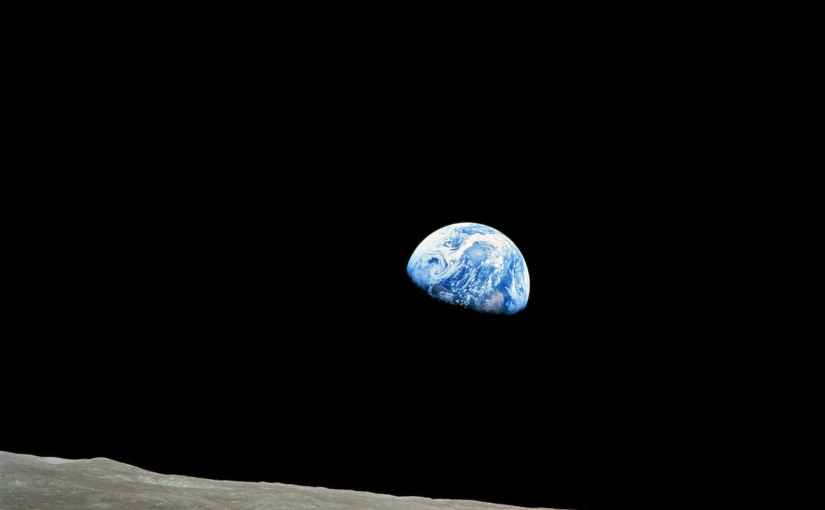
the first Earth-rise above a lunar landscape

broke all the old mythology to pieces as we realized:

Earth and heaven are no longer separate:

Earth is floating in the heavens

Earth is a heavenly body

Earth is no longer the center of the universe –

cosmological centers are now everywhere!


Therefore, we can surrender

all our anxieties and ambitions

to the God who is everywhere –

God is no longer “Our Father who art in heaven”

but right here/right now

and therefore will provide what we need

right here/right now

to be happy and holy and loving

of this pale blue dot

this goddess, “Our Mother Earth.”


THE FREEDOM OF RELIGION

God can only be in all things if we allow God to be with us

in mercy as well as power

in littleness as well as greatness

in emptiness as well as fullness –

when we are full of ego God empties us

and when we are empty God fills us with Spirit


our love of God depends on the emptiness/trials/tribulations

of the world because we cannot get to pure love

until we experience emptiness/setbacks/limitations to our ego


if you go into the world with the conscious intention

to not shut anything or anyone out of your heart

you will be constantly challenged by learning

ugly things about yourself that you always repressed –

prejudices that want to keep your heart shut down


according to psychologists there are ten lines

of internal development that can go thru stages of growth:

moral/spiritual/psychological/esthetic/physical lines

cognitive/financial/social/sexual/emotional lines


and of course psychologists overlook religious lines –

since religion is always ironically a blind spot for psychologists

even though religion pervades every culture throughout history

and religiosity is an inescapable part of our human constitution

and rights of religious freedom are founded on the dignity

of being human which can be established

thru reason and the Word of God/the Bible


freedom of religion and freedom of religious development

should therefore be written into every nation’s constitution

as a civil right of all citizens so that no one is forced

to be an atheist as in Marxism/communism

and no one is forced to be religious

as in ancient times when Christianity became

the state religion of the Holy Roman Empire


even if Christianity, unlike other “myths” –

“lies that turn out to be the Truth” – even if you don’t like it

that Christianity proposes something greater than immortality –

eternal life with God – since immortality without God and a living body

with senses – and therefore without a life – would be eternal boredom

still, despite what you like/dislike, the freedom of religion must be respected.


IN PRAISE OF COMMUNITY – EAST AND WEST

The Shantivanam Ashram had a wide impact

because its founder, Bede Griffiths, embodied the marriage

of East and West – he was at one and the same time

the brilliant Christian intellectual and the Indian sadhu (holy man)

and he knew that Christianity and Hinduism

could meet at the mystical level.


Griffiths also knew every one of the eight billion inhabitants

of Earth is circumscribed by their context –

their culture and institutions dictate what

books/entertainment/freedom/moral values/political system/

religion they should follow.


However, healthy psychosocial development means

individuals are not only shaped by their context

they choose and shape their context –

in other words, healthy childhood/adolescence/adulthood

involves self-regulation and self-agency.


Christians have a special agency to play in politics:

to fight for the common good, that is, to show how

authority can be harmonized with freedom

diversity can be harmonized with unity

initiative can be harmonized with communal good.


Jesus taught women and included them freely

in the early Christian community/ecclesia

and would ordain them today.


The Buddha also was naturally oriented to justice –

he invited women to be active and teach

in the Sangha (Buddhist community/ashram).


Our culture and institutions used to be guided

through psychological perils by the symbols

and rituals of our religious inheritance.

But now that all mythology/gods/demons

have been rationalized out of existence

we now have no overarching myth that binds us all together

we have no protection – no community/church/sangha/ashram

to keep us warm/comforted/sustained/fighting for the good –

sadly, our impoverished/individualistic lives means

we have to face our daily perils on our own.


GOD IN HUMAN FORM

Within Christian ranks in the past 40 years or so there have been persistent attempts to recast the basic tenets of Christianity itself. One of the most remarkable of these has come from Tom Harpur, who noted in The Pagan Christ in 2004 that other cultures had myths about the dying and rising god, and therefore the early church just made up a myth about the dying and rising Jesus.

    My sense is that Harpur is either not being true to himself or has somehow forgotten his theological studies as an Anglican priest. Every student of Christian theology is taught that the distinctiveness of the Jewish God was that this God acted in history. One of the most dramatic examples of this was when God liberated the Hebrew slaves from Egypt. God acted throughout Jewish history from the time of Abraham to the kings and prophets.

    This experience of God acting in history simply continued in the most dramatic way of all when God became human in Jesus Christ. God acting in history was not a new idea that the early church made up. The church did not try to change a myth into a reality. Rather, it proclaimed that all the myths of other cultures suddenly became a reality when Christ was born. This was Paul’s basic approach when he told the Greeks and Romans that Jesus was their Unknown God.

    It makes sense that God would not just tell us how to live, as God did in the Ten Commandments, but God would also show us how to live by becoming human. In Christ, God gave us a three-year audio-visual demonstration of what a true human being is and what God is really like.

    There were many witnesses to the specialness of Jesus before, during, and after his life. First, there is the ancient scriptural record. Before the historical Jesus appeared, there were dozens of prophecies in the Jewish scriptures of what the Messiah would be like: royal, suffering, and divine. Jesus fulfilled all these prophecies, particularly the ones by the prophet Isaiah, who said that a child will be born who will be called “Mighty God” and “Everlasting Father” and will have a kingdom without end (Isaiah 9: 6-8). This suffering servant will be “pierced for our sins,” but “by his wounds we are healed” (Isaiah 53:5).

    Then there is the vision of the prophet Daniel of a man who was led into the presence of God. God gave this man everlasting authority, sovereign power, and glory, and the people of every nation worshiped him (Daniel 7:13-14). There are many other Jewish prophecies like this.

    During Christ’s life he gave great and sublime teachings such as the Sermon on the Mount, in which he focused in the Beatitudes on the nature of true happiness. The rest of Christ’s teachings also extended and completed the spirit of the Law and the Prophets.

    Another witness is the astounding miracles: Jesus calming a raging sea, multiplying food for the hungry, healing all manner of illnesses, raising a man to life who had been dead for four days!

    Even if we overlooked the miracles, there is the witness of the way Christ lived. His courage, integrity, wisdom, and compassion were so complete they must have had a supernatural source.

    There is the witness of the appearances of Christ after his resurrection to hundreds of disciples, and there is the New Testament record of miracles performed in the name of Jesus by these disciples.

    There is also the witness of people dying for their faith in Christ, the record of all the martyrs in the early church. No one would lay down their life for some mythical human being. Then there is the record of the ongoing growth of the church through the centuries, and of so many present-day martyrs.

    Put all this together and one is almost forced to conclude that in Jesus something extremely special was going on. In fact, it all points to one reality: that God was in Christ, reconciling the world to God. In the birth of Christ, God gave us the greatest gift of all: God in the form of a human being.

Bruce Tallman is a spiritual director and author of God’s Ecstatic Love (Apocryphile Press, 2021). See www.brucetallman.com/books


COSMOS/THEOS/ANTHROPOS


Copernicus/Galileo/Newton opened the door

to the new cosmology – there is more to the universe

than Earth as its center, and gravity connects us

not only to Earth but to the stars. It is all one!


You can let the ki/chi/energy of the whole universe

flow thru your body

thru deep rhythmical abdominal breathing –

breath is central to all Asian forms of meditation

and in the mythology of some Asian religions

the universe was created

thru the intercourse of the gods.

Similarly, a Christian mystic in the fifth century

named Pseudo-Dionysius believed that

Creation is an outpouring of Divine Ecstasy –

the Big Bang is God’s Orgasm!


In the magical/mythical pre-rational religious stage

myths about God are taken literally

for example, God is an angry Old White Man

detached from humans and living far away in the sky.

In the post-rational (but not anti-rational) religious stage

God is Spirit – the unitive Ground of Being

a timeless Presence accessed by unity-consciousness.

These two religious stages were separated

by the renewal/new dawn of reason

in the so-called ‘Enlightenment.’


Christians need a new dawn too –

we must no longer stand with Saint Augustine

who separated grace from nature

causing our current environmental crisis

but with Saint Irenaeus who saw everything in this world

as good/a manifestation of God’s grace –

grace is in nature and therefore in human nature!


We cannot grow spiritually

if we separate our humanness from spirituality

and we cannot grow in humanness

if we separate out our spirituality –

good anthropology is foundational to good theology

and good theology is foundational to good cosmology.


LOVING OUR DIFFERENCES

The core challenge of spiritual maturity

is integrity and differentiation:

being rooted in your own spirituality

while respecting the different spirituality of others.

Accepting differences gets the ego out of the way

and points to self-transcendence – a dynamic force

operative in all human nature/experience/activity:

God’s Mercy frees us from our self.

But most religions play both sides:

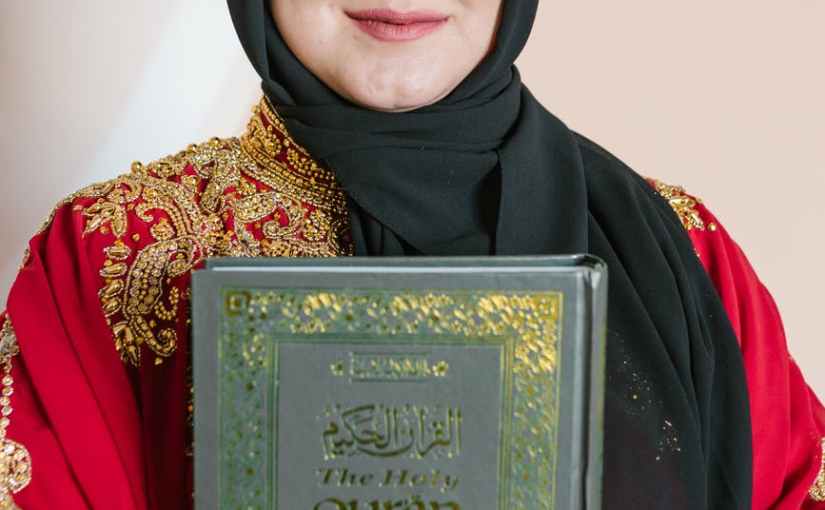
throughout the Qur’an God is

All-Merciful/All-Compassionate/All-Loving

but also the Master of the Day of Doom.

God is the Only One to pray to and serve

the Only One to guide us to be blessed

and not subject to God’s Wrath.

But we cut our self off from God:

“Disobedience and thanklessness

are the source of all evil.”

– Saint Catherine of Sienna

Some think humans are saints

others think we are “totally depraved” (John Calvin)/

“piles of dung covered over by the snow of Christ” (Martin Luther).

However, churches also have the capability of creating unity –

bringing in the light of God unites human beings

by showing we are simultaneously

defective and dignified/broken and blessed.

But churches are also flawed/divided/broken –

the Church thought of itself as universal and united

during the first one thousand years

till the Great Schism in 1054

between Catholic and Orthodox –

when churches became obsessed

with being ‘right’ about what separates them.

Life always involves conflict

but “The journey of the mythological hero

is to move through a devastated landscape

and suffuse it with imperishable love” (Joseph Campbell).

It always gets back to:

love/love of those who are different/

love of our enemies

the teachings of Jesus.

GETTING BEYOND FLATLAND

We must get beyond Flatland –

the loss of transcendence –

and build a civilization that integrates

consciousness/culture/nature

morals/art/science

personal values/collective wisdom/tech knowhow.

Science and technology on their own

are not accountable to anything

except their own ethic: expediency and efficiency.

If technology allows us to do something

we feel we must do it

even if we destroy whole civilizations

with chemical/biological/nuclear war.

Normal ethics do not apply

to these autonomous powers.

“Life is always a battleground between opposites:

birth/death, joy/pain, good/evil, science/religion.

If the opposites ceased, life would cease.”

– Carl Jung

If science alone rules, we are in deep trouble:

“Humanity should not be afraid of God,

we should be afraid of losing God.”

– Meister Eckhart

Every civilization is built on mythology

and the most common myth is the hero.

The mythic structure is always the same

whether ancient/medieval/modern

whether Far East/African/Incan:

miraculous birth/early displays  

of superhuman strength/then rise to power/

triumphant struggle with evil/

eventual fall due to pride or death.

Pope John Paul II noted also:

common mythic structures/elements/roots

in the many varieties of religion.

This pope was more on the side of

Vivekananda than Francis Xavier –

John Paul was a pope

who ironically transcended Christianity.