
Boost Your Spiritual Growth with These Easy Practices

If you adopt any of the following suggestions, it will have a big impact on your spiritual growth.

    Get to know a homeless person and try to find out how they became homeless.

    Read the scriptures of another religion.

    Start the day with prayer, meditation, scripture reading, or any spiritual reading. It will set the tone for the day.

    At the end of the day, keep a spiritual diary and record where you met God that day or what God taught you. Record your prayers and review them later to see if they were answered.

    Use natural breaks in the day, like meals, coffee breaks, or when you shower, drive, exercise or wait in line to think of others in prayer.

    Extend your present daily spiritual practice from 15 to 30 minutes or 30 minutes to an hour.

    Adopt a child or family in a developing nation through World Vision or a local charity like Save-A-Family-Plan and develop a relationship by writing back when they write you.

    Volunteer to visit people in jail, read to the blind, be a friend to the mentally ill, or help prepare meals and clean up at a local church soup kitchen.

    Hire the person on the traffic island with the sign that says they will work for food or money.

    Attend the place of worship of your own faith regularly if you do not do so.

    Prepare yourself before going to your place of worship by praying or reviewing the readings beforehand.

    Visit the place of worship of another denomination. For example, if you are Presbyterian attend a Mennonite service.

    Visit the place of worship of another religion. Christians could attend a local mosque. Muslims could attend a synagogue.

    Get to know someone of a different religion and find out what they believe.

    Check out www.beliefnet.com, a vast website where you can learn about any spiritual or religious tradition and dialogue with those in it.

     Join an online prayer community like that at  www.sacredspace.ie. You can put your prayer requests out there and pray for the requests of others.

    Get to know the writings of a major spiritual thinker like Thich Nhat Hahn or Henri Nouwen.

    Do a “retreat at home.” Take a whole morning, afternoon, or evening once a week or once a month to pray or meditate more deeply.

    Attend a local retreat center like the Michaelite Fathers just outside London, or Five Oaks in Paris, Ontario.

    Get to know the Enneagram, a powerful tool for spiritual growth and awareness at http://www.enneagraminstitute.com.

    Learn new ways of praying, like Centering Prayer, Ignatian Prayer, Taize Prayer, or learn new ways of reading scripture, such as Lectio Divina.

    All these things will help you on your spiritual journey.

Bruce Tallman is a London spiritual director and educator of adults in religion.

http://www.brucetallman.com

Why Marriage is Hard: Exploring Challenges and Solutions

Songs and movies create fantasies about romantic love, and the wedding industry creates even greater fantasies about marriage. However, romantic love is fickle, and marriage is hard. St. Paul wrote in scripture that those who marry will experience trouble (I Cor. 7:28).

       Humans are basically good but also basically broken, and therefore, while God meant marriage to be a holy and blessed state, if two broken people live day after day in the most intimate relationship in the world, that is, marriage, there are going to be problems.

       Besides spiritual direction, I do marriage counselling. All marriage experts agree there are four distinct stages of marriage: romance, disillusionment, misery, and seasoned love.

       Marriage normally begins with romance. When dating, everyone is on their best behavior and looks their best. You haven’t lived together, so it is easy to buy into the illusion that this person only has good points and will take care of all your needs forever.       

       After you move in together or get married, and the other person is in your face day after day, you normally start to notice things about them that bother you, and you may feel that only some of your needs are getting met. In this disillusionment or “reality check” stage, you lose the illusions of romance.       

       If you stay together long enough, you will normally go through misery at some point, where your partner’s good points seem to be totally eclipsed by their bad points, and you feel none of your needs are getting met. This misery stage is why, according to Statistics Canada, there is now about a 40% divorce rate for first marriages.      

       At this point, faith can be very helpful. In most religious weddings, the couple takes serious, sacred vows before God and other people that they are going to love their spouse “for better or worse.” When in misery, it is particularly important to remember this unconditional love commitment before God. Prayer and church-based organizations like Retrouvaille, which hosts healing weekends for couples in misery, can also help a lot.

       Misery can be as difficult as overcoming an addiction. Alcoholics Anonymous has been successful because its first tenet is to admit that your life is out of control, and you need the help of a Higher Power to overcome your problem.

       In a second marriage, faith can be even more crucial. People in second marriages are even more prone to fall into misery because there are usually also ex-spouses, lawyers, children from two marriages, and wounds from the first marriage to contend with. It is not surprising the divorce rate for second marriages is significantly higher than for first marriages. People in second marriages need to pray even harder and exercise even more the virtues that all churches teach: forgiveness, trust, patience, commitment, etc.                 

     However, there can be legitimate reasons for separation and divorce. If there was prolonged emotional or physical abuse or neglect, it probably was not God’s will that the two of you be together in the first place, and you should split up. On the other hand, often couples split up without giving their best effort to preserving the marriage. 

       Mutual spiritual growth is the purpose of any marriage, whether first, second or third. Difficulties can be seen as an opportunity to rely more upon God, to surrender your ego more, to pray more, to love more deeply. 

        If you can do all these things, you will eventually come through to the fourth stage called seasoned love. If you learn to accept your partner with all their flaws, remember your wedding vows and recommit yourself to the marriage, you will normally start to see your partner’s good points again, the bad points don’t matter because you are committed to the marriage anyway, and by then you have learned to rely upon God more than your spouse for getting your needs met. 

Bruce Tallman is a spiritual director and educator of adults in religion. brucetallman.com.
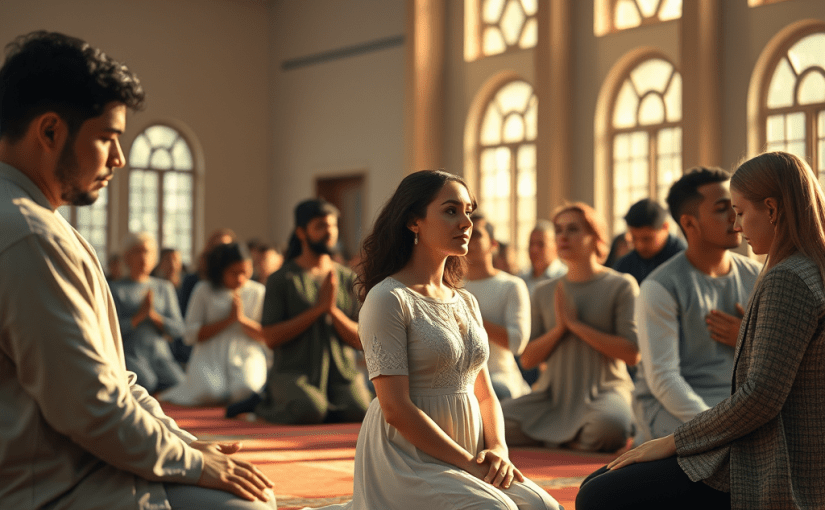
Effective Prayer: Seven Key Habits for Spiritual Growth

Most people who believe in God, whether Christians, Muslims, Hindus, Bahais, or Jews, pray at least occasionally. For many, prayer is central to their spiritual journey. However, like anything else we do, prayer can be effective or ineffective. 

       The key to prayer is desire for God. St. Augustine’s classic Christian definition of prayer is “lifting up our hearts and minds to God.” In this sense, whatever we do, whether working, playing, or even just walking the dog, can be prayer if we use it to connect to God.

       Another key to effective prayer is silence, both internal and external. It helps to pray in a quiet environment and to take a moment to still the constant cacophony of thought before beginning. However, God can be found in the midst of noise and chaos as well.

       Having a special designated place and time can be helpful, but where, when, how often and how long you pray depends entirely on your schedule and whatever proves fruitful for you.

       In preparing to pray it helps to get into a comfortable posture, whether sitting or kneeling, and then follow the A.C.T.S. formula: Adoration (instead of starting with requests bring to mind God’s glory: e.g. “Almighty God, source of all being, truth and life…”), Confession (examine your conscience, repent of and surrender to God all negatives such as unforgiveness and deceit), Thanksgiving ( remember all God’s blessings), Supplication (pray for the needs of others). 

       It is also okay to pray for your own needs, as long as this does not become the major focus of your prayer. As well, the Jewish scriptures say that if you pray for someone else’s need and you have a similar need, God will supply your need as well. You don’t even have to ask for it.

       There are seven habits of people who are highly effective at prayer:

       First, their prayer is based on their own experience of God, so they are praying from their heart as well as their head, not just mumbling prayers composed by someone else. 

       Secondly, their prayer is simple and direct. Good prayer is possible for anyone, not just the religious professionals. You don’t have to have a doctorate in theology to pray well.

       Next, their prayer is bold, strong, and durable. They boldly approach God because they know God as a God of compassion. They do not timidly address God as if God’s grace did not outweigh their failings. Also, their prayer gets stronger, not weaker, during the hard times.

       Fourth, their prayer is deep and loving. It involves a radical commitment to God and others, particularly their enemies. For them, prayer is broad and hospitable. It welcomes all human beings, all creatures, and the whole planet into their hearts. It is never just about their own little group.

       Fifth, they listen to God as much as they talk, and they take this listening attitude into their daily life. Throughout their day they are sensitive to the subtle promptings of the Spirit. In this sense, they “pray always” as St. Paul exhorted Christians to do.

       Sixth, their prayer is socially conscious. They are particularly aware of the marginalized, the people the rest of us often forget about because they drop through society’s cracks. Their prayer takes in the social issues of the day. It is never just about “God and me.”

       Lastly, their prayer is integrating. It integrates their faith with their life, their contemplation with their action. After they pray, they do something that addresses what they prayed about. As someone said, the person who is effective at prayer “prays as if it all depended on God and then acts as if it all depended on them.” They know that what the world needs now is effective prayer harnessed to effective social action.

Bruce Tallman is a spiritual director and educator of adults in religion. brucetallman.com
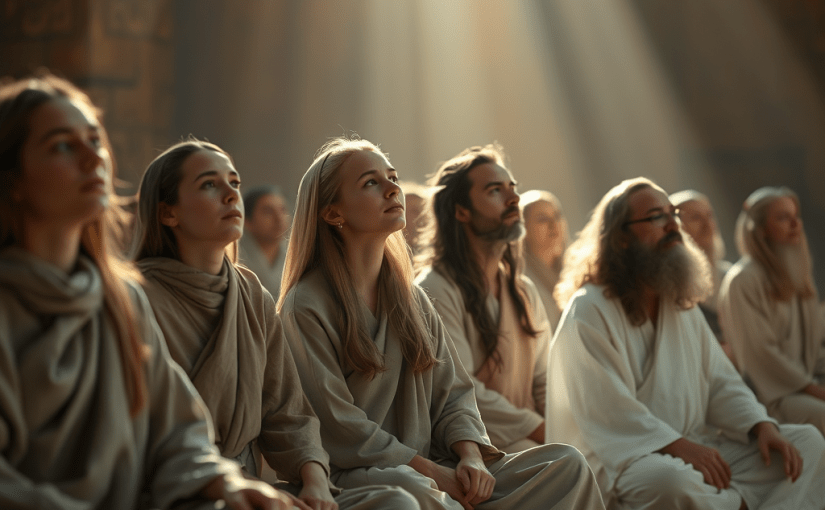
Unity Consciousness in Spiritual Experience

If you are spiritual you cannot ignore the flesh

you cannot pretend we don’t need the body

to live/breathe/move/see/hear/think/contemplate God

without the body and its senses there would be no spirituality

contemplation allows us to connect scriptures to life

to see how the God who liberated the Israelites

from slavery

wants to liberate us 

from slavery

to addictions/codependency/consumerism/victimhood

however, “Shame and aggression are central

in the human psyche, particularly men –

and these are the universal ‘original wounds’

not ‘original sins’ – and they are hard to shake”

– Otto Rank

but prayer heals

and translates religion/doctrines/dogma

into vital spirituality

and we pray in the first person

subject-to-subject

our soul to God’s soul

we say, “Lord, I am sad/joyful” 

not “Lord, he/she/it is sad/joyful”

Carl Jung’s personal myth of meaning

which he also found expressed in the Western Mystics

was the myth that God needs us 

to become more and more conscious

so that God can become conscious of the whole

which is what the Spirit is leading us to

the core of spiritual experience 

is the same in all religions:

unity consciousness

which is not a phantasmagoric mystical experience

but rather a life-changing sense 

of the unity of all things –

no more separation

we are all one

with God/others/ourselves

the whole Creation.

The Messy God in All Things

Raimon Pannikar and Paul Tillich support Teilhard’s view

that a new perspective of God is rising out of the old one –

a God more comfortable with the messiness of evolution

than with the order and structure of Greek metaphysics

the direction of evolution is now seen as 

towards the maximization of goodness

and thus towards the incarnation of God –

if Christ is the Divine Word as Creator

and if Christ is the Word Incarnate as Jesus

Christ Jesus is also the Redeemer –

what is created in Love is redeemed in Love

through prayer Love is received

and through miracles Love is expressed

prayer is the medium for miracles

our night dreams show us 

we contain in our unconscious 

the miracle of secret Aladdin caves 

a mythological world of jewels and ‘jinn’ –

spirits within that invite us into

the desire and dread of the human adventure –

to have our secure inner world dismantled/

deconstructed but also reconstructed

into a broader/more compassionate/

more fully human space

in general, it is better to approach God

through the Holy Spirit, as a living reality

than through theology as an abstract concept

self-abandonment to Divine Providence

in the present moment

begets faith

which helps us to see 

God hides God’s Self

so we develop a pure faith

that can see God in everything –

in all life

and all evolution. 

FREEDOM FROM SELF

Humans are the apex of the created world

are open to the Infinite

seeking fulfillment in God

and this openness and seeking of God

constitutes the very nature/structure/meaning

of what it is to be human

spiritual transformation has two movements:

self-appropriation – owning who you are

and what is going on inside you

and self-transcendence – becoming God-centered

not ego-centered

intellectuals and sceptics never think

to check out the Source of their intellect

in their pride they reject God and religion 

they never slay the dragon 

of their ego

our one desire should be to seek God’s will for us

not pleasure or wealth or fame 

or even virtue or wisdom

liberation theology is about not just 

struggling for others

which suggests paternalism

it is also about self-liberation:

realizing you are not completely fulfilled

without others

and you are living in a society 

that alienates you from others

and therefore from your true self 

which always needs others 

for fulfillment

prayer is the best way 

to step out of self-centered living

into the big picture: God 

and a vision of peace and love 

for all

prayer is

“Enlightenment:” freedom from self.

SPIRITUALITY BEFORE BIBLE

A Jesuit approached a guru

and asked to be initiated

into the art of praying without ceasing

the guru said “Concentrate on your breathing

and the air you breathe in and out is God

and stay with that awareness”

the Jesuit soon realized

prayer is as easy

as breathing

and that with the guru’s method

praying without ceasing is easy-

all of us are praying without ceasing

as we breathe

as long as we are aware


but constant awareness is the great challenge

for all of us, not just Hindus and Jesuits –

and in addition, the challenge for Buddhist practice

is to hold the sadness of Samsara

and the vision of the Eastern Sun

at the same time –

to hold sadness at our broken/illusory world

and the joy of heaven

simultaneously

and in constant awareness


but any type of prayer, Eastern or Western,

is powerful –

it was three hundred years of praying

that came before and led to

the Nicene Creed

and to choosing what books went in the Bible

and what did not make the cut –

the Gospels of Peter/Mary/Magdalene/Phillip/Thomas/

Gospel of Truth/Gospel to the Egyptians/Secret Book of James –

prayer came before choosing

the Canon of Scripture –

the officially sanctioned books by the Church –

the Bible and Creeds came after the prayer of the Church


the Bible and Creeds are not unimportant

but they are not foundational

spirituality/prayer is.


HUMAN PURPOSE LOST AND FOUND

The new cosmology resonates with Christian faith –

God cannot be reduced to the creation event –

something must have come before Creation – 

God is not reducible to the universe –

even though people pray to the universe

or ask the universe to do things for them

“the universe” is a code name for “God”

but people are afraid to admit God into their life

because it is not cool these days to be religious –

God is not the universe nor separate from it

but God’s Presence is in and flows thru ongoing creation

modern atheism did not arise with science

but atheism got a kickstart with Copernicus’ heliocentrism –

humans kicked out of the center of the universe

to the periphery of a vast impersonal cosmos 

humans irrelevant to the cosmic story –

humans no longer the perfection of the universe

but an accidental side show

gave birth to existentialism – we have no god-ordained purpose –

we create our own purpose by what we do

Gandhi retrieved and the West lost a religious view of reality –

a view of the importance of being and truth

the West reduced the human purpose to practical efficiency –

concerned with means not ends –

no longer aware of the intrinsic God-given value 

of being human – we only focus on what humans 

can do for other humans – particularly the rich 

our only purpose: producing and consuming things

only religion kept a notion of our intrinsic value –

the Church’s mission to discover honest-to-goodness truth

through open dialogue between humans

requires reverence and respect for lawful diversity

“The Church’s purpose is to keep unity in essentials

freedom in non-essentials, and charity in all things”

– Pope John XXIII

but the Church cannot brag about any of this –

it is the work of the Holy Spirit

to call forth many religious – hermits/monks/nuns

who have consecrated their lives to prayer –

praising God and interceding for God’s People –

this has gone on since the Desert Mothers/Fathers

and is the living source of the spiritual life of the Church.

THE TRUTH ABOUT HUMANS

To be responsible human beings

we need to make responsible choices

and to do that we need to seek and face the truth

and reality is the first principle of truth

and to be fully human is to be fully connected to reality

particularly our humanness/vulnerability –

we need to ask “what is real here- what is really going on?”

“what am I capable/not capable of?”

and “what are the dangers?”

to be real as a human being 

means to abandon the loneliness 

of being caught 

in illusions/dreams/ideologies

frightened of reality

part of our human reality

is the tendency to be distracted 

from the truth 

in the first mansion of Teresa of Avila’s Interior Castle

it is dark and dangerous 

because those who inhabit it dwell

in the first stage of the spiritual journey

and are still so preoccupied 

with worldly riches and pleasures

they are distracted 

from moving into the second mansion – 

the only way out of the first mansion

is to beseech Mary 

and all the saints

to rescue you 

thru the power 

of prayer/meditation/contemplation

so you discover the truth 

that our vulnerability

is grounded

in the reality of God.


WAKE UP!

Prayer is the place where much spiritual growth

and struggle can occur

caused by the true self and false self and sinful self

in conflict


your false self is not your sinful self

the intentionally self-centred self

that God does not like and you should not like –

the false self is good and necessary as far as it goes –

it is the outer things you think you are –

your name/gender/job/nationality

but it often poses as the true self/soul which it is not

thus it becomes false


the essence of spirituality is being aware/seeing/

becoming conscious – that is why Jesus and Buddha

constantly say “Be awake/wake up” –

“Therefore keep awake/be on the alert

for you do not know when your Lord is coming” (Matt 24:42) –

be awake particularly to your sinful self

the subtle self that likes the best spot in the synagogue

to be treated with respect and called “Rabbi”

or “Father”


the cure for the false self is what Brother Lawrence calls

“The Practice of the Presence of God” –

the holy habit

of getting used to God’s constant company

and constantly talking/constantly listening

to God in every circumstance –

even while making love

indeed, particularly while making love

that’s why sex feels so heavenly –

God is making love to you

thru your partner – wake up to that!


contemplative prayer can occur anytime/anywhere –

it is “a communion in which the Holy Trinity

conforms humans/the image of God/the Imago Dei

to God’s likeness” (Catechism of the Catholic Church 2713)

– thru grace we participate in Divinity! Wake up to that!


all souls thus owe God everything

and can repay God nothing.