UNIVERSAL COMMUNION

With relativity and quantum mechanics

scientists began to see the oneness of all things/

got rid of former Newtonian dualisms/

such as separation of observer and what is observed/

came to see the whole

as energy penetrated by consciousness

just as all mystics do –

science started to catch up with mysticism!


“God creates light/dark/well-being/woe –

there is only one God

not a god who creates light and well-being

and another god who creates darkness and death

as in dualistic Manichaeism”

– Deutero-Isaiah


the Center of the World which unites all things

may be the Tree of Life

or the World Navel

or a Cosmic Human

like Buddha or the Son of God –

wherever the Energies of Eternity

break into the Everydayness of Time


we need some kind of mythology/deep truth to live –

Carl Jung’s personal mythology of meaning

expressed also in Western mystics

was that God made us

to become more and more conscious

so that God could become more and more conscious

and more fully penetrate the whole Cosmos


Jung’s view was that the future of Christianity

lay in the realization of the Cosmic Christ within each person –

this involves not making a person into a “God”

but rather helping them to consciously discover

the True Self/Christ-Self within each one of us


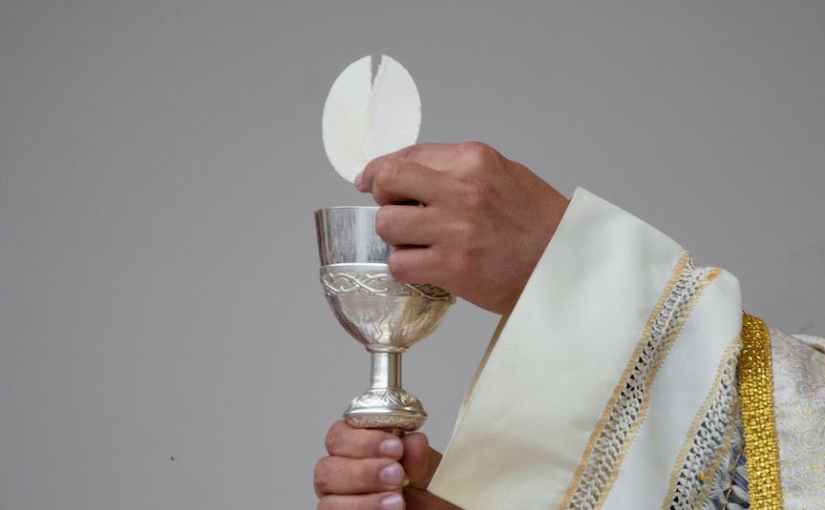
 thus the bread and wine are not just symbols –

they contain God/Ultimate Reality/the Ground of All

just as we do –

the Church calls us to mindfulness in the Eucharist –

that God is in the Eucharist

just as God is in us.

FAITH DEEPER THAN “BORN AGAIN”

In his song “Lovers in a Dangerous Time”

Canadian folk legend Bruce Cockburn sings

we live in a dangerous time because

democracy is rapidly crumbling across the planet

and because climate change leaves no time  

to stop it/figure it out/get our bearings


however, mystics East and West agree

there is more to life than “getting somewhere”

in politics/business/war/religion –

beyond ambition there is penetration of being/

truth/meaning/purpose


and the solution to all problems

is not simply to be “born again” –

religious maturity is deeper than any psychological state

or infantile religious experience

because maturity can deal with

darkness/failure/uncertainty and still be joyful

whereas infantile religion always needs more and more light

and only light, no darkness or shadow


self-confrontation of our shadow is painful

but necessary for spiritual growth –

taking a log out of an eye is a painful operation

but then we can see clearly –

contemplation can be painful too –

showing us our deepest convictions

are wrong or shallow, replacing our comfortable truths

with unsettling ones that empty out our ego


faith and love are deeper/higher than science

or even mystical experience – knowledge and experience

no matter how deep or great are worthless

unless they deepen our faith and love


hope deepens us too –

without the hope of eternal life

the riddles of life/death/grief/guilt remain unresolved –

according to Catholic theologians Karl Rahner and Ron Rolheiser

“there is no finished symphony in this life” –

and so there is a tendency to fall into despair

unless the Life Divine is real.


PEACE THRU INTEGRATION

Science is going thru a major paradigm shift

from seeing nature as mechanical and inanimate/dead

to seeing it as organic and alive


The physical sciences noted

the dissolution of energy in entropy

but ignored increasing complexity/consciousness

which is building energy up and up – it is this increase

that gives the whole cosmos its purpose and direction


Believers claim the resurrection of Christ integrates

the whole cosmos and all people into God

which is God’s purpose/direction/flow for everything:

union and transformation in God


It is good to include all religions and thus integrate everything

in a new way not the old way –

Buddhism can be part of cosmic integration

since it will not block the flow of God’s plan –

doing no harm to ourselves or others

is basic Buddhist teaching on nonaggression

which includes not killing/stealing/lying and the Christian commandments

of not doing harm in our heart/thoughts/speech/actions


However, Rosemary Radford Ruether, a great feminist theologian

pointed out that in traditional Judeo-Christianity there exists

a sacralised assumption of a divinely ordered patriarchy/hierarchy

from God to angels to men to women to animals –

this Great Chain of Being invented by men –

was the primary metaphysics for all cultures East and West

before science – and it placed women somewhere

between men and animals


No matter how we integrate everything – whether thru science

or religion or science and religion working together –

what people want most of all is to live in peace


Peace is all around us – in the world/nature/ourselves

when we live in the present moment – when mindfulness

whether Buddhist or Christian – is in us

the Holy Spirit and peace are in us –

this is not a matter of faith but of practice

and others will sense it and be transformed –

world peace begins in everyone’s heart.

MYSTICISM AND POLITICS

Mysticism is direct experience of God

but most mainline pastors are sceptical about experience

because they believe faith must have intellectual content –

and it must involve social justice –

true faith is not simply pentecostal or mystical.


Johann Metz’s theology of politics was influenced by

Catholic theologian Karl Rahner

existentialist philosopher Martin Heidegger

marxist philosopher of hope Ernst Bloch

Jurgen Habermas’s critique of modern consciousness

liberation theologian Gustavo Gutierrez

and the base communities who

practically and politically implemented

the ideas of all these thinkers.


If Metz were alive today he would include scientists and mystics

since mysticism explores consciousness

and understanding consciousness is

the next big frontier for science.


What most pastors miss or forget

is that Divine Co-creativity works

within the evolutionary process

and within us –

the Spirit works primarily through

our mind/heart/gut’s consciousness and experience

rather than as an external agent of cause-and-effect.


“The universe is the primary Sacred Reality

and we become sacred by participating in it” –

Thomas Berry


This is how we get wholeness/salvation –

salvation by participation in the universe

since the whole cosmos was designed and created

with a view to the Cosmic Christ

the noble goal/perfection/center of the universe.


This is the starting point for Johann Metz

in his theology of politics.


SYNTHESIS

Newton’s mechanistic universe was the harbinger

of Nietzsche’s “death of God” – God was replaced

by the inexorable laws of physics as the means

of explaining things – no need for God anymore.


The abandonment of God and religion

is no longer unusual – it is seen as a requirement

of scientific progress and a new humanism

which has affected the arts/literature/history/law

and has left people shaken not stirred.


However, the great role for religion

in our postmodern world is to move people

from pre-rationality to rationality to trans-rationality

from child to adolescent to adult spirituality.


There have been great religious thinkers

trying to bring about a new synthesis

by including everyone. Rev. Dr. John Macquarrie

put us in touch with traditional wisdom

through Augustine and Aquinas

but also with contemporary great thinkers:

psychologists Freud and Jung

neo-Marxists Bloch and Marcuse

theologians Tillich and Rahner

philosophers Wittgenstein and Sartre.


And William McLoughlin outlined five stages

of religious awakening:

  1. doubting the old ideas
  2. seeing institutional malfunction
  3. a new vision of human nature/spirituality/God
  4. new practices/ways of life/being emerging
  5. the transformation of institutions.


Universal oneness/we are all one/all connected

was described by the ancient mystics

and now is being discovered anew

by modern physics.


Thesis: religion

Anti-thesis: science

Synthesis: religion and science as equals.


CAST YOUR NETS INTO THE DEEP

The growing gap between theology and science

for five centuries meant religion got relegated

to the backburner of fixed abstract concepts

which couldn’t cope with a universe of dynamic change –

Isaac Newton believed God’s living commands

would be replaced by mathematical laws

and Darwin’s theory of universal evolution

destroyed the immutable world of religion.


We either accept our fixed views/beliefs/assumptions

about reality, or we challenge them –

to remain open and curious, according to Buddha

is the best use of our lives.


 Evolution entails a continuous revolution

in consciousness that eventually expresses itself

in deeper religious understanding –

most Christians today are rethinking Augustine

who gave way too much weight to one verse:

“I was brought forth in iniquity, and in sin

did my mother conceive me” Psalm 51:5.

The idea we all are sinners

right from the moment of conception

gave birth to the prevailing paradigm of Original Sin

and convenient communal amnesia about the verse

that God originally created everything

including us humans “very good” (Psalm 1:31).

Religious ideas in western Christianity

are now in flux/diverse/non-dogmatic

even in religious America only .05% believe

they or their neighbours will go to hell

and 70% believe many religions lead to eternal life –

contemporary atheists now seem to know more

about traditional Christian beliefs

than most Catholics and Protestants!


The request of Peter by Jesus

to cast his nets into the deep

was a symbolic invitation to us to go deep into our souls

and haul up a treasure of self-knowledge –

that, and communal remembering

and becoming mystics as Karl Rahner advocated

are the only ways we will make Christianity work again.

UNITY SURPASSING MODERNITY

The Perennial Philosophy highlighted

the “Great Nest of Being”

which was the universal worldview of humanity

until modernity reared its methuselah head.


Going beyond modernity

since the turn of the millennium has been

a growing awareness of commonality

between religions, and unity of all sciences –

a general visioning of all things as interrelated.


However major dualisms still persist:

heaven vs Earth/spirit vs body/human vs animal/

sacred vs secular – all these dualisms

which falsify life/nature/God

since God works thru both/and polarities

not either/or dualisms – God is in and beyond

the Earth/body/nature/culture/life.


Photosynthesis, one of the key factors in life

happened when chlorophyll molecules served everything

by capturing solar energy and converting it into

food and energy for others

3,000,000,000 years ago.


Nature serves us and Law serves us

and so our will delights in Law

but we cannot fulfill all laws

so the Cosmic Christ emerged from within the universe

as Jesus the Christ who lived under the Law

and experienced all our temptations/compulsions

in order to redeem/liberate us from the Law

with the Divine Love that goes beyond Law.


Following Jesus, Christian social action

finds God in politics/work/social programs –

anything that betters human life –

because Christ became human

and every human is another Christ

and we cannot let Christ live

in physical/spiritual squalor –

“As you do to the least, you do to Me”

– Jesus the Unitive Thinker in Matthew 25:40.

THE STRAWBERRY OF GOD’S EYE

A Fourth Awakening of Christianity may be coming –

postmodern Christianity started in the 1960s and is more

pluralistic/egalitarian/experimental/environmental.

Harvey Cox, a Harvard sociologist/theologian thought

a 1500 year “Age of Belief” was ending

and an “Age of Spirituality” was beginning.

Some think the 300-year-old “Enlightenment” has fizzled:

people no longer trust science for all the answers.

Phyllis Tickle described an ongoing “Christian rummage sale:”

every 500 years or so everything changes –

500 AD Christianity became the Holy Roman Empire

1000 AD the Western and Eastern Churches split

1500 AD the Protestant Reformation

20th Century: the Second Vatican Council.


“In the monomyth of the Hero’s Journey

the normal rites of passage are magnified: you separate

from ordinary life and enter a world of supernatural wonders/

overcome fabulous challenges/return with boons

for all mankind.” – Joseph Campbell


After the first millennium, the “wandering ascetic”

was abolished – monks were ordered to “leave the world”

and live in monasteries. However, now we see

that ordinary, everyday life abounds with fabulous challenges:

opportunities to practice holiness/honesty/commitment/

trust/compassion/patience/forgiveness – we used to think

holiness consists of heroic deeds somewhere else

but it is all right here/right now.


Canadian folk music legend Bruce Cockburn:

“If you don’t see beyond normal sight

you can get trapped forever in the fraying-rope/

uneasy/anxious treadmill our culture is on.

You never see that the whole world is full

of the Spirit’s light/life/love.”


It is true that in the cosmic scale you are nothing

but “Do you not know that your name

is written in heaven?” (Luke 10:20) –

to God you are everything – the apple

of God’s eye – the strawberry of God’s “I.”


INTEGRALISM A WAY OUT OF POLARIZED WORLDVIEWS

It goes without saying that debate is polarized today. The left is convinced they are right. The right know they have the truth. Going beyond both into underlying worldviews might create understanding and help alleviate the conflict.

    Currently there are three predominant worldviews at work in our society: traditional, modern, and postmodern. Each has its own strengths and pathologies. A fourth approach, integralism, takes the best from those three and lets go of the negative stuff.

    People in the traditionalist worldview hold positive values like fairness, honesty, duty, honour, patriotism, making sacrifices for the greater good, and traditional religion. These are the good people who voted for Donald Trump, not because they liked him personally but because he spoke their language about tradition. He was going to restore things to the way they used to be, and “make America great again.” They felt it would be hard to bring this about and so they needed a tough guy like Trump to make it happen.

    The pathology of this worldview is that it tends to be ethnocentric. It focuses on “our group” being totally right and everyone else being wrong. It is an “us versus them” mentality. This can result in racism, homophobia, and xenophobia, that is, fear of strangers or anyone different than us. So, it is not surprising that it is against having a never-ending influx of immigrants. People here can get stuck in rigid law and order.

    The second worldview, the modern, also has many positive values, mainly about independent thought and empowerment of the individual. The modern worldview is in favour of science, rationality, freedom, democracy, capitalism and global markets.

    The shadow side of modernism has been an insensitivity to minorities and those who through no fault of their own cannot keep up with the competition. It is marked by over-consumption of the world’s resources and resulting environmental degradation. And as the individual triumphs, there is no sense of community and the greater good.

    The postmodern worldview began around 1968 according to Richard Rohr, Ken Wilber, and others. On the positive side, postmodernism is obsessed with human rights and the absolute equality of all people, particularly women, blacks, indigenous people, people of colour, LGBTQ and the handicapped. It is sensitive to minorities and the marginalized. People who hold this worldview tend to be world-centric not ethnocentric. They want to include all groups, including the natural world, and so are extremely environmentally conscious. People who believe in progressive religion would fit in here.

    The pathology of this approach lies in the tendency of every new level of development to be overly-critical of the worldview that preceded it. So, postmodernism tends to be anti-modern. It is anti-capitalism, ignoring all the good things capitalism has brought us. It is wary of all hierarchies that could create inequality and believes there are no absolute, objective truths. In a post-truth world, people can get stuck in chaotic relativism and disorder.

    Those who hold the integral worldview try to live by Wilber’s dictum of “transcend and include.” This means that you keep developing, constantly working on transcending your previous worldviews, but also try to include all the positive things from each earlier stage of development.

    Integralists try to escape rigid order and chaotic disorder and bring about a healthy reordering of things. There are many people who are trying to do this such as Jeff Salzman with his podcast, The Daily Evolver,and Steve McIntosh with his book Developmental Politics. In religion, besides Rohr, there is Catholic bishop Robert Barron with his Word on Fire podcast, Brian McLaren, a major Protestant thinker with books like A New Kind of Christianity and Pope Francis with his “integral ecology” outlined in his 2015 encyclical “On Care for Our Common Home.”

    What the world needs now is to respect and include the positive values behind others’ worldviews, let go of the negatives and learn to work together to bring about a new post-pandemic reordering of society and life.


Bruce Tallman is a spiritual director and religious educator of adults. http://www.brucetallman.com 


A TIMELY REVOLUTION IN CHRISTIAN THINKING

There is a revolution slowly happening in Christian thinking and it is very timely as it focuses on the sacredness of the planet. This revolution has come about due to the theory of evolution and the rediscovery of a 14th century mystic, Meister Eckhart.

    The theory of evolution has been integrated into Christian thinking by Pierre Teilhard de Chardin, a Jesuit priest, and the rediscovery of Eckhart has been largely due to Matthew Fox, a former Dominican priest whose radical ideas caused Cardinal Ratzinger (before he became Pope Benedict) to force Fox to leave the church. Fox is now an Episcopalian (Anglican) priest, and still has a huge following.

    The revolution has been the gradual replacement of “fall/redemption theology” with “creation spirituality.” Fall/redemption theology in brief is the idea that human beings are broken due to original sin and need a redeemer to save them. Creation spirituality in brief is the idea that the universe is glorious, an original blessing, and that should be our starting point, not the fall of humanity.

    I think Fox’s mistake, and the reason creation spirituality has only gradually caught on, is that he put it in opposition to fall/redemption theology. Fall/redemption theology has a lot of backers since it is realistic about human sin and our five-thousand-year history of wars and corruption; it has been the dominant theology for the whole history of the church; and the Bible and most church services are full of it.

    On the negative side, it starts with the negative – we are fallen; it is based in Augustine’s warped theology (according to Fox) of original sin; and if we don’t repent of our sin, we are cut off from God and bound for hell. So, it is guilt and fear-inducing.

   Based on Meister Eckhart, Fox by contrast starts off with the goodness of creation as witnessed by the first chapter of Genesis, the first book in the Bible, in which God created everything as “very good,” including humans. Fox’s creation spirituality is joyful, focused on our fourteen-billion-year-old universe, instead of on human sinfulness, and is realistic about four “vias” or ways of spirituality that are found in Eckhart.

    In summary, the “via positiva” is about our universe as an original blessing and our awe when we contemplate it; the “via negativa” is about our fallenness, evil, and suffering; the “via creativa” is our recovery from sin and destruction; and the “via transformativa” is about communal social justice.

    A breakthrough occurs when one realizes that it is not the case that fall/redemption theology is not true, it is just that it is too narrow. We are broken and need a redeemer, and creation spirituality includes that but is much broader in its scope.

    Not only that, but creation spirituality is thoroughly biblical. The via positiva takes in not only Genesis 1, but also the celebration of nature throughout the Bible and by Jesus – his parables are full of the flowers, birds, animals, and harvest. The via negativa is not only in Genesis 3 but also throughout the Bible in the Jewish people’s subjection to slavery and exile, and in the crucifixion of Jesus. The via creativa is in the ongoing recovery of the Jews from hellish situations and in the resurrection of Jesus. And the via transformativa is in the social justice teachings of the Jewish prophets and in the era of the Holy Spirit after Christ’s resurrection, which formed a church community built on the sacred value of each person and on social justice.

    Creation spirituality is found, according to Fox, not only in Eckhart. It is latent in Thomas Aquinas, who was the major Christian theologian for centuries. In the past sixty years it is clearly in prolific writers like Thomas Merton, Richard Rohr, Ronald Rolheiser, Elizabeth Johnson, and Ilya Delio. It is obvious in “On Care for Our Common Home,” a major encyclical by Pope Francis. It is also in popular Protestants such as John Philip Newell’s rebirth of Celtic Christianity which is very creation-centered.

    Rather than putting creation spirituality in opposition to fall/redemption theology, Fox should have noted it does not negate it, but rather includes and transcends it. Creation spirituality is simply a broader, more biblical theology than fall/redemption.


Bruce Tallman is a London spiritual director and religious educator of adults. brucetallman.com