Exploring Divine Love Amidst Human Pain

Why does God, who is supposedly all-knowing, all-powerful, and all-loving, allow disasters? Why does God not prevent all accidents, illness, famine, and war? Why does God allow suffering in general?

       In 2005, some Christians maintained that, because New Orleans had a reputation for being “sin city,” God sent Hurricane Katrina to punish them. Pat Robertson, a US televangelist, claimed that God had punished Haiti with hurricanes and earthquakes for “making a pact with the devil.” A few centuries ago, John Wesley believed that the great Lisbon earthquake in the 1700s was God’s wrath against sin. 

       Such explanations must be categorically rejected. In the biblical story of the woman caught in adultery, when asked if she should be stoned to death as the Law of Moses demanded, Jesus replied, “Let the one who has never sinned cast the first stone.” All her accusers walked away because they knew they had sinned too. If God struck New Orleans, Haiti, or Lisbon for their sins, God would have to do the same to all of us. 

      God did not want or cause an earthquake in Haiti, one of the poorest countries on our planet. A more widespread explanation for Haiti’s poverty and woes is that foreign countries rejected Haiti when its slaves revolted and gained independence, it has had a string of brutal and corrupt governments, and Haiti is geographically located in a hurricane zone and on a fault line.

       God does not want or cause suffering in general either. We know that God allows human freedom, which is the cause of most human suffering. God also allows a certain freedom in the natural world. Most of the time, nature serves us well, but natural laws will proceed even if humans are in the way. God did not cause the earthquake in Haiti, the shifting of tectonic plates did.

       Getting back to our question of why God allows suffering, we also have to ask: to what extent should God eliminate suffering? Should God eliminate all pain? Pain, which is part of nature, serves us well in most cases. For example, if you put your hand on a hot stove, the pain tells you to withdraw it. If God eliminated our ability to feel pain, we would quickly destroy ourselves. Pain is also a great motivator. Most medical and social breakthroughs have come from seeking to alleviate or prevent pain.

       Most of us have experienced a broken heart from being spurned by someone we loved. To eliminate all pain, God would have to make us into robots who could not do unloving things like rejecting people. However, we would also be unable to love since love requires free choice. 

       Pain also serves us well spiritually. The ecstasy of gaining love and the pain of losing it make us more humble, wise, and compassionate. Suffering should not be glorified; no one should purposefully seek it. However, we can use it as a great teacher.

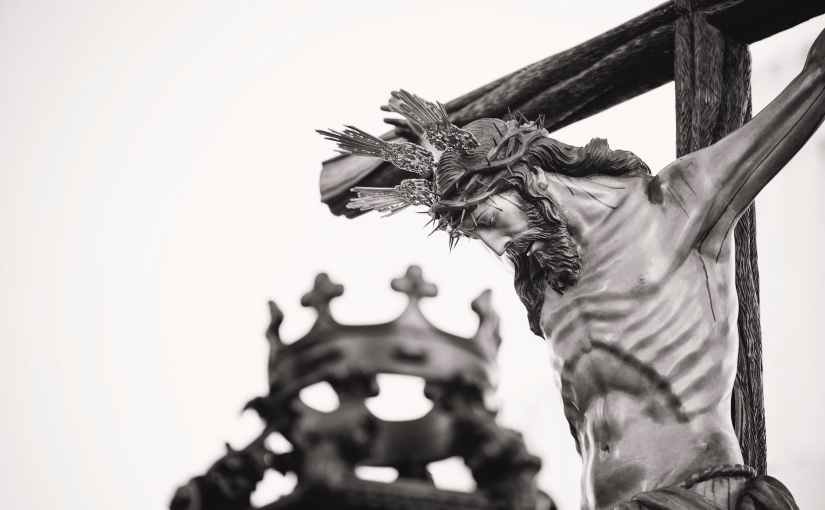
       Just as we suffer if our children suffer, God must suffer with us. In fact, that is what the cross, the central icon of Christianity, is all about. It declares that God knows what it is like to suffer as a human being. God suffers with us. The cross is the universal symbol that God is not in bliss, off somewhere else, while we suffer on earth. God is right in the middle of our pain. God is always on the side of the crucified, no matter what their nationality, race, or religion.

              Sometimes, though, the suffering is so senseless that there is no adequate explanation. As Rabbi Harold Kushner said long ago, sometimes all you can do is drop your theological explanations and be with people, hold them in your arms, and cry with them in their grief. That’s what God does. God does not leave us alone in our sorrow.

       The international response to Haiti was due to God moving people’s hearts and consciences to reach out and help take this crucified nation off its cross. The response has been like the beginnings of a resurrection: God overcoming horrific pain and death. Perhaps, Haiti will eventually be fully resurrected as a much safer and stronger nation than before. Let us all pray that this is what happens.

       Bruce Tallman is a spiritual director and religious educator of adults. www.brucetallman.com
Deepening Spirituality: Wisdom from Modern Sages

The ideas below come from my ongoing reflections on the works of some of the greatest sages of the 20th and 21stcenturies, people like Carl Jung, Joseph Campbell, Thomas Merton, Ken Wilber, Karen Armstrong, and Richard Rohr. I think about their ideas until I make them my own, then rewrite them in my own words. Here are some of my favourites:

    A proof of God everyone can experience: we long for truth, freedom, goodness, and happiness and we long to have all these supreme goods to the max, which is what God is, so what we all long for is God.

    The loyalty of Jesus is not to Catholics or Protestants, Muslims or Buddhists, but to anyone who is suffering, whether believers or non-believers. Jesus is always on the side of the crucified.

    Religion gives wider meaning to our lives. It makes us realize we are children of God, not just producers and consumers.

    It is important to plumb the depths of at least one religious tradition. If you chase ten rabbits you catch none. If you dig ten shallow wells you never reach water.

    Full conversion is intellectual (wisdom), emotional (compassion), and moral (individual and social responsibility). Conversion is many-sided.

    Meaning is the bottom line in life, not money. Money is important, but life without meaning is not worth living.

    The truly religious do not take themselves too seriously. The ability to laugh at yourself is similar to humility. A sense of humour is a sign of spiritual health and holiness. It is the joy of the gospel.

    God does not want suffering. The only cause of suffering, beside human folly, is natural processes which are necessary in an evolving universe. Human folly is inevitable but unnecessary.

    Religion and spirituality are far more about intuition than reason. Theology is very rational, but reason is very limited. It does not understand the ways and reasons of the heart.

    Your relationship with others, particularly your partner, can be part of your spiritual practice.

    Your true self is love, peace, and joy, and so the only real sin is to act contrary to your true nature, to violate who you really are, to not let your own God-given holiness shine forth.

    Wisdom permeates everything, enters into our souls, and urges us to be friends of God. 

    God must be very familiar with letting go, because humans insist on being in control. God very seldom gets what God wants. This explains most of the problems of the world.

    The purpose of evolution is to bring everything to the point where compassion and wisdom can be born through humans, so that the survival of only the fittest no longer applies.

    Humans only live fully if freely joined to God. Therefore, God works by invitation not force.

    Jesus chose a child as the model of discipleship. If we lose the qualities of our inner child: humility, innocence, playfulness, creativity, and genuineness, we have essentially lost our soul.

    Mysticism, the profound experience of God, gives us the courage and energy to do justice.

    Our desires are God-given gifts meant for living life to the full. Contrary to Buddhist teaching, desire is not evil. It is good to desire good things. This is the Holy Spirit working in us.

    Most atheists think religious people are out of touch with reality. Most religious people think God is Reality, and therefore, atheists are out of touch with reality.

    What matters is not so much doctrine as internal transformation. Kindness and goodness are praised by all religions, humanists, and atheists. These virtues are what unite all people.

    Let no one delude themselves that knowledge of the path is an adequate substitute for walking in it. To know spiritual truth is one thing, to live it is quite another.

Bruce Tallman is a spiritual director and an educator of adults in religion. http://www.brucetallman.com

On God and Suffering: Dialogue with an Atheist

After completing his PhD in religious studies, my friend Leon became an atheist! 

    After that, he and I got into debates over the existence of God that would rage on for whole weekends, but it all seemed to get down to the problem of suffering. Given the wonders of our world, belief in a Creator would be easy if it were not for all the suffering. 

    Here is a summary of Leon’s toughest questions and my best answers on God and suffering.

Leon: How can you believe in a good God when there is so much suffering and evil in the world?

Bruce: I believe good is foundational, and suffering and evil are secondary. Evil is always only a corruption of something that was originally good. For example, illness is a corruption of original health. War is a corruption of original peace. God created everything good in the beginning. Good, not evil, is the bottom line in life.

Leon: If God is the Creator, God is the cause of everything. God must, therefore, cause suffering. 

Bruce: God does not want or cause suffering and evil. Secondary causes, that is, natural laws and human freedom, cause suffering. So that we would not live in chaos, God created the laws of nature, which normally serve us well. 

    However, nature blindly follows its laws, much as an avalanche obeys gravity, whether humans are in the way or not. Also, you can’t have true love without freedom of choice, so God created humans with free will. But sometimes, we make wrong choices and sin. If most of the suffering in the world is caused by our wrong choices, the question is not “How can God allow suffering?” but rather “How can humans allow it?”

Leon: If God does not want suffering, what does God do to alleviate it? I don’t think God cares.

Bruce: The Bible teaches us how to overcome evil and suffering by obeying God’s laws. It also teaches us that we can call upon God at any time for help with suffering and that true happiness lies in having a loving relationship with God.

Leon: But if there is a loving and all-powerful God, why would there be any suffering?

Bruce: Paradoxically, although suffering is the main reason people don’t believe in God, God is the ultimate answer to suffering. If there is a loving and all-powerful God, then suffering must make sense, although we may not immediately understand it. Trust in God’s goodness provides hope in the midst of suffering, thus eliminating the worst suffering, that is, meaningless suffering.

Leon: I still think there is more suffering than good, which disproves there is a loving God.

Bruce: Beyond foundational goodness, there is “secondary goodness”, that is, our response to suffering. This is how all the helping professions arose: medicine, law, psychology, social work, etc. All progress is a response to suffering. Good abounds, and God is in charge.

Leon: But if there is a loving God who is in charge, why would he allow suffering?

Bruce: God does not normally allow us to suffer and only allows suffering and evil so that higher values and attitudes such as humility, compassion, forgiveness and wisdom might emerge.

Leon: I still don’t see a God anywhere out there helping us with suffering. Where is God anyway?

Bruce: God is invisible, but we can see that God has created us with great defences against suffering. Everyone comes with some built-in, standard equipment: a brain, the greatest problem-solver in the world, and the human spirit, the great urge to fight against suffering. 

    God has also given us people who aid us in avoiding suffering and who are great supports when we do suffer: parents, spouses, and friends. Through people and angels, God either protects us from suffering and evil or helps us to get through it. God comforts us, encourages us, carries us through suffering, and works with us to bring secondary goodness out of suffering and evil.

Leon: I still don’t think God actively cares. God just sits up there and watches us suffer.

Bruce: The Christian belief is that God suffers when we suffer. If God is everywhere (including within us) and knows everything, and we are God’s children, then God knows and feels our pain. God is not some detached sky-god. The Cross is the great symbol that God suffers with us.

Leon: Suffering is so horrible, though. Life is so hard and so meaningless. What’s the point of it?

Bruce: Christ on the Cross transformed suffering, showing that suffering can have meaning. He showed us that to suffer for others is the deepest love.

Leon: I still don’t think there is any final answer to suffering.

Bruce: Often, all you can do is accompany the suffering person, not give them your answers, but if there is a final answer, it is that God overcomes all suffering in heaven forever. God gives believers ultimate and eternal joy, peace, happiness, and love. Things began as “very good” (Genesis 1:31), the end is even better, and the middle is good in spite of negative news reports. All is well that ends well, but you have to have faith to see the goodness of God in all things.

Bruce Tallman is a spiritual director and author: http://www.brucetallman.com

Repentance and Glory: Transformative Christian Values

Making room for not knowing

is more important than certainty –

we think something is going to bring us pleasure

or misery/be a disaster or a great adventure

but we really don’t know

one thing we do know for certain:

inferior goods such as silver and gold/

temporal honors and power

have their temporary delights

but they are nothing compared to God

who made them all –

true delight and joy rests in God

“Ultimate Reality is at hand –

change your mind and believe such good news!”

– Richard Rohr’s translation of 

“The kingdom of God is at hand

repent, and believe in the gospel” (Mark 1:15)

to repent is to change your mind –

to be baptized into Christ’s death and resurrection

means that you have died to the values

of the Roman or American Empire

and been born into Christian values

of peace/charity/justice/nonviolence

which sometimes involves suffering like Christ 

who said to Francis of Assisi

“I have given you the stigmata

the five wounds in my feet/hands/side

the emblems of my Passion

so that you may be my Standard-Bearer”

but Francis tried to hide these wounds

which in truth were his glory

but then again, God hides God’s glory:

“God’s glory is to be in all God’s creatures

giving them their being/breath/everything

living in their midst as unknown

for if we could see how unlike our glory

is to God’s glory

we would die for love of God.”

– Thomas Merton

BUDDHA’S DILEMMA

Science has discovered that chaos is everywhere

and has a necessary role in universal life –

chaos creates creativity –

and the consequent struggle to survive

results in unexpected benefits

when you ask “Why is my life not working?”

and discover your shadow beneath the “persona” –

the mask you and everyone wears – the “smiley face”

you can discover your True Self beneath the mask


the pharisaic equation: holiness = perfection

results in denial of the shadow

so the shadow functions autonomously

and, having a mind of its own

comes out sideways and causes scandals

when those attempting to be righteous

least expect it – they find themselves

with their pants down

in the glaring light of publicity

which exposes their shame

for all to see


Descartes was a philosopher

who never faced his shadow –

he lived totally in his head –

nothing is more alien to shadow-work

than Descartes’ famous dictum –

the foundation of western philosophy –

“cogito ergo sum” – “I think therefore I am” –

the statement of an alienated being

so divorced from his True Self

that he must seek proof of his own existence

in the fact that he thinks


Buddha long ago went a step further –

feeling the idea of “atman” (self) –

the foundation of Vedic beliefs –

was responsible for the corruption of Vedic priests

and the underlying caste system

which caused untold suffering of millions –

so Buddha taught “anatman” (no self) –

there is no separate/individual/independent self –

and so Buddhists started worshipping “emptiness”

until Buddha found that was worse than worshipping atman.


TWO GOLDEN PATHS

There are no historical/archaeological facts

about either Jesus’ burial or resurrection –

the only data we have is the stories/witness

of his small band of followers who went

from disillusionment/despair

to radical self-sacrifice/martyrdom

based on their reported experience

of resurrection


similarly, faith nowadays has undergone a resurrection –

since the 1960s we have gone

from externalized religion

to internalized experience –

in 1962 only 22% of believers reported a mystical experience –

in 2022 68% reported they were “spiritual and religious”

and turned to mysticism –

since the old-time institutional religion

barely/rarely moved them

to tears of sorrow or joy


and it is not the participation

of the old-time “Christian Right” (an oxymoron)

in politics which is a problem

for the “UnChristian Left,” –

but rather that progressive believers

cannot stand the style/language/goals

of so-called “Christians”

that violate civil discourse –

and violence is the central problem

in our pluralistic civilization


the violations/violence of the right

causes suffering for those “Left-Over Hippies”

who seek peace and love –

but then suffering and prayer

are two golden paths to God

and God prepares us for suffering –

“better is the little of the righteous

than the abundance of the wicked” (Psalm 37:16)

and God calls us to suffering

for justice – “blessed are those persecuted

for the sake of righteousness” (Matthew 5:10)

and God sustains us and renews us in suffering

“for those whom the Lord disciplines

God loves” (Hebrews 12:6) and resurrects.

CHILDLIKE MINDFULNESS

Trungpa Rinpoche, like many Buddhist monks

never got trapped in unnecessary hope

or groundless fear

was never for or against results

not attached to things working out

just lived life freely/with curiosity/

as an experiment/like a child


children were always the models Jesus used

to teach his disciples the spiritual life

and the children’s story of Jonah in the belly of a whale

was Christ’s only metaphor for transformation –

you have to go into the dark

before you can see the light


if while practicing mindfulness we are not aware

of all the darkness/suffering in the world

it is not mindfulness but escape

and if we could peer into the minds/hearts/souls

of those causing suffering we would realize:

we could be just like them and they know suffering too –

peering always creates compassion/love for our enemies


we are somehow connected to all humans

no matter how despicable

and this reveals a fundamental truth about life:

mutuality/interdependence/connection

are woven thru and thru the cloth of creation –

even quarks can only exist in dyads and triads


if integrated wholeness/oneness/consciousness

are the heart of cosmic personalization

they naturally lead to selfless/altruistic love

and, contrary to popular belief, Darwin himself

saw the survival benefits of cooperation:

if I help others I get helped


the “Hsaio Ching”/“Classic of Filial Love” –

a Confucian approach to the Tao

sees brotherly/sisterly love

as the greatest taproot

into the mysterious

“Will of Heaven.”


THE THIRD WAVE

The second major arc of human development

after the pre-rational and before the trans-rational

is the anti-religious/atheistic stage

which is all about reason and science

and which brings seemingly staggering benefits

to humanity in terms of reducing suffering


but we are right on the edge

of the third wave of transformation:

from farming to industry to information –

from the suffering caused by the rational-industrial

to the visionary-informational


the visionary Paul Tillich developed and applied

the “Protestant Principle:” vigorous protest

(which is why they call it “Protest-antism”)

against all distortions of the Truth –

particularly rational ones against the Gospel

particularly the “demonic tendency”

to make the Church into an Absolute replacing God

and manipulate God with sacraments


since World War II modern society has gone thru

an “expressionist revolution:” replacing external authority

with inner authority – each person expresses

their authentic self/individuality/personal choices

of purpose and meaning

in a fractured commercialist society –

old loyalties to family/nation/religion are gone

and others revolt mindlessly against this loss

of the old values and the old Church


our formerly simple world has changed

to one of pluralism – both culturally and religiously –

consequently, the meaning of Christ must be changed

and expanded exponentially

beyond all protest


the humble scientific researcher

even though s/he is unaware of it

as he/she tries to penetrate

the secrets of the universe

is being led by the Cosmic Christ of Divine Love –

into the Third Wave after religion and science:

the perfect marriage of science and religion.

SACRIFICE/LIBERATION/SALVATION

Contemporary theologians would do well

to free themselves from the “Hellenic complex” –

the integration of Greek categories of thought

into Christian theology – starting with Thomas Aquinas

and his merging of Aristotle into Judeo-Christian beliefs –

Popes John Paul II and Benedict thought Catholicism

should no longer be dominated by Aquinas

but they embraced no one else


they could have embraced Gustavo Gutierrez

who realized the new European theology he learned

could not deal with the structural injustices

of his South American continent

so he began interpreting the gospel in light of the poor

but “Saint Pope J.P. II” condemned this as Marxism

and so destroyed liberation theology


in spite of “Saint Pope J.P. II” liberation theology

became the key to black theology in North America –

the theology of liberation contained in the Bible –

the liberation of the Jewish slaves from Egypt –

parallels the liberation of black slaves in America –

Lincoln was Moses to the sharecroppers –

because the very essence of Jesus is freedom

Jesus became the model of liberation for blacks


understanding is the most powerful tool for “liberation”

which in Buddhism is “salvation from suffering”

so Buddhists talk about salvation by understanding

and the seed of understanding in everyone –

so similar in Christian or Buddhist terms –

is God/Jesus/Christ-Consciousness/Buddha-Mind –

Buddhist meditation involves deep insight

and creates understanding/love/salvation


love is both dependent and free at the same time –

it depends on objective values and creates new values:

joy/gratitude/self-sacrifice –

the bodhisattvas sacrificed entering into nirvana/heaven

until all sentient beings were liberated


similarly, Muslims sacrifice sex during the Great Fast/Ramadan:

“Do not lie with your wives during the day but cleave to the mosque –

(but during the night you can go into your wives and lie with them)” –

some sacrifice (but not too much) there. 😊

BEING/EMPTYING VS SUFFERING

The Cross and Resurrection are the Christian solution

to the problem of evil – this is far more satisfying

than Carl Jung’s solution of making evil part of God

Zen Buddhists love the “kenosis” passage (Philippians 2:7)

where Christ empties himself – even to death –

death on a cross –

because Zen is all about emptying oneself 

of all attachments/passions/thoughts

and learning to just sit for hours or days

to “waste time with God”

as Christian monks call it –

like old friends who don’t need to speak

they just enjoy BEING together –

this is all God asks of us: “Please BE with me” –

“To just BE alive is sacred, to just BE is holy”

– Abraham Heschel

besides emptying, part and parcel of Zen  

is awareness of suffering

caused by peoples’ unmindful speech/inability to listen

Buddhists therefore vow 

to cultivate loving speech/deep listening 

that alleviates suffering

the intellectual nature of the human person 

is perfected by wisdom 

for the intellectual drive 

is not confined to observable data alone – 

wisdom gently leads all our drives 

beyond the visible world to what is invisible –

what is honestly true/honestly good

without this humble inner quest

without interior spiritual integration

even something as spiritual as a pilgrimage

can turn into a divisive/destructive/alienating journey

just as forsaking of self/emptying of ego 

unites you to God

so giving up external things

brings you peace.