Transformative Loss: Finding Strength in Lent

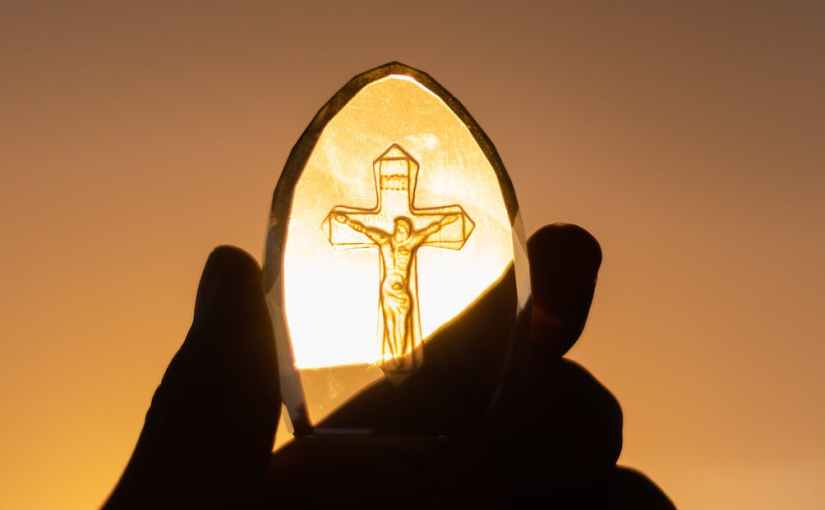
Lent is a time of loss. The 40 days before Easter are meant to commemorate the 40 years the ancient Israelites were lost in the desert before coming to the Promised Land. Lent is also a time when Christians lose things, give them up, as a way of commemorating Christ’s great loss, the sacrifice of  his life on a cross.

       Lent is a time of repentance, of turning around, of turning away from things that may be addictive habits the rest of the year. Some give up chocolate, dessert, or that lovely glass of wine after work. Many go deeper and see Lent as a time to lose unholy attitudes: jealousy, self-pity, unforgiveness, adulterous thoughts, the internal sins that no one knows about except us.

       Some choose loss during Lent, and some have loss thrust upon them. Due to the financial meltdown, people are losing their jobs, homes, businesses, retirement plans, and peace of mind.

       Those who work in palliative care, hospice, and hospital emergency departments receive training in how a person’s “assumptive world,” all the assumptions they have about the way life will be, can implode in an instant: their son or daughter is killed in a car accident, their spouse learns they have cancer, has a stroke, or dies. The normal response is to feel like the ground under your feet has suddenly disappeared, you are falling, and your whole life is falling apart.

       The scriptures contain one of the most spectacular stories of loss ever recorded, a story that makes most of our losses seem small by comparison. Job was a man of God who had it all: great wealth, a wonderful family, and an outstanding reputation. Then he had a total meltdown: he lost all his money, his family, and even his health. His friends accused him of bringing all this on himself through some hidden sin, although he couldn’t think of anything he had done to deserve this. Even his wife urged him to “curse God and die.” However, despite all the absurdity, he continued to trust God.

       A time of loss can be a time of personal transformation. When people lose precious things, they start to realize that, despite their former assumptions, life is very vulnerable, dreams are fleeting at best, and one’s fortunes can suddenly reverse. The natural response is to ask, “What is really important in life?”

       In the face of all this loss, people search for a solid foundation for their life, something eternal and unchanging. People start to realize that the only lasting thing is God. Quite simply, it’s God or nothing. 

       It’s not surprising that church attendance goes up during individual or social meltdowns. Next to God, the church is one of the few constants in our civilization. It has been there through the collapse of the Roman Empire, the Dark Ages, the Renaissance, the Reformation, the Enlightenment, the advent of modern science, communism, two planetary wars, and the Great Depression. The church has witnessed many severe storms come and go.

       People who build their lives on the solid foundation of God know that, with God’s help, they can withstand any storm, crisis, or meltdown, just as the church has. They also know that God can bring a greater good out of any loss.

       Throughout the scriptures, God brings new life out of evil, no matter how great. Job trusted God and was vindicated in the end: everything and more was restored to him. As our human exemplar, Jesus trusted God and was resurrected so that all of us could reach the Promised Land.

       No matter how bad it gets, as long as we trust God, all is well, and as Julian of Norwich said, “All will be well, and all manner of things will be well.”

Bruce Tallman is a spiritual director and educator of adults in religion. http://www.brucetallman.com


Authentic Spirituality

Spirituality should move people from 

mortality to immortality/

sin to salvation/

law to grace/

bondage to freedom/

ignorance to enlightenment/

suffering to fullness of life

without transformation religion is merely

the institutionalization of spirituality –

a belief and belonging system –

there is no change of consciousness/motivation –

conversion means moving from outer to inner authority

– from “the Church says”

to “given what the Church says

what also does the Holy Spirit/my conscience/

my experience say?” –

inner authority leads to the True Self/God within

true piety is not turning our face from West to East

true piety gives of its substance:

alms to the needy/strangers/travellers

ransoming of slaves

when I seek God, every event/moment/

sows God’s seeds in my will

and eventually Bibles burst out of my mouth

we are paradoxically both empty and full

full of emptiness/empty of fullness

and there is satisfaction in being empty

if we let God come in and fill us up

the divine/human encounter 

in the Sacraments

is with my own True Self/the Church/God

and therefore should change 

planetary/cosmic consciousness

transform the small/egoic self/the Church/

and the world’s cosmic messiness.

THE SHADOW AND THE INNER RIVER

Jesus said “Blessed are the peacemakers”

however, to work for and sustain peace

you have to be at peace in your own heart

not angry and hateful of the “wrongdoers” –

if you fight evil with your own evil

you will simply replace one evil with another.


You cannot deal effectively with the

hurt/anger/shadow/jealousy/deceit in others

until you have dealt with these things in yourself –

then there is no judgement/condescension toward others.


A fruitful way of discovering your shadow

is to identify with one scripture figure:

Mary or Martha/the prodigal son or his older brother –

the one you don’t identify with is your shadow

and can teach you inner transformation.


According to Paul Tillich in The Courage to Be

there are three forms of inner transformation:

the courage to be vs not be

(to choose life not death)

the courage of faith vs meaninglessness

(to trust that it all somehow makes sense)

the courage to accept God’s acceptance of you

vs condemnation (to trust that God

is merciful/forgiving/your unconditional lover).


Teresa of Avila’s entire mystical theology

is about finding God’s Inner Flow/River of God within you

and stop wasting your time digging for water on your own –

let the Spirit do the work of transformation

and stop striving for perfection.


Silence and solitude are the heart of prayer –

they allow us to: go within and listen to God

let God shine light into our shadow

stop being driven by our noisome world

which incessantly clamors for our attention.


Without silence and solitude

the Spirit has no room to make its home in us

and is forced to vacate the premises

of our soul.


LETTING GOD LOVE YOU

In the Paleolithic period when agriculture first developed

the fertility of the land was imaged

in the pregnant goddess statues

found all over Europe/the Middle East/India.


Modern science believes all religious claims

whether ancient/modern/literal/mystical

are a holdover from humanity’s childhood

like Santa Claus – science denies them all

as there is no empirical evidence for any of them.


However, religion is not focused on evidence

but on self-transformation – crossing the threshold

of any temple/church is meant to be self-annihilation

a reminder to let go of the small self/ego.


This is why entrances to the sacred are commonly guarded

by angels/saints/gargoyles/dragons/lions/bulls –

entering you undergo metamorphosis/

leave your secular/unholy self behind/

and discover the World’s Womb/Navel/Earthly Paradise.


The call to grandeur/union with God

and to the depths of misery/separation from God

are both integral parts of human experience

that only receive their ultimate explanation

in God’s revelation.


Christian love calls you to transcend your selfishness

to commit your self to the good of others

enabling them to realize their full potential.


But, contemporary psychology tells us that to love others

you must first love your self.

But true self-love involves loving your self

the way God loves you.

But none of us is capable of loving the way God loves –

you have to let God do it.


True self-love therefore involves letting God love you

the way only God can love you.


Then you can love your self and you can love others

the way only God can love them.

INNER TRANSFORMATION IS NOT ENOUGH

The starting point of Master Kung Fu’s teaching

is that there is a transcendent/unchanging/objective reality

called ‘heaven’

and there is an immanent/changing/contingent reality

called ‘Earth’

and there is ordered and disordered human life.

Confucius (Kung Fu) knew

the Universal Christ in his own way.

If one does not reach the transcendent God

and a world-centric stage of development

then pluralism and multiculturalism

descends into ethnocentric tribal wars and oppression.

Likewise, the scientific attempt to control all of nature

combined with patriarchal consciousness

which refuses to confront its shadow –

the possible extinction of the human race –

means we will continue to destroy

our Mother, Earth.

What is needed is to face the chaos

and name our collective fears –

once Jesus knew the name of a demon

it lost its power.

But it is possible to overdue

facing the negative –

the great Protestant thinker, Reinhold Niebuhr

as great as he was

focused his Christology too much on Crucifixion –

not enough on Resurrection and Christ the Liberator.

Niebuhr emphasized sinfulness so much

the power of grace was obscured.

But humans are first of all grace-full

made in the image of God

endowed with a conscience which is

“the most secret core and sanctuary

of a human being.” – Vatican II

Still, the denizens of 21st century culture

are goal-oriented consumers, not prayer-full.

The purpose of prayer

is not to get anywhere

nor consume anything

except God

in whose presence we already abide –

God, not culture, is the believer’s center.

We are desire-full

but the Cloud of Unknowing says:

“Gather all your desires into one

simple and short prayer-word

that enables you to focus your love steadily

on God. This sacred word will be your defence

your flaming weapon of war

in conflict or peace.”

But inner transformation of our desires

is not enough – the whole Christian church

has a three-fold outward task:

fellowship/ministry/witness

or in the Greek New Testament:

koinonia/diakonia/martyrdom:

the kingdom/queendom of God

survives by drinking

the blood of martyrs.

Churches need people transformed

inside and out –

transformed people transform people –

conversion happens by attraction

to converted people

rather than self-promotion

of my ideas

over and against

your ideas.

The world will only be saved

if transformed people

live their faith.