WHAT THE POSTMODERN WORLD NEEDS NOW

The most important role for religion in the postmodern world

is to act as a sacred conveyor belt

moving people from myth to reason to trans-reason

that is, to see the limits of reason and transcend it.


Today we need to transcend both reason and science.

Buddhism tells you from day one

to find out for yourself what is true –

it encourages constant seeking –

even the teachings of the Buddha

should be questioned and tested.


For fundamentalist Muslims there is no need to ask questions

for the Koran has all the answers already –

their Sacred Book in its 114 suras (chapters)

is considered by them to be the final revelation

of the final prophet Mohammed

of the final purpose and will of God for humanity.


But mystics/contemplatives/sages of all traditions see

that their viewpoint is just a view from a point –

they have the ability to observe

their own inner dramas and dilemmas

in an egoless way

which is the primary form of “dying to the self”

that Jesus and Buddha lived and taught experientially.


Today however, the self reigns supreme

individualism leads to anti-institutionalism

people think institutions like family and marriage

are too restrictive – no one should have a say in how I live

and so people rail against government taxation

meant for the common good

and church is seen as impeding my spiritual growth –

individuals want to create their own self-religion

and free autonomous individuals get infected

by the pandemic of loneliness

which scourges the postmodern world.


What the postmodern world needs now

is community/togetherness/love/

sweet love.
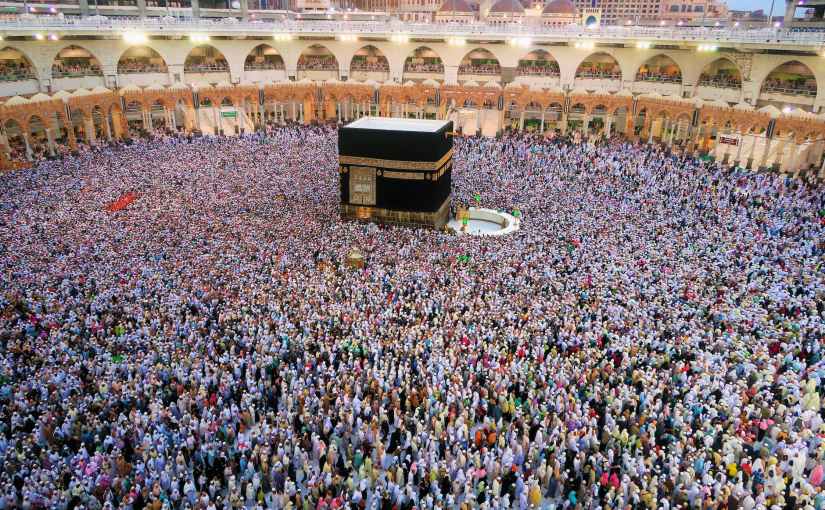
SPIRITUAL PRIDE/RELIGIOUS VIOLENCE

Medieval pilgrimage was meant to be a cure for violence

but in the Crusades it became a consecration of violence –

if we believe God is only on our side

now we can kill in God’s name

and believe killing infidels is God’s will.


Religious violence comes from hubris –

proudly thinking we know all about God and God’s will

but for theologians like Meister Eckhart

God is better apprehended by negation than affirmation

God is an unspoken word/ineffable/

a light shining in silent stillness

which can be found in all religions

if you dig deep enough.


Hinayana Buddhism, the Lesser Wheel,

regards the Buddha as a human hero/a supreme sage/a saint

but Mahayana Buddhism, the Greater Wheel,

goes deeper and sees him as a world savior/an incarnation

of the principle of Enlightenment: silent light shining everywhere.


In Christianity, the Second Vatican Council (1962-1965)

reunited spirituality and theology so much

that its treatises are spiritual theology

and can be read as “lectio divina” – “sacred reading/sacred light.”


Jonathan Edwards, a Protestant philosopher and pastor

considered one of America’s most important

philosophical theologians, tried to discern

true religious affection from delusion.

He condemned both emotionalism and intellectualism

in religion because true religion

consists in “holy affections” from the heart

a unitary faculty of love and will

which cures the spiritual hubris

of thinking we can feel what God feels (emotionalism)

and think what God thinks (intellectualism)

which leads to religious violence.


“My ways are not your ways

and my thoughts are not your thoughts”

says the True Lord (Isaiah 55:8-9).


ONE RELIGION FOR ALL?

 A basic principle of Quantum Theology:

we must begin with the whole, the Unmanifest Source

of All that is within each part.


The obsession of science with objectivity/analysis/data

tells us nothing about reality and life

in its wholeness/depth/relationality –

these are mysterious forces of attraction in Nature

that cannot be explained by science alone.


Life transcends not only science/rationality/thought

but also our other big obsession, the pursuit of money:

play transcends money by reminding us

we are not just workers

and art transcends money by helping us see

hidden and deeper aspects of reality

than just producing and consuming.


Christianity became overly-rational

to oppose the over-rationalism of the Enlightenment –

in Europe this became highly academic theology

and in America fundamentalism – an over-reaction

to religious rationalism – but it left out reality

which includes everything – including inclusivity/

environmentalism/and other religions.


Some rationalism in religion is beneficial:

the Parliament of the World’s Religions

developed a “Global Ethic” – ethical guidelines

for all humans, religious or not

but this does not mean “a global ideology/

a single unified religion beyond all religions/

or a religion that dominates all others.”


The Parliament recognizes God’s love of diversity

and the Dalai Lama with his impish sense of humor

said that to have good interreligious dialogue

we need to honor the diversity of religions:

“To try to be Christian and Buddhist at the same time

is like putting a yak’s head on a sheep’s body.”


In short: it is impossible to reduce everything

to science/money/one religion.


LOOKING EAST AND BACK WEST


In The Mystic Heart Brother Teasdale pictured a tree

in which the branches are all the religions of the world.

The main branches: Judaism/Christianity/Islam/Buddhism/Hinduism

and the minor ones: Sufism/Shintoism/Confucianism/Bahaism.

and the come-and-gone ones: Greek and Roman gods and goddesses/

Inca/Mayan/Aztec religion.


It is possible to learn and grow from all these traditions:

from Buddhism, Anthony de Mello, a Catholic mystic

learned “the fantasy of attending your own funeral”

and “the fantasy of your own corpse.”


Many Christians would have become Buddhists

but the tendency of eastern religions

towards world-denial and over-spiritualization

are pitfalls that prevent Christians from embracing the east

and prevent eastern traditions

from discovering the riches of the Incarnation and the Cross.


The intrinsic connection between the mystery of Incarnation

and the mystery of Creation means that in Jesus Christ

we discover the divine clue

not only to the structure and meaning of humanity

but also the entire universe.


Karl Barth’s massive Church Dogmatics

thoroughly Trinitarian and Christocentric

reminded us not to lose sight

of the central doctrines of the faith

while attempting to live Christianity out in the world.

Our image of God is central to our understanding

of how God acts in the world

and central to our attempts to transform this world

rather than deny/withdraw from it.


The question for Catholics at the contemporary crossroads:

do we deny modern theology/cling to old notions of God/

revert to the static medieval worldview

or do we grasp the dynamic evolutionary universe

that constantly raises consciousness

toward integral wholeness:

the unity of God/self/others/the world?


THE TRANS-PERSONAL MESSIAH


For the past 500 years, the scientific lens

in which everything is rational and testable

has been robbing us of the wonder

of the former magical/mythical era.

We should have integrated science and religion long ago

since they are both foundational to our makeup

of both body and spirit.


Immanuel Kant was on the right track –

he refused to let religion be reduced

to objective scientific explanation

because he demonstrated subjectivity

cannot be reduced to objectivity

and he was an enlightened Lutheran who believed

what contemporary theologians believe –

we are in a dynamic/trans-personal relationship with God.


Quantum theology today focuses on

‘sin’ as ‘missing the mark’

which implies a dynamic process of seeking

and flexible/multiple ways of arriving at the ‘mark’

rather than rigid/dualistic/mechanistic notions of right/wrong.


Scientific research shows three broad arcs

to human psychological growth:

pre-personal/pre-rational/pre-conscious

to personal/rational/conscious

to trans-personal/trans-rational/trans-conscious.


Scripture is tran-spersonal in Second Deutero-Isaiah

where we first hear that Yahweh is not just God of the Jews

but of all people, and we first hear of the Messiah

not just as the ideal king of the Jews

but as the Universal Ruler over all people.


The only way Buddhists and Christians

can keep Buddha and Christ alive today

is for their followers to live their teachings –

Jesus needs Christians to thoroughly practice

his central teaching, the Beatitudes

for, as Teresa of Avila said:

“The only feet/eyes/hands

God has are our feet/hands/eyes” –

The trans-personal Christ is mediated to the world through us.


A CULTURE OF LIES


Liberal Protestant theology has its roots

in Friedrich Schleiermacher who spoke of

the basic goodness of humans/the inevitable progress of culture/

the ethical imperative of love, and played down

sin/the judgment of God/the miracles of Jesus/the Resurrection –

Schleiermacher bought into secular beliefs in his landmark book

On Religion: Speeches to its Cultural Despisers.


But Schleiermacher was naïve:

so much of contemporary politics/advertising/sex

violates the Fourth Buddhist Precept of Mindful Speech –

people lie to start wars/get votes/sell products/have sex –

it’s a culture of lies that bows to the Father of Lies –

Schleiermacher should have titled his book

On Religion: Speeches to Cultural Liars.


According to Buddhism:

a Bodhisattva is not contained in the world –

rather she contains the world

and holds it in her jewelled hands.


According to Islam:

Mohammed supernaturally received fragments of the Koran

in a trance between 610CE and his death in 622CE –

he was illiterate so he simply recited what Allah taught.


According to Christianity:

doctrine saves no one

salvation comes from an existential confession

that for you, personally, “Jesus Christ is Lord!”

Christianity based on doctrine alone is dead –

Christians must be involved

in the suffering of the world.


To this end Jesus criticized the cultured men of religion –

the Pharisees – for their hypocrisy

and then attacked the cultured men of affairs –

the Sadducees – for their oppression of the poor –

Jesus wanted the leaders to model a spiritual kingdom

whereas the Pharisees and Sadducees

modelled the kingdom of Rome

a culture of lies just like our own.

LIVING CHRIST/LIVING BUDDHA

A cosmic Christology is the only adequate one.

If Christ is “first-born from the dead”

the resurrection is not only for humanity

but the whole Creation.


Christ’s resurrection renews the whole universe –

“in Christ all things are made new” (2 Corinthians 5:17)

including other world religions.


After all – to reverse engineer things –

Zoroastrian/Persian thought definitely influenced

the writers of the Book of Daniel

and the Dead Sea Scrolls.

In the last century before Christ, the Essenes

who had roots in Zoroastrianism

expected a World Savior.

God the Holy Spirit influenced Zoroastrians and Essenes

even before Christ appeared.


For Plato/Plotinus/Meister Eckhart/Ralph Waldo Emerson

Spirit transcends/includes/gives rise to mind/body.

Similarly, in Buddhism, Spirit (Dharmakaya)

gives rise to mind (Sambogyakaya)

which gives rise to body/form/Nature (Mismanakaya).


We can therefore help the Living Christ and the Living Buddha

continue their compassionate work by realizing our body

is first of all a member of the Mystical Body of Christ

but also the body of Buddha.

Therefore, if you are Buddhist, you should love your body

as if it were the Buddha

and if you are Christian, you should love your body

as if it were Jesus the Christ

because Christ is living in you/over you/thru you/as you.


“The mystery of Christ within you

is your hope of glory!” (Colossians 1:27).


“My deepest me is God!”

– Saint Catherine of Genoa


“I live, yet not I, but Christ lives in me.”

– Saint Paul in Galatians 2:20


LOVE WITHOUT BORDERS

Love knows no boundaries:

from the most elementary particles: quarks and bosons

to the most intense human relationships/sexuality

there exists a lifeforce that lures and attracts –

gravity/attraction/love is the basic driver

of the universe/evolution.


Evolution is not just another theory

according to Teilhard de Chardin

it is a dimension of truth to which all theories/disciplines –

physics/chemistry/biology/sociology/history of religions –

must bow, if they are to be credible.


Religion as our ultimate concern (Paul Tillich)

is a dimension of spirituality to which all major religions

Judaism/Christianity/Islam/Hinduism/Buddhism

must bow – this means religion is much broader than church:

lawyers can be seized by an ultimate concern for justice

and thus make the legal system more accessible for the poor.

In a ‘theonomous’ (God-based not church-based) culture

many groups can co-operate, including churches,

in transforming society. Is not this all religion too – God acting in the world?


Buddhism can transform civilizations, as in Thailand and Vietnam

with its Five Precepts which outlast any war:

cultivate compassion/kindness/oneness of body and mind/

mindful speech/mindful consuming.


Christ’s only description of the Final Judgement (Matthew 25: 31-46)

has nothing to do with following the Ten Commandments/

attending church/believing in papal infallibility

it is only about seeing Christ in the marginalized

and reaching out to them in lovingkindness

as the image of God in the least sister/brother.


In giving Christian or Buddhist lovingkindness to others

we need to start with unconditional love for ourselves

whether we feel weak/small/incompetent/not good enough

we can still choose to love our true self/

forgive our false self/

be happy.


Loving others starts, but never ends, with loving our whole self

without boundaries/limits/conditions.

IDEAS, RELIGIOUS ATHEISTS AND SUFFERING

For Paul Tillich every aspect of culture –

a new law/painting/political movement

is charged with religious meaning

because it is part of the dynamic energy of God.


Every culture subsists in ideas –

Notre Dame Cathedral in Paris began as an idea

and Meister Eckhart knew what every true intellectual knows:

the importance of ideas for peoples’

freedom/courage/integrity

so, when he was shown Notre Dame he said

“I would trade it all for John Chrysostom’s manuscripts.”


However, there are narrow and broad ideas –

ideas can be limiting or fulfilling.

As Kierkegaard wrote: “the cultured despisers of religion”

“The New Atheists” such as Richard Dawkins, rightfully attack

immature fundamentalist claims of biblical literalism

but mature believers promote the idea

that knowledge born of faith, like poetry, music, theatre or any art

enables us to see reality more deeply than science can.


The Church may reject atheism, but does not reject atheists –

it takes them and their profound questions very seriously

and just like religion, atheism can be narrow or broad

limiting or fulfilling – Buddhism is essentially atheistic

or at least indifferent to the “God question.”

According to Theravada Buddhists, Buddha was an atheist

but manifested the highest humanity and helped multitudes –

his only concern was not God but eliminating suffering.

Anyone who eliminates suffering is a Buddhist.

Therefore, Jesus was a Buddhist. But Buddha was just human,

and when Jesus opened his heart at baptism in the Jordan River

the Holy Spirit descended on him like an eagle

and he manifested as not just human

but the Son of God called to redeem all suffering

through carrying his cross out of love for all humans.

Humans are God’s constant Cross.


Those who are truly guided see this

and when tried/visited with affliction

they say “Surely to God we belong and to God we return”

and in temptation/trials/suffering they take comfort

in being “hidden with Christ in God” (Colossians 3:3).

OVERCOMING OUR SHADOW AND OUR SUFFERING

Theologians try to make Christianity relevant

by showing theology follows scientific methods

or correlating it to some current philosophy

or urgent need: racism, nuclear war, climate change

but the problem behind all problems

is dualistic non-unitive thinking in the form of individualism.


Individualism, the triumph of the individual

the foundation of American culture, is ironically false freedom:

separation from others and therefore separation from God

who in Jesus exhorted us to “love others as our self”

and “love our enemies.”


America is ironically “Land of the free and home of the slave”

according to the artist formerly known as “Prince.”

Ironically too, America will only overcome its shadow history

by embracing it: “Taking up your cross today

means owning your own shadow

which is the essence of ethics/

integrity/spirituality/religion.” – Carl Jung

First recognize the log in your own eye

before trying to take out the speck in your neighbour’s eye.

Otherwise, you project your shadow onto others

and force them to carry your darkness.


We can use everything that happens in us

and that happens to us, to wake up:

Buddhism exhorts us to resolve the dualistic struggle

by embracing difficulties (our crosses)

and by meditating day and night.

“Seek in reading and you will find in meditating;

knock in verbal prayer and it will be opened to you

in contemplation” – Guigo the Carthusian.


But contemplation is always beyond us:

beyond art/philosophy/theology

even beyond discussion or explanation –

the language of God

is silence.


But the language of the blind and deaf Helen Keller is

“Life is full of suffering

and it is also full of the overcoming of suffering.”