The rationality of religion and the faith of science

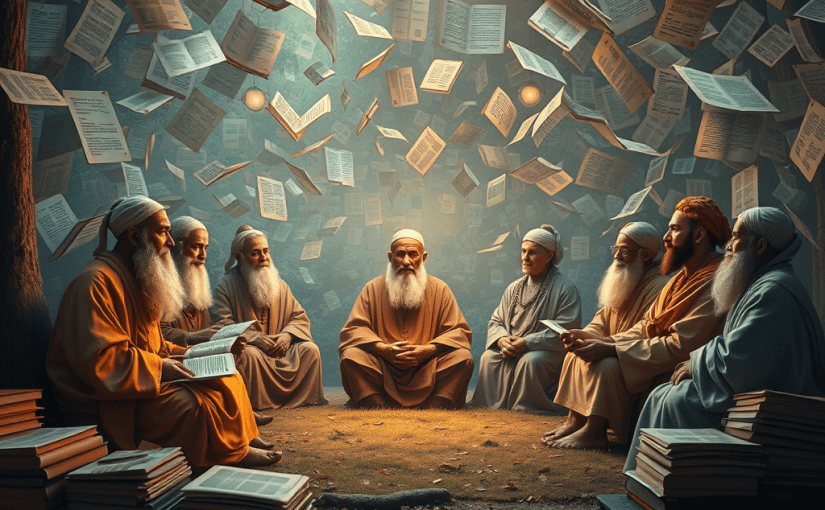
Many today have concluded that religion is fundamentally irrational, and science is the only model of rationality. However, science and religion are more similar than most people think. They both start off beyond reason and become rational later. 

    Anselm in the 11th century defined theology as “faith seeking understanding,” thus balancing those who said all we need is faith with those who claimed all we need is science. In the 13th century, Aquinas carried on Anselm’s agenda of putting divine revelation and human knowledge together. At a time when universities were first forming, these doctors of the church defined the criteria for western scholarship from then on. Since then, most mainline churches have had a healthy respect for the role of reason in religion. In fact, in the Anglican church, they believe the three basic pillars of the church to be tradition, scripture, and reason. Blind faith is immature faith. 

    The great pioneers of science – Copernicus, Kepler, Galileo, Newton, and Darwin were religious and hoped their findings would confirm their faith. They believed all truth comes from the one God; therefore, there can be no ultimate contradiction between religion and science.

    It is true that people become religious from promptings of the heart. The heart is beyond reason, but has reasons of its own, as Pascal said. God is most readily experienced through faith, prayer, ritual, and acts of compassion. However, whereas religion is more intuitive and right-brained, theology is the rational attempt to understand religion and is more left-brained and logical.

    Whether you think science is rational and religion is not depends on your definition of reason. In medieval times, thinkers such as Anselm and Aquinas defined reason as the faculty which knows our place in the universe and that there are divine mysteries beyond human understanding.

However, science eventually predominated to the point where some scientists, such as Richard Dawkins, subscribe to positivism, the belief that only what can be proved by science is rational.

    The truth is that science, like religion, starts beyond reason and then becomes rational. Science is based on the faith that the universe is logical. No scientist would begin to do science if they did not have this faith, if they presupposed the universe is beyond understanding. The scientific search for the simplest theory is motivated by the belief that such a theory exists. Charles Townes, a Nobel Prize winner for physics, said: “Science is so successful, we are enthralled. Many people don’t realize that science involves assumptions and faith…nothing is absolutely proved.”

    Beyond that, science is increasingly coming face-to-face with mystery. The strange, logic-defying things quantum mechanics tells us happen at the subatomic level of the universe make Christian theology seem more and more reasonable by comparison. If you don’t reject science because it is full of mystery, incomplete knowledge, and paradox, why would you reject religion because it is also full of mystery, incomplete knowledge, and paradox?  

    When you plunge into the depths of religion, science, and the universe, you must first let go of rationality and be guided by intuition, imagination, wonder, and awe. However, religion, science, and the universe are all secondarily rational. Religion has theology, science has theories, and the universe has material and spiritual laws.

    Dawkins believes that science and religion are opposites, with science totally rational and religion totally irrational. However, they are on parallel paths of trying to understand the universe, and at a deep level, the differences are superficial.            

Bruce Tallman is a London spiritual director and educator of adults in religion. brucetallman.com 
The Historical Reality of Jesus: Myths vs. Truth

Within Christianity in the past thirty years, there have been persistent attempts to recast the basic tenets of Christianity itself. One of the most remarkable attempts came from Tom Harpur, who noted in The Pagan Christ that other cultures had myths about the dying and rising god, and therefore, the early church just made up a myth about the dying and rising Jesus. 

    Myths in many cultures have been powerful carriers of cosmic truths, and the early church knew this. However, according to Harpur, over the course of its first three hundred years, the church gradually came to claim that the myth they had made up was a historical reality called Jesus Christ.

    My sense is that Harpur is either not being true to himself or has somehow forgotten his theological studies as an Anglican priest. Every student of Christian theology is taught that the distinctiveness of the Jewish God was that this God acted in history. One of the most dramatic examples of this was when God liberated the Hebrew slaves from Egypt. God acted throughout Jewish history from the time of Abraham to the kings and prophets. 

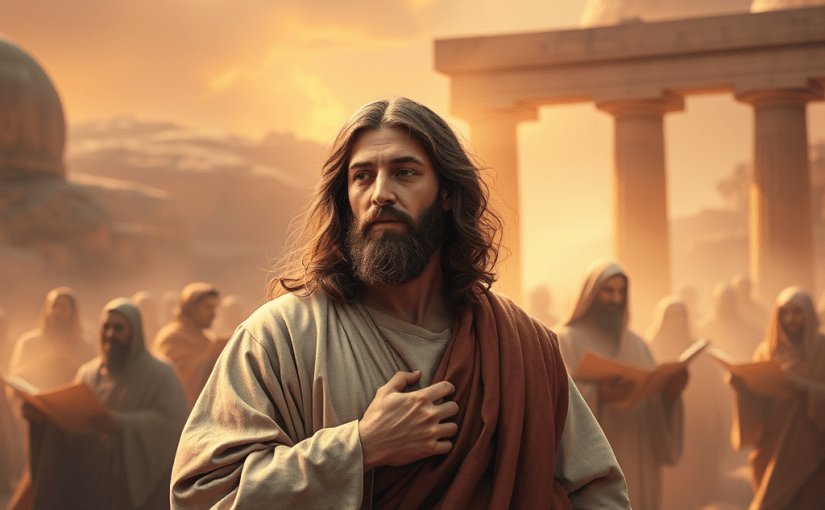
    This experience of God acting in history simply continued in the most dramatic way of all when God became human in Jesus Christ. God acting in history was not a new idea that the early church made up. The church did not try to change a myth into a reality. Rather, it proclaimed that all the myths of other cultures suddenly became a reality when Christ was born. This was Paul’s basic approach when he told the Greeks and Romans that Jesus was their Unknown God.

    Harpur is right that God has always been incarnate in all of God’s creation, and therefore, there are many paths to God, but the traditional belief of the church has been that God was incarnate in a special way in Christ and therefore, Christ is a specialpath to God. This idea that the Infinite Ruler of the Universe can be in a specific location in a special way is, again, not a new Christian idea. Jews believed that God was present in a special way in the sanctuary of the temple. Catholics, Anglicans, and Lutherans have taken the special incarnation of God a step further in their belief that the cosmic Christ is incarnate in a very special way in the communion host.

    It makes sense that God would not just tell us how to live, as God did in the Ten Commandments, but God would also showus how to live by becoming human. In Christ, God gave us a three year audio-visual demonstration of what a true human being is and also what God is really like.

    There were many witnesses to the specialness of Jesus before, during, and after his life. First, there is the ancient scriptural record. Before the historical Jesus appeared, there were dozens of prophecies recorded in the Jewish scriptures of what the Messiah would be like: royal, suffering, and divine. Jesus fulfilled all these prophecies, particularly the ones by the prophet Isaiah, who said that a child will be born who will be called “Mighty God” and “Everlasting Father” and will have a kingdom without end (Isaiah 9: 6-8). This suffering servant will be “pierced for our sins”, but “by his wounds, we are healed” (Isaiah 53:5)

    Then there is the vision of the prophet Daniel of a man who was led into the presence of  God. God gave this man everlasting authority, sovereign power, and glory, and the people of every nation worshiped him (Daniel 7:13-14). There are many other Jewish prophecies like this.

    During Christ’s life, he gave great and sublime teachings such as the Sermon on the Mount, in which he first focused on the nature of true happiness in the Beatitudes. The rest of Christ’s teachings also extended and completed the spirit of the Law and the Prophets.

    Another witness is the astounding miracles: Jesus calming the raging sea, multiplying food for the hungry, healing all manner of illnesses, driving out evil spirits, and raising a man to life who had been dead for four days!

    Even if we overlook the miracles, there is the witness of the way Christ lived. His courage, integrity, wisdom, and compassion were so complete they must have had a supernatural source.

    There is the witness of the appearances of Christ after his resurrection to hundreds of disciples, and there is the New Testament record of miracles performed in the name of Jesus by these disciples.

    There is also the witness of people dying for their faith in Christ, the record of all the martyrs in the early church. No one would lay down their life for some mythical human being. Then there is the record of the ongoing growth of the church through the centuries and of so many present-day martyrs.

    Put all this together, and one is almost forced to conclude that in Jesus, something extremely special was going on. In fact, it all points to one reality: that God was in Christ, reconciling the world to God. In the birth of Christ, God gave us the greatest gift of all: God in the form of a human being.

Bruce Tallman is a London spiritual director and educator of adults in religion www.brucetallman.com  

The Power of Wisdom in an Internet Age

Wise people value wisdom above all for it is the source of peace in the midst of information chaos. Knowledge now doubles every six months, and this overwhelming barrage of information makes it increasingly difficult to discern what has lasting value. However, by holding to principles of wisdom that have withstood the test of time, our future-shocked culture can survive.

    Jesus, Buddha, King Solomon, and Socrates, all revered as exceptionally wise men of the ancient world, have some particularly relevant thoughts for our present age. They all agree that wisdom is more precious than money or anything else you could desire because it is the source of all truly good things. Wisdom, not information, is what is ultimately important.

    Studying wisdom cross-culturally reveals seven key principles.

1. God Exists. Many scientists, including Einstein, believe that anyone who pursues science with their whole heart inevitably comes to the conclusion that there must exist an Intelligence behind everything that is vastly superior to the human mind. 

    God constitutes the source, sustenance, and goal of all things whether in the scientific age, information age, new age, or any age. The wisdom literature of western religion repeats over and over “The fool says in their heart ‘There is no God’”.

2. Accept Your Humanity. The three great monotheistic religions, Judaism, Christianity, and Islam, agree that the ancient message of the Garden of Eden remains true: all our problems begin with pride, with denying our place in the scheme of things, with wanting to be like God.

    Through the Internet we have fifty million computers at our fingertips. This gives us the god-like quality of instant knowledge about anything, which can tempt us to think we have all the answers and are, in fact, God. Bloated with information, we have no room for wisdom.

    False pride easily blinds us to our limitations, creatureliness, and humanness, but all major religions agree that the essence of wisdom consists in forgiving yourself for being human. If the first principle of wisdom is “There is a God”, the second one is “You are not God”. If pride causes all our problems, humility, that is, accepting our humanity, is the solution.

3. All Wisdom Comes From God. King Solomon states over and over that wisdom begins and ends with recognition of God’s supreme wisdom. You may not understand things, but God does. Similarly Socrates maintains that intellectual humility marks the first quality of the wise person: the realization that you lack wisdom and do not have all the answers. The wise listen much more than they speak.

4. All Things Pass Away Except God. Like Jesus, Buddha taught that everything passes away, and sorrow derives from putting too much stock in this world. 

    The epidemic of depression in our culture stems, at least partly, from ever-accelerating change in which we constantly lose people, things, lifestyles, and beliefs we had clung to. Instant access to infinite information has only sped up the change/loss process. Many find they cannot keep up.

    Therefore, hold everything lightly: your health, spouse, children, friends, job, wealth, reputation, ambitions, ministry, and theology, for they all inevitably change. Wisdom teaches that true joy and peace comes from clinging only to God, for God alone lasts.

5. Purify Your Desires. God wants lasting love, truth, and peace but the commercialization of the Internet places all the treasures, pleasures, and temptations of the world before us in an unprecedented way. We must use the great gift of this technology wisely, to bring us what is truly good and life-giving rather than the ever-increasing hawking of earthly wares and human bodies.

6. Wisdom Means Compassion. Christ exhorted us to love our enemies. Similarly, Buddha stated that compassion, even for adversaries, arises when we realize the suffering of all beings. Many people have become news addicts and, through an endless parade of woe in the media, anesthetized to other peoples’ pain. However, in spite of “compassion fatigue” we still need to reach out and try to comfort those who are suffering.

7. Wisdom Sees the Oneness of All Things. Wisdom thinks constantly in terms of unity, and realizes that whatever we do to others we do to ourselves. Therefore it always strives to create community and to take care of all people, creatures, and the Earth. Social and environmental justice are natural outflows of wisdom. The information age tends to fragment people into ever smaller interest groups. We need to use the world wide web to bring people with divergent views together in dialogue.

    In conclusion, there are three main ways to gain wisdom: pray for it, study it, and imitate it. Every major religion has a body of wisdom literature, a collection of reflections of its founders, greatest saints, and prophets whose lives can be emulated. In particular , we could all grow spiritually by imitating Jesus, who is considered by Christians to be the Wisdom of God in the flesh. Only by following the wisdom of the ancients will we transform the information age into an age of true peace and love. 

Bruce Tallman is a spiritual director and educator of adults in religion. http://www.brucetallman.com.    

Three Truths of Wisdom: Confucianism and Christianity Explored

Confucian wisdom has three components:

cultivation of the person

meaningful action nourished by heavenly splendor

harmony of one’s wisdom with the wisdom of others

Christian wisdom knows the soul needs three truths:

knowledge of God’s goodness

knowledge of self

cure for the world’s woes in constant/humble/prayer

in Confucianism, filial piety

does not equal blind obedience/subservience

to age and authority –

a son will correct his father 

when he knows his father is wrong

similarly, the minister will correct the prince 

when the prince is wrong

in Christianity the beginning of wisdom 

and nondual consciousness

involves seeing not only the goodness of things

but also their weakness/failure/dark side

the ‘prosperity gospel’ on the other hand

tries to see only the good side of things

and divides everything into either/or

good/bad – there is no realism/

no middle ground

and so the ‘prosperity gospel’ weaves 

Christianity and the American dream of wealth together

breeding fanaticism and unbalance

the Second Vatican Council (1962-1965)

recognized that the institutions/laws/

modes of thinking of earlier generations

were not well adapted to contemporary realities

but the Council Fathers/Bishops/Archbishops

wanted to aid those trying to preserve three truths:

the holiness/natural dignity/greatness

of ordinary life and its superlative value

much as Confucianism does.

The Messy God in All Things

Raimon Pannikar and Paul Tillich support Teilhard’s view

that a new perspective of God is rising out of the old one –

a God more comfortable with the messiness of evolution

than with the order and structure of Greek metaphysics

the direction of evolution is now seen as 

towards the maximization of goodness

and thus towards the incarnation of God –

if Christ is the Divine Word as Creator

and if Christ is the Word Incarnate as Jesus

Christ Jesus is also the Redeemer –

what is created in Love is redeemed in Love

through prayer Love is received

and through miracles Love is expressed

prayer is the medium for miracles

our night dreams show us 

we contain in our unconscious 

the miracle of secret Aladdin caves 

a mythological world of jewels and ‘jinn’ –

spirits within that invite us into

the desire and dread of the human adventure –

to have our secure inner world dismantled/

deconstructed but also reconstructed

into a broader/more compassionate/

more fully human space

in general, it is better to approach God

through the Holy Spirit, as a living reality

than through theology as an abstract concept

self-abandonment to Divine Providence

in the present moment

begets faith

which helps us to see 

God hides God’s Self

so we develop a pure faith

that can see God in everything –

in all life

and all evolution. 

EASTER: HUMAN VS DIVINE PERFECTION

Carl Jung believed each of us

originally had a total and powerful sense

of the Self – the total psyche

but then trauma caused the Ego to emerge

which narrowed our consciousness down

to awareness of our small self as a vulnerable individual

but our Ego still needed connection to the Self

to have psychic health


in this regard the Ego’s striving for security and perfection

is striving for death

because we kill our own life

by trying to control everyone else’s life

leaving no room for error or disruption

but sooner or later disruption happens

we lose our health or a loved one

and errors happen –

all this is an inevitable part of being human


so to counter this, God always calls all humans

to God’s version of perfection –

sharing in the Divine Life beyond all corruption –

Christ won victory over error/disruption/death

by dying and rising for all humans

so that all of us who live with Lady Wisdom

know faith is God’s Answer

to human versions of perfection

and human anxiety about an insecure future


by the grace of God, intimate friendship with the Risen Jesus

has always been central

to the spiritual life of authentic Christians –

this friendship allows us to love

our fellow human beings and our True Self

which fulfills God’s Commandments given to us in Judaism

and in modern Jewish thought –

“All real living is meeting other people”

– Martin Buber, Jewish theologian –

contrast this with the atheist

Jean-Paul Sartre:

“Hell is other people”

God’s version of perfection – faith in God –

saves us from every version of hell.


TRANSFORMATION OR EXTINCTION?

The most essential practice of peace is non-attachment

to your own views – clinging too tightly to our own beliefs/

ideology causes violence/war on the one hand

but on the other hand you have to believe in something

or your life is meaningless – you have to hold your beliefs

tightly/loosely – to be committed/open


and in our culture the number one blasphemy

is to question anyone’s views on autonomy – their right

to do their own thing without consideration of others –

their separation from others and God –

and the faith of the modern mind is based on this:

science can and should be allowed to do anything

no matter how horrendous – we have created

nuclear weapons – therefore we are morally obligated to use them


but one of the best things – if your faith brings you into conflict

with science/history/culture/philosophy

is that this conflict can stimulate new and deeper theology


the quantum theologian has already learned

that extinction (crucifixion) and transformation (resurrection)

are central coordinates of cosmic and planetary evolution –

in Romans 8:22 the Apostle Paul wrote

“the whole creation has been groaning together

in the pains of childbirth until now” –

birth/transformation and extinction are the two great possibilities

facing us right now and should be our primary focus


our primary focus is too often misplaced:

we focus only on: “Am I full or hungry? Am I sick or healthy?

Am I rich or poor?” Good questions but

if we leave God out of the equation

we will not be fully full/healthy/rich:

“You say ‘I am rich, and have become wealthy,

and have need of nothing’ but you do not know

that in God’s eyes ‘you are wretched/miserable/

poor/blind/naked’” (Revelation 3:17)


our true food/health/wealth is to do the will of God

who made us – only when we get this

will we be headed towards a world

that is interspiritually unified by both

the corporal and spiritual works of mercy.


THE MAGIC ELIXIR

Tremendous change has happened since the Middle Ages:

Renaissance/Reformation/Enlightenment/Evolution/World Wars –

which makes theologians ask 

“What is modernity?/theology?/Christianity?”

but whatever it is, theology is secondary to liberating praxis –

solidarity with the poor must be the center of Christianity –

theology is subordinate to justice –

Jesus, like Buddha, came to liberate 

not speculate

another major development is Technology

which increases our ability to meet every human need

but hypnotizes the Masses into believing 

life is only about meeting economic needs –

we have gained the world 

but lost our souls

long before this, right back in biblical times

Christianity was corrupted by unconscious worldliness –

scholars agree on three “Pauls” in the Christian scriptures: 

the radical/conservative/reactionary Pauls –

Paul probably did not write Colossians and Ephesians –

fake authorship was common throughout the ancient world

and Paul goes from a theology of liberation in Romans/Corinthians

to a theological conservative in Colossians/Ephesians

who in these later books believes Christians can own slaves

for their own economic gain

but the Quran says “The riches and progeny of unbelievers

will profit them nothing when it comes to Allah –

they will inhabit the Fire –

believers put their trust in God”

so being Christian (or Muslim) never ceases to be challenging 

we always get pierced by the horns 

of scientific materialism or world-escaping piety

however modern theologians such as Ileo Delia 

avoid the conservatizing/privatizing/sickening of the Masses

and allow us to drink a magic elixir

made by swirling together central ideas from some august believers:

Merton/Teilhard/Panikkar/and Griffiths

that give us a robust/healthy modern faith.

FAITH DEEPER THAN “BORN AGAIN”

In his song “Lovers in a Dangerous Time”

Canadian folk legend Bruce Cockburn sings

we live in a dangerous time because

democracy is rapidly crumbling across the planet

and because climate change leaves no time  

to stop it/figure it out/get our bearings


however, mystics East and West agree

there is more to life than “getting somewhere”

in politics/business/war/religion –

beyond ambition there is penetration of being/

truth/meaning/purpose


and the solution to all problems

is not simply to be “born again” –

religious maturity is deeper than any psychological state

or infantile religious experience

because maturity can deal with

darkness/failure/uncertainty and still be joyful

whereas infantile religion always needs more and more light

and only light, no darkness or shadow


self-confrontation of our shadow is painful

but necessary for spiritual growth –

taking a log out of an eye is a painful operation

but then we can see clearly –

contemplation can be painful too –

showing us our deepest convictions

are wrong or shallow, replacing our comfortable truths

with unsettling ones that empty out our ego


faith and love are deeper/higher than science

or even mystical experience – knowledge and experience

no matter how deep or great are worthless

unless they deepen our faith and love


hope deepens us too –

without the hope of eternal life

the riddles of life/death/grief/guilt remain unresolved –

according to Catholic theologians Karl Rahner and Ron Rolheiser

“there is no finished symphony in this life” –

and so there is a tendency to fall into despair

unless the Life Divine is real.


SOLVING THE HUMAN DILEMMA

Henri Nouwen holds the mystical path

devotion to God

to be central to the life of the heart.

When morality gets too much attention

it subverts the priority of the mystical.


In any case, true morality flows out of oneness

the Law of Karma rules:

“You cannot do good or evil to your self

without doing the same for your neighbors”

– Catherine of Siena


To the extent we can look at our self

clearly/compassionately, we can confidently/fearlessly

look into someone else’s eyes – and into their soul

since eyes are the mirrors of the soul.


For Teilhard de Chardin love is not

an epi-phenomenon – something humans can acquire

rather it is what we constantly bathe in

something closer to us than our breath

which includes agape/eros/philia (brotherly/sisterly love)

and undergirds/supports the rise of consciousness –

deepening love and rising consciousness go together.


Similar to Teilhard, theologian John Macquarrie

illumines the human condition

by his main theme of self-transcendence

which simultaneously opens us to God the Infinite

while recognizing our essential finitude.


We humans are always a problem to ourselves

because we are finite yet longing for infinity –

longing for the Godhead, for Infinite Love

the living God beyond our images/idols of God.


This is where we need faith –

because according to Simone Weil

“Faith is the ability to hold creative tension

between paradoxes that are irresolvable

such as being finite but longing for infinity.”


Faith in God is the solution

to the otherwise unsolvable human dilemma.