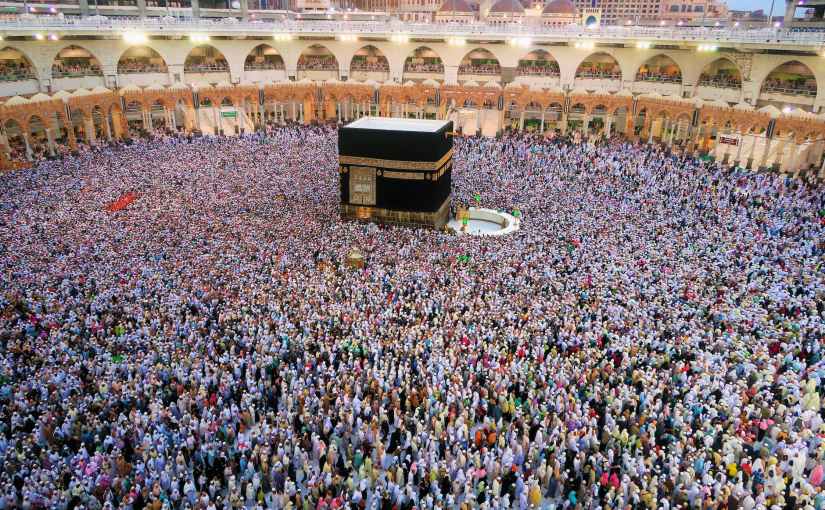
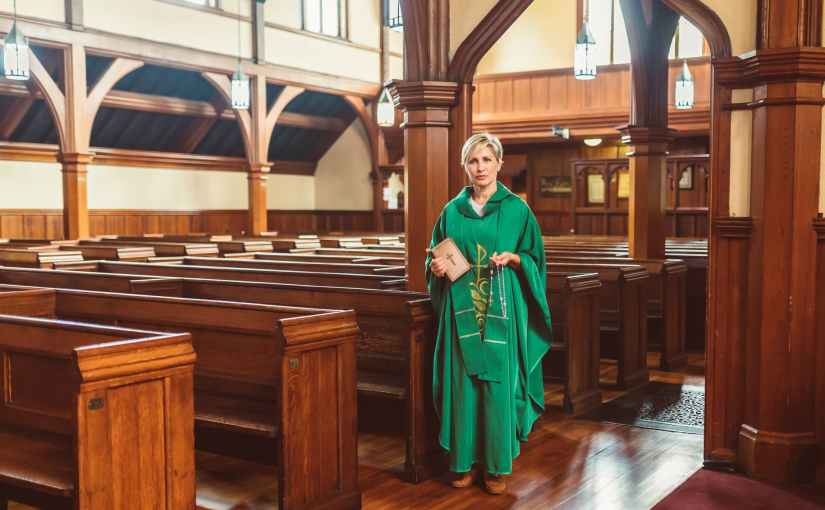
COMMON THREADS IN WORLD RELIGIONS

The world’s great religions, diverse as they are

share a common existential thread:

self-reflection and self-transcendence

to St. Paul baptism means you transcend/die 

to the Roman Empire’s violence 

maintaining its patriarchy/hierarchy/slavery

hierarchical and biblical authority

the mainstays of Catholicism and Protestantism

have been problematic for feminist theologians

because there are many ‘terror texts’

hard to believe as ‘inspired by God’

because they maintain subjugation/exclusion/

violence against women –

by seeing biblical texts as interactive with the reader

feminist theologians reclaimed the Bible for women 

by biblical criticism prioritizing the life-giving/

political/ethical/nonviolent texts

but the vision of the hierarchical Fathers 

of the Second Vatican Council (1962-1965)

was to help the Church be evermore true

to its divinely-inspired mission:

to effectively serve all people 

both men and women

with generosity/empathy/love

and in Buddhism the Three Jewels:

the Buddhist Trinity of Buddha/Dharma/Sangha

(Teacher/Teaching/Community)

are all meant to sow seeds 

of love/peace/understanding 

throughout the world

and in Taoism the sage Lao Tzu teaches us all

how to accomplish much 

without effort

by allowing the Tao, the Hidden Force

motivating the universe

to act in and through us

spreading wisdom and joy everywhere

Spirit hides in all these traditions.

THE THIRD WAVE

The second major arc of human development

after the pre-rational and before the trans-rational

is the anti-religious/atheistic stage

which is all about reason and science

and which brings seemingly staggering benefits

to humanity in terms of reducing suffering


but we are right on the edge

of the third wave of transformation:

from farming to industry to information –

from the suffering caused by the rational-industrial

to the visionary-informational


the visionary Paul Tillich developed and applied

the “Protestant Principle:” vigorous protest

(which is why they call it “Protest-antism”)

against all distortions of the Truth –

particularly rational ones against the Gospel

particularly the “demonic tendency”

to make the Church into an Absolute replacing God

and manipulate God with sacraments


since World War II modern society has gone thru

an “expressionist revolution:” replacing external authority

with inner authority – each person expresses

their authentic self/individuality/personal choices

of purpose and meaning

in a fractured commercialist society –

old loyalties to family/nation/religion are gone

and others revolt mindlessly against this loss

of the old values and the old Church


our formerly simple world has changed

to one of pluralism – both culturally and religiously –

consequently, the meaning of Christ must be changed

and expanded exponentially

beyond all protest


the humble scientific researcher

even though s/he is unaware of it

as he/she tries to penetrate

the secrets of the universe

is being led by the Cosmic Christ of Divine Love –

into the Third Wave after religion and science:

the perfect marriage of science and religion.

PERSON/COMMUNITY/LOVE

Ken Wilber’s all-inclusive vision/”integral philosophy”

takes in the I/WE/IT we live/move/have our being in each day

when we are alone (I space)

when we interact with others (WE space)

when we interact with corporations/banks/governments/

organized religions (IT space) – we go from

personal/to interpersonal/to impersonal

and the IT space treats us like another  IT not a PERSON


Jesus was: not a cog in the wheel of organized religion/

a layman not a priest/in the streets more than in the temple

yet priests have created elaborate religious temple ceremonies/rituals

to worship a man who never once asked to be worshiped

only followed – organized religion has made Jesus

safe/institutionalized/an IT – an object of worship


organized/institutional/impersonal religion

does not equal or create COMMUNITY

because in the past 150 years Christianity has become

largely institutionalized/like a big business

and not only laity but also clergy

are dissatisfied with institutionalized religion


“Western orthodoxy has for far too long

had a too detached/lofty/oppressive view of God

imposed on it by a “docetic” – “not really human”

view of Jesus – which has made Jesus the God-man

impotent in peoples’ personal lives” – N.T. Wright


all this has come about due to an underlying philosophy

of “individualism” spawned by Protestant theology/

reinforced by the so-called “Enlightenment”/

doubly reinforced by IT-space capitalism –

Protestantism often addressed the Word of God

to the salvation of solitary individuals

rather than the social gospel

of the transformation of society


but there is hope since evolution thrives

on communalism not individualism – survival

of the most cooperative not the most competitive

and God is the dynamic of love

that gathers all beings together

into greater consciousness/unity/LOVE.


HOW RELIGIONS CAN LIVE IN PEACE

If we want world peace, it is becoming increasingly crucial that Christianity and Islam get along. However, how can any religions get along? Religion, by its very nature, tends to take things to the limit, to globalize its beliefs and absolutize its truths. If my truth is absolutely true, your different truth must not be true.

    This attitude generates conflict not only between religions, but also within religions. For example, Sunnis and Shiites have a long history of conflict in Islam, as do Protestants and Catholics in Christianity.

     One attempt to solve this dilemma is the annual World Day of Prayer wherein the major Christian denominations try to pray together. Another effort is World Religion Day, usually in mid-January, in which the major religions get together and speak their truth about peace.

    However, these approaches, while salutary, do not address the basic problem of how to handle conflicting truth claims. On the one hand, the Koran tells us that Islam is the true faith, Buddhism maintains the Buddha taught the true path, Christianity claims the absolute truth is Jesus Christ is Lord, and Hinduism asserts that Lord Krishna was divine.

    On the other hand, every world religion also teaches wisdom, compassion, prayer, fasting, taking care of the needy, and avoiding evil. Given this, no one can say that every major religion is all wrong or all evil. All of them have at least some truth or goodness in them. So, how do we reconcile all this? There are four basic approaches to truth.

    The first approach is that all religions are equally true and valid. However, this choice has to be rejected when you compare say rabbinic Judaism to Aztec religion with its human sacrifices in order to keep the sun-god rising, or when you compare say Voodoo cults with the sublime theology of Thomas Aquinas.

    The second approach is that no religions are true. This is the stance of the atheist or the person who cannot reconcile all the competing assertions of absolute truth, and therefore decides that all religion must be nonsense.

    However, this choice is not very satisfying either. Religion expresses the deepest insights of the human heart. To say there is no truth in any religion is to leave humanity in a truly hopeless situation.

    The third approach is black and white religious truth. This is the attitude of “we are saints, you are sinners,” “we have all the answers, you don’t have any,” “only Catholics will be in heaven” or conversely “all Catholics are going to hell.”

    This approach, when taken to its limit can result in self-righteousness and endless division, hatred, and war between religions and within them. Truth as black and white eventually disintegrates when you start to notice the shortcomings and sin in your own community and the virtue in others.

    The fourth approach is degrees of truth. This choice has as its basic premise that there is truth in all the major religions, but some religions are truer than others.

    This choice forces you to really study and weigh where you can honestly find the most truth, rather than just accepting or rejecting everything wholesale. This approach also allows you to be completely committed to your own tradition while at the same time being open to whatever degree of truth you find in other traditions. In fact, everyone could enrich their own tradition with the truths they found in other traditions.

    Catholics could learn a lot about humble service and justice from the Salvation Army, peacemaking and community from Mennonites, preaching and Bible study from Baptists, and joyous worship from Pentecostals. Protestants could learn from Catholics about the riches of the sacraments, contemplative prayer, the saints, and church history.

    Christians in general could learn from non-Christians: love of God’s law from Jews, detachment from Buddhists, a spirit of poverty from Hindus, and zeal for God from Muslims. These traditions could similarly learn a lot about forgiveness from Christians.

    An objection from evangelical Christians might be “If we admit there is truth in all the major religions, why reach out to them with the good news of Jesus Christ?” The answer is simply that, if you believe Christianity to be truer than other religions, you will want to reach out to them with your greater truth. In the process you might learn why they believe they have the greater truth, and so understand each other better. This can only be good.

     In a degrees of truth approach, every person is given the human right of freedom of religion and is free to believe that their religious tradition is truer than other traditions without absolutizing their tradition as the one and only truth.

    “All religions are true” has great tolerance, but no commitment; “no religions are true” has no religious commitment or tolerance; “black and white religious truth” has commitment but no tolerance; only the  “degrees of truth” approach has both the religious commitment and religious tolerance which together can lead to world peace.  


Bruce Tallman is a spiritual director and religious educator of adults. btallman@rogers.com


HOW TO APPROACH THE BIBLE INTELLIGENTLY

There are two basic approaches to Bible reading: faithful and unfaithful. The faithful approach, as Augustine wrote, is “faith seeking understanding;” the unfaithful approach seeks to tear down faith.

    The fact is that truth is interactive between the text and the reader. If no one ever read the Bible, it would become a museum piece that people looked at but never picked up. On the other hand, if people read everything in it literally it would seem absurd: talking snakes, rivers clapping hands they don’t have, hills shouting for joy, a great red dragon sweeping a third of the stars from the heavens with his tail.

As Richard Rohr says, the literal approach is important, but it is the least useful approach and misses so much of the deeply meaningful symbolism in the text.

    It is important to realize that the Bible is full of different genres: poems, history, wisdom writings, romance stories, gospels, letters, apocalyptic writing. If you took everything as the same genre, it would be like reading the newspaper comics as if they were the same as stories on the front page.

    In fact, the Bible is so rich, so packed and varied, you can find anything you want in it. you can find God as a monster who sends poisonous snakes to kill 30,000 Israelites for complaining to Moses when they have no food in the desert; God killing everyone on Earth in a flood; God condemning people to eternal torture in hell. This is the biblical God atheists like Richard Dawkins find.

    Or you can find God as a good shepherd taking care of his flock or God as a loving mother nursing her child on her lap. The question is: what did you want to find before you even started reading the Bible? That’s what you will find because it is interactive.

    The Protestant Reformation, which started in 1517 with Martin Luther, attacked the authority of the pope and so the Catholic church made the pope infallible, that is, incapable of making erroneous statements. Protestants reacted by making everything in the Bible inerrant, that is, without error. However, Protestants interpret the Bible in many ways, and without realizing it, it is their own interpretation they take as inerrant.

    The Bible did not fall out of the sky, it was written over about 1300 years by about 40 human authors who had different personalities, different life experiences, and who were affected by their own culture’s history and understanding of reality. So, they were capable of writing things that, with our greater knowledge, we know were inaccurate.

    There are thus two basic mistakes in approaching the Bible: to take everything in it as equally true, as if there are no scientific or historical errors in it, as fundamentalists do, or to take it as just another book and not inspired by God as some Protestants do.

    It is challenging to keep the tension between the Bible as both the inspired word of God and as written by fallible human beings. The Bible was meant as a faith and morals text not as a science and history text.

    There are no math or physics equations in the Bible, but there is an evolution of peoples’ understanding of God. Things develop from all the laws in the early books, some of which are humanly made, such as not combining two different fabrics in clothing, to prophets who criticize God’s people when they get off track, to Jesus who fulfills both the law and the prophets.

    So, when Christians approach the Bible, they need to take Jesus as their hermeneutic, or means of understanding what is written in the Bible. We need to always look at scripture through the wise and compassionate eyes of Jesus who was selective in his use of biblical texts, that is, he considered some texts to be more inspired by God and some as less inspired. He largely ignores the less-inspired parts.

    Faithful interpretation of the Bible necessitates a lot of prayer for guidance by God when reading it, as well as the need to listen to faithful Bible scholars who can help us understand what Jesus meant.

    If with their help we can discern how Jesus interpreted the scriptures, then we will get the proper interpretation.

Bruce Tallman is a spiritual director and religious educator of adults. btallman@rogers.com

SPIRITUAL PRIDE/RELIGIOUS VIOLENCE

Medieval pilgrimage was meant to be a cure for violence

but in the Crusades it became a consecration of violence –

if we believe God is only on our side

now we can kill in God’s name

and believe killing infidels is God’s will.


Religious violence comes from hubris –

proudly thinking we know all about God and God’s will

but for theologians like Meister Eckhart

God is better apprehended by negation than affirmation

God is an unspoken word/ineffable/

a light shining in silent stillness

which can be found in all religions

if you dig deep enough.


Hinayana Buddhism, the Lesser Wheel,

regards the Buddha as a human hero/a supreme sage/a saint

but Mahayana Buddhism, the Greater Wheel,

goes deeper and sees him as a world savior/an incarnation

of the principle of Enlightenment: silent light shining everywhere.


In Christianity, the Second Vatican Council (1962-1965)

reunited spirituality and theology so much

that its treatises are spiritual theology

and can be read as “lectio divina” – “sacred reading/sacred light.”


Jonathan Edwards, a Protestant philosopher and pastor

considered one of America’s most important

philosophical theologians, tried to discern

true religious affection from delusion.

He condemned both emotionalism and intellectualism

in religion because true religion

consists in “holy affections” from the heart

a unitary faculty of love and will

which cures the spiritual hubris

of thinking we can feel what God feels (emotionalism)

and think what God thinks (intellectualism)

which leads to religious violence.


“My ways are not your ways

and my thoughts are not your thoughts”

says the True Lord (Isaiah 55:8-9).


LIVING IN BABYLON

Major structural injustices in which we

live/move/have our being

create haves/have-nots

and are hugely immoral – but most religions

while preaching personal and interpersonal ethics

ignore systemic evil and most believers accept

massive injustice as “the way things are” never asking

“How can individuals be moral in an immoral culture?”


The typical response of Christians living in

our Babylonian culture, in exile, is:

try to be faithful husbands and wives

raise virtuous children who are

compassionate/contemplative/seek justice

and who kick at the darkness till it bleeds daylight.


Catholics adopt Protestant practices:

daily Bible reading/speaking in tongues

and Protestants adopt Catholic practices:

praying the Divine Office and trying out

Benedictine/Franciscan/Ignatian prayer styles

and perhaps this is the Holy Spirit

weaving the entire Church together

so we all may be one

or maybe this is just rearranging

the deck chairs on the Titanic

as long as the structural injustices persist.


Hopefully, the Contemplative Way

will save and transform us:

because sometimes contemplatives

as they are liberated from all addictions/attachments

gain psychic powers/siddhis such as

telepathy and clairvoyance – genuine contemplatives

always hide these super-powers

but maybe they could use them to fight injustice?


In any case, the ultimate secret of the spiritual life:

“ever-present divine awareness” is not hard to attain

for anyone and is impossible to avoid

according to Lao Tzu/Shankara/Paul/Augustine/

Plotinus/and Teresa of Avila because it is always there

and awareness of the divine is the only thing

that makes living in Babylon bearable.

THE PROTESTANT PRINCIPLE AND PARADOX

Life is always the tension/balance between opposing forces:

dark energy makes up 70% of the universe, dark matter 25% –

the visible universe is only 5% of what we know!

Dark energy keeps the universe expanding

and dark matter is a vast invisible ocean

that causes clustering of galaxies

and keeps the universe together.


More tensions of life:

Paradox I: salvation is freely given

but requires effort on our part.

Paradox II: Salvation is absolute liberation and joy

but to get there you normally go thru

absolute chaos/confusion/suffering.


Peter, James, John and Paul were saints just like us

who brought their brokenness to Christ

so that God’s strength might be glorified

in the transformation of their weakness.


The New Testament word for “heart” – “kardea”

means “our innermost thoughts/feelings/judgements”

that Jesus said must be purified –

he is quite clear – we must go beyond

superficial practice of the Law

to inner purification of our heart.


The Protestant Principle of iconoclasm –

the anti-idolatry that smashes idols – purifies things.

Paul Tillich turned the Protestant Principle

on Catholicism for believing it is God

on Karl Barth for his ‘supernaturalism’

and not taking modern culture seriously

on Carl Jung for reducing religion

to a private subjective realm

on himself for absolutizing Christianity

and not dialoguing with world religions

earlier in his theology.


Spiritual growth is to get rid of the clutter

to purify your self. The hero’s journey is one of

rediscovery not discovery – you learn that you were

a daughter/son of God all along – the heir of the universe:

the universe, in all its darkness and light, is yours, forever!