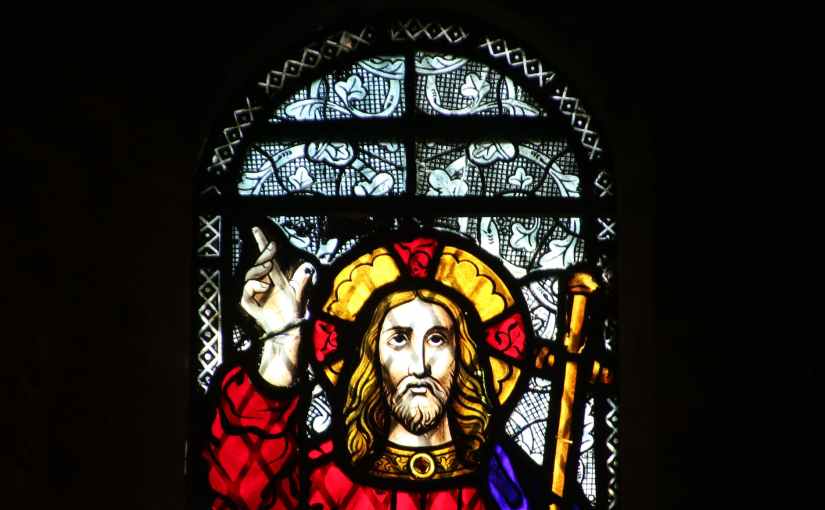
HOW TO INTELLIGENTLY APPROACH GOD’S WRATH IN THE BIBLE

The Bible, although inspired by God, came to us through human beings, and so there were often two steps forward and one step back in understanding God, until we arrive at Jesus, who is the best “hermeneutic” or “means of understanding” the Bible.

    In approaching God’s wrath in the Bible, we ideally would move from a vengeful God, which is what the ego wants, to the merciful God of Jesus, which is what the soul wants. However, humans have always lived in ego-based, divisive, reward and punishment cultures in which wrongs should be punished. On the other hand, God is soul and grace-based and responds to wrongs not by punishment but by love.

    Much of the wrath of God, in the Old Testament at least, was due to human authors failing to separate God and nature: floods killing people, poisonous snakes biting Israelites in the desert, bears mauling children, must be from God, since everything that happens is from God. This mentality is still with us today when insurance companies refer to floods, hurricanes, and earthquakes as “acts of God.”

    However, God and nature are not the same. God is in all nature, but these so-called acts of God are not God’s will, they are due to nature obeying natural laws about heat, gravity, and tectonic plates. The Old Testament writers knew nothing of these laws.

    Despite this, there are many instances in the Old Testament of God’s loving restoration. It was prophesied that God would restore us through a Messiah (Isaiah 53:5-6). In Ezekiel 33:11 God says, “I take no pleasure in the death of the wicked, but rather that the wicked turn from his way and live.” And the prophet Micah declares “Who is a God like you, who pardons iniquity? You will cast all our sins into the depths of the sea” (Micah 7:18).

    We also find God’s restorative justice in the New Testament. Zacchaeus was hated because he collected taxes from his fellow Jews for the occupying Romans, but Jesus tells Zacchaeus he wants to have dinner with him. Zacchaeus is stunned by the grace of Jesus and says, “Behold Lord, half of my possessions I will give to the poor,” and Jesus responds, “Today salvation has come to this house, because Zacchaeus too is a son of Abraham.” Jesus thus restored him to the Jewish community (Luke 19:8).

    What then do we do with the “hard sayings” of Jesus? In Matthew 5:29-30, he says it is better to cut off your hand or pluck out your eye if it causes you to sin, than to end up in hell; the sheep (who took care of the poor) go to heaven and the goats (who didn’t take care of the poor) go to eternal torture in hell (Matthew 25: 31-46).

    Context is important here. Jesus was speaking to Jews, Romans, and Greeks who were masters of rhetoric – the art of dramatic speech to make a point. Jesus knew it was not the hand or the eye but the heart that caused sin. He didn’t expect people to actually cut off their hand or pluck out their eye, as if that would solve anything. He is speaking dramatically here to make the point that sin and not taking care of the poor are extremely serious. They destroy human community and create hell on Earth. He knew people do not change easily, so he had to speak dramatically to make his point.

    Jesus also said other hard, countercultural things such as love your enemies, which is the essence of restorative justice: God does not punish his enemies, God destroys them by loving them more and making them his friends. This is the essence of wisdom.

    This spirit of restorative justice carried on in the early church. “If anyone has caused sorrow, you should forgive him and reaffirm your love for him” (2 Cor. 2: 5-8) and “If anyone is caught in any trespass, restore him in a spirit of gentleness” (Gal. 6:1).

    This idea of God as a God of love not punishment has continued in the modern church. The largest Christian denomination, Catholicism, has never said that anyone, even Hitler or Stalin, are definitely in hell. On the other hand, it has said that many people are definitely in heaven: the saints and martyrs.

    Jesus was all about restorative not retributive justice. His great commandments, to love God with all your heart and to love others as you love yourself, were meant to restore the original unity between God and humans found in the Garden of Eden. And as I concluded in an earlier article, the healthiest image of God is that God is a God of pure love, not a mixture of love, wrath, and punishment.

Bruce Tallman is a spiritual director and religious educator of adults. btallman@rogers.com

HOW RELIGIONS CAN LIVE IN PEACE

If we want world peace, it is becoming increasingly crucial that Christianity and Islam get along. However, how can any religions get along? Religion, by its very nature, tends to take things to the limit, to globalize its beliefs and absolutize its truths. If my truth is absolutely true, your different truth must not be true.

    This attitude generates conflict not only between religions, but also within religions. For example, Sunnis and Shiites have a long history of conflict in Islam, as do Protestants and Catholics in Christianity.

     One attempt to solve this dilemma is the annual World Day of Prayer wherein the major Christian denominations try to pray together. Another effort is World Religion Day, usually in mid-January, in which the major religions get together and speak their truth about peace.

    However, these approaches, while salutary, do not address the basic problem of how to handle conflicting truth claims. On the one hand, the Koran tells us that Islam is the true faith, Buddhism maintains the Buddha taught the true path, Christianity claims the absolute truth is Jesus Christ is Lord, and Hinduism asserts that Lord Krishna was divine.

    On the other hand, every world religion also teaches wisdom, compassion, prayer, fasting, taking care of the needy, and avoiding evil. Given this, no one can say that every major religion is all wrong or all evil. All of them have at least some truth or goodness in them. So, how do we reconcile all this? There are four basic approaches to truth.

    The first approach is that all religions are equally true and valid. However, this choice has to be rejected when you compare say rabbinic Judaism to Aztec religion with its human sacrifices in order to keep the sun-god rising, or when you compare say Voodoo cults with the sublime theology of Thomas Aquinas.

    The second approach is that no religions are true. This is the stance of the atheist or the person who cannot reconcile all the competing assertions of absolute truth, and therefore decides that all religion must be nonsense.

    However, this choice is not very satisfying either. Religion expresses the deepest insights of the human heart. To say there is no truth in any religion is to leave humanity in a truly hopeless situation.

    The third approach is black and white religious truth. This is the attitude of “we are saints, you are sinners,” “we have all the answers, you don’t have any,” “only Catholics will be in heaven” or conversely “all Catholics are going to hell.”

    This approach, when taken to its limit can result in self-righteousness and endless division, hatred, and war between religions and within them. Truth as black and white eventually disintegrates when you start to notice the shortcomings and sin in your own community and the virtue in others.

    The fourth approach is degrees of truth. This choice has as its basic premise that there is truth in all the major religions, but some religions are truer than others.

    This choice forces you to really study and weigh where you can honestly find the most truth, rather than just accepting or rejecting everything wholesale. This approach also allows you to be completely committed to your own tradition while at the same time being open to whatever degree of truth you find in other traditions. In fact, everyone could enrich their own tradition with the truths they found in other traditions.

    Catholics could learn a lot about humble service and justice from the Salvation Army, peacemaking and community from Mennonites, preaching and Bible study from Baptists, and joyous worship from Pentecostals. Protestants could learn from Catholics about the riches of the sacraments, contemplative prayer, the saints, and church history.

    Christians in general could learn from non-Christians: love of God’s law from Jews, detachment from Buddhists, a spirit of poverty from Hindus, and zeal for God from Muslims. These traditions could similarly learn a lot about forgiveness from Christians.

    An objection from evangelical Christians might be “If we admit there is truth in all the major religions, why reach out to them with the good news of Jesus Christ?” The answer is simply that, if you believe Christianity to be truer than other religions, you will want to reach out to them with your greater truth. In the process you might learn why they believe they have the greater truth, and so understand each other better. This can only be good.

     In a degrees of truth approach, every person is given the human right of freedom of religion and is free to believe that their religious tradition is truer than other traditions without absolutizing their tradition as the one and only truth.

    “All religions are true” has great tolerance, but no commitment; “no religions are true” has no religious commitment or tolerance; “black and white religious truth” has commitment but no tolerance; only the  “degrees of truth” approach has both the religious commitment and religious tolerance which together can lead to world peace.  


Bruce Tallman is a spiritual director and religious educator of adults. btallman@rogers.com


HOW TO APPROACH THE BIBLE INTELLIGENTLY

There are two basic approaches to Bible reading: faithful and unfaithful. The faithful approach, as Augustine wrote, is “faith seeking understanding;” the unfaithful approach seeks to tear down faith.

    The fact is that truth is interactive between the text and the reader. If no one ever read the Bible, it would become a museum piece that people looked at but never picked up. On the other hand, if people read everything in it literally it would seem absurd: talking snakes, rivers clapping hands they don’t have, hills shouting for joy, a great red dragon sweeping a third of the stars from the heavens with his tail.

As Richard Rohr says, the literal approach is important, but it is the least useful approach and misses so much of the deeply meaningful symbolism in the text.

    It is important to realize that the Bible is full of different genres: poems, history, wisdom writings, romance stories, gospels, letters, apocalyptic writing. If you took everything as the same genre, it would be like reading the newspaper comics as if they were the same as stories on the front page.

    In fact, the Bible is so rich, so packed and varied, you can find anything you want in it. you can find God as a monster who sends poisonous snakes to kill 30,000 Israelites for complaining to Moses when they have no food in the desert; God killing everyone on Earth in a flood; God condemning people to eternal torture in hell. This is the biblical God atheists like Richard Dawkins find.

    Or you can find God as a good shepherd taking care of his flock or God as a loving mother nursing her child on her lap. The question is: what did you want to find before you even started reading the Bible? That’s what you will find because it is interactive.

    The Protestant Reformation, which started in 1517 with Martin Luther, attacked the authority of the pope and so the Catholic church made the pope infallible, that is, incapable of making erroneous statements. Protestants reacted by making everything in the Bible inerrant, that is, without error. However, Protestants interpret the Bible in many ways, and without realizing it, it is their own interpretation they take as inerrant.

    The Bible did not fall out of the sky, it was written over about 1300 years by about 40 human authors who had different personalities, different life experiences, and who were affected by their own culture’s history and understanding of reality. So, they were capable of writing things that, with our greater knowledge, we know were inaccurate.

    There are thus two basic mistakes in approaching the Bible: to take everything in it as equally true, as if there are no scientific or historical errors in it, as fundamentalists do, or to take it as just another book and not inspired by God as some Protestants do.

    It is challenging to keep the tension between the Bible as both the inspired word of God and as written by fallible human beings. The Bible was meant as a faith and morals text not as a science and history text.

    There are no math or physics equations in the Bible, but there is an evolution of peoples’ understanding of God. Things develop from all the laws in the early books, some of which are humanly made, such as not combining two different fabrics in clothing, to prophets who criticize God’s people when they get off track, to Jesus who fulfills both the law and the prophets.

    So, when Christians approach the Bible, they need to take Jesus as their hermeneutic, or means of understanding what is written in the Bible. We need to always look at scripture through the wise and compassionate eyes of Jesus who was selective in his use of biblical texts, that is, he considered some texts to be more inspired by God and some as less inspired. He largely ignores the less-inspired parts.

    Faithful interpretation of the Bible necessitates a lot of prayer for guidance by God when reading it, as well as the need to listen to faithful Bible scholars who can help us understand what Jesus meant.

    If with their help we can discern how Jesus interpreted the scriptures, then we will get the proper interpretation.

Bruce Tallman is a spiritual director and religious educator of adults. btallman@rogers.com

HOW CAN GOD ALLOW SUCH PAIN?

  In the past twenty years wildfires, famines, hurricanes, tsunamis and floods have killed hundreds of thousands of people and left many more without homes and means of livelihood. Given all this, how can anyone say God is a God of love?

      Whenever we are overwhelmed by the evil and suffering in the world, we should always remember that evil is only a corruption of something that was originally intended to be good. For example, illness is a corruption of original health. War is a corruption of original peace.

       So goodness is original and foundational, evil is only secondary. According to the Jewish scriptures, God made life and everything “very good” (Genesis 1:31).

       God provides for us most of the time. The oceans God made are good to human beings 99% of the time: the source not of tsunamis and hurricanes, but of fish and of rain that makes the plants thrive that animals and humans eat. God constantly provides air, food, water, and shelter for us, but this is so commonplace we normally don’t think about it.

       God does not want or cause suffering. The laws of nature, and misuse of human freedom, are the twin sources directly responsible for suffering.

       Normally, natural laws serve us well, create order in the world, and allow us to predict what will happen. However, nature just obeys its own laws. It doesn’t matter to nature if people are in the way of an avalanche – it is going to obey the law of gravity anyway.

       If God kept interfering with natural laws to prevent our suffering, life would be totally chaotic and unpredictable.

       God allows suffering for higher purposes. Through suffering, we learn compassion for the suffering of others, and wisdom: how we and others can avoid even worse suffering. Also, service to others, self-sacrifice, courage, and heroism emerge. If God eliminated all suffering, life would lose its’ profundity.

       Suffering, to some degree at least, is an inescapable part of life because suffering is a continuum, all the way from stubbing your toe to the massive tragedies of famines and war.

      We have to ask: should God eliminate all suffering from life? And if not, what degree of suffering should God allow?

       As Helen Keller once noted, “Life is full of suffering, and it is also full of the overcoming of suffering.”

       God allows suffering, but God also motivates us to overcome suffering. Thus, all the helping professions and agencies arise: medicine, psychology, social work, churches, mosques, synagogues, the United Nations, Red Cross, etc.

       God always brings greater good out of any tragedy or evil. Through God working in them, people all over the world respond generously to disaster relief.

       The pandemic has caused people all over the world to examine their own lives and priorities: are material things that important? Any of us could be gone in the blink of an eye, so maybe God, taking care of each other, and what happens to us in the afterlife are the important things.

       Perhaps the biggest answer to suffering is this: if God had not created human freedom (and therefore the capacity to do harm), and natural laws, there would be no suffering. Therefore, while God is not directly responsible for suffering, God is indirectly responsible for it. Given that God indirectly causes suffering, one could say it is necessary that God suffer with us, that God not be in heavenly bliss while people on earth suffer.

       If God is ultimately responsible for suffering, the cross is a necessity, if we are going to maintain any idea of a compassionate God. The cross is the great symbol that God suffers with us, that God is, indeed, a compassionate God.

       Where is God in the face of natural catastrophes? God is right there suffering with the people who are suffering. God is always right in the center of human pain, trying to alleviate it. God is a God who cares and is close to the brokenhearted. The Jewish, Christian, and Muslim scriptures say this over and over.

       The cross in turn demands resurrection and heaven. It wouldn’t make any sense that an all-powerful God could be ultimately defeated. It is another necessity of faith that God ultimately must triumph over all suffering and death, and there is a place where all suffering is wiped away forever. Resurrection and heaven are necessities.

       Suffering is ultimately a mystery beyond explanation. We could talk to the victims about all the points above, but it would still not take away the pain of those who have lost loved ones, homes, and livelihoods.

       Sometimes all you can do is hold, cry, support, and try to be present (either physically or in your prayers) with those who are suffering.

       Besides giving whatever aid you can, sometimes all you can do is feel people’s pain with them. This is what a loving God does.

 Bruce Tallman is a spiritual director and author. btallman@rogers.com


GOD’S JUSTICE IS ETERNAL LOVE NOT ETERNAL PUNISHMENT

 You may find the idea that God is only pure love, not a mixture of love and wrath, revolutionary if you grew up as I did with an idea of God as an angry old man in the sky constantly watching us so he could punish us for our sins.

    Although I have grown beyond that image intellectually, the vestiges of it are still deeply planted in my brain and make it difficult for me to totally trust God. Even as an adult I used to think that, on the one hand God was purely loving, and yet on the other hand we had to maintain God’s “holiness,” by which we meant “hatred of sin,” and since sin has to be punished, God’s justice was always punitive and wrathful.

    But what if God’s justice is only restorative not punitive, and God is forever only pure love? What if, as the Franciscan priest Richard Rohr always says, “Jesus came not to change God’s mind about us, but to change our minds about God.”

    The best human being would do everything they could to fully understand and help others, not punish them. However, we live in a dualistic, tit-for-tat culture that divides people up into good and bad. The bad are your enemies and the culture tells us enemies are to be punished and destroyed.

    This punitive cultural attitude even infects our churches and warps our theology. Jesus taught that we should love our enemies, but many Christians do not believe that God does this, God condemns sinners to be tortured forever in hell.

    Jesus taught that we should forgive seventy times seven, that is, forever. But many Christians do not believe God does this, God sends people to eternal torment in hell.

    Why would someone as great as God, who has infinite power, knowledge, patience, kindness, love, forgiveness, compassion, and mercy choose to eternally destroy infinitely small, vulnerable creatures because of the stupid things they do, usually out of their own ignorance and brokenness? Doesn’t that make God infinitely petty, unloving judgmental and angry – qualities we don’t admire in any human being?

    Even in civil courtrooms, the length of the sentence must fit the crime – we don’t send people to lifelong imprisonment for stealing a loaf of bread for their family because they are food insecure. Eternal punishment therefore does not make sense. What could we possibly do that would warrant, not just imprisonment but torture, and not just for a lifetime but forever? Forever is an awfully long time, particularly if you are being tortured! This idea makes God a monster who is eternally vengeful, something we admire in no one. This idea makes atheists not believers. Surely, God is far greater, not far lower, than the best human being?

    Maybe God’s holiness is God’s infinite and eternal love, forgiveness, compassion, and mercy? Maybe God’s holiness is like the story Jesus told about the father of the prodigal son who runs out to meet and embrace his son and celebrates his return, rather than punishing him for squandering his father’s fortune? Maybe God’s holiness is like Jesus who, when a woman is caught in adultery, rather than stoning her for her sin, as the elders wanted him to, says, “I don’t condemn you, go and sin no more.”

     I think the idea of hell as a place of eternal torture is a projection of our worst fears onto God and religious leaders used this to control people. It is easy to control people who are afraid. I also believe though that there is a hell, not as a place but a state of mind. We create our own hell or heaven on Earth by the choices we make. I suppose it would be possible to make eternally bad choices and so condemn yourself to eternal hell, but I don’t think God condemns us. Rather, God would eternally pursue us until we gave in to God’s eternal love.

    Of course, this brings up all the verses in the Bible about the wrath of God. There are good theological responses that give alternative ways of interpreting these verses, but I reserve my answers for another article. Suffice it to say for now, that the Bible is full of examples of God’s restorative not punitive justice. For now, let us merely consider and savor the idea that God’s holiness and justice are found in God’s eternal love not eternal wrath, that God is only loving not both loving and wrathful.

Bruce Tallman is a spiritual director and author of God’s Ecstatic Love (Apocryphile Press, 2021). See www.brucetallman.com/books


GOD IN HUMAN FORM

Within Christian ranks in the past 40 years or so there have been persistent attempts to recast the basic tenets of Christianity itself. One of the most remarkable of these has come from Tom Harpur, who noted in The Pagan Christ in 2004 that other cultures had myths about the dying and rising god, and therefore the early church just made up a myth about the dying and rising Jesus.

    My sense is that Harpur is either not being true to himself or has somehow forgotten his theological studies as an Anglican priest. Every student of Christian theology is taught that the distinctiveness of the Jewish God was that this God acted in history. One of the most dramatic examples of this was when God liberated the Hebrew slaves from Egypt. God acted throughout Jewish history from the time of Abraham to the kings and prophets.

    This experience of God acting in history simply continued in the most dramatic way of all when God became human in Jesus Christ. God acting in history was not a new idea that the early church made up. The church did not try to change a myth into a reality. Rather, it proclaimed that all the myths of other cultures suddenly became a reality when Christ was born. This was Paul’s basic approach when he told the Greeks and Romans that Jesus was their Unknown God.

    It makes sense that God would not just tell us how to live, as God did in the Ten Commandments, but God would also show us how to live by becoming human. In Christ, God gave us a three-year audio-visual demonstration of what a true human being is and what God is really like.

    There were many witnesses to the specialness of Jesus before, during, and after his life. First, there is the ancient scriptural record. Before the historical Jesus appeared, there were dozens of prophecies in the Jewish scriptures of what the Messiah would be like: royal, suffering, and divine. Jesus fulfilled all these prophecies, particularly the ones by the prophet Isaiah, who said that a child will be born who will be called “Mighty God” and “Everlasting Father” and will have a kingdom without end (Isaiah 9: 6-8). This suffering servant will be “pierced for our sins,” but “by his wounds we are healed” (Isaiah 53:5).

    Then there is the vision of the prophet Daniel of a man who was led into the presence of God. God gave this man everlasting authority, sovereign power, and glory, and the people of every nation worshiped him (Daniel 7:13-14). There are many other Jewish prophecies like this.

    During Christ’s life he gave great and sublime teachings such as the Sermon on the Mount, in which he focused in the Beatitudes on the nature of true happiness. The rest of Christ’s teachings also extended and completed the spirit of the Law and the Prophets.

    Another witness is the astounding miracles: Jesus calming a raging sea, multiplying food for the hungry, healing all manner of illnesses, raising a man to life who had been dead for four days!

    Even if we overlooked the miracles, there is the witness of the way Christ lived. His courage, integrity, wisdom, and compassion were so complete they must have had a supernatural source.

    There is the witness of the appearances of Christ after his resurrection to hundreds of disciples, and there is the New Testament record of miracles performed in the name of Jesus by these disciples.

    There is also the witness of people dying for their faith in Christ, the record of all the martyrs in the early church. No one would lay down their life for some mythical human being. Then there is the record of the ongoing growth of the church through the centuries, and of so many present-day martyrs.

    Put all this together and one is almost forced to conclude that in Jesus something extremely special was going on. In fact, it all points to one reality: that God was in Christ, reconciling the world to God. In the birth of Christ, God gave us the greatest gift of all: God in the form of a human being.

Bruce Tallman is a spiritual director and author of God’s Ecstatic Love (Apocryphile Press, 2021). See www.brucetallman.com/books


WHAT THE POSTMODERN WORLD NEEDS NOW

The most important role for religion in the postmodern world

is to act as a sacred conveyor belt

moving people from myth to reason to trans-reason

that is, to see the limits of reason and transcend it.


Today we need to transcend both reason and science.

Buddhism tells you from day one

to find out for yourself what is true –

it encourages constant seeking –

even the teachings of the Buddha

should be questioned and tested.


For fundamentalist Muslims there is no need to ask questions

for the Koran has all the answers already –

their Sacred Book in its 114 suras (chapters)

is considered by them to be the final revelation

of the final prophet Mohammed

of the final purpose and will of God for humanity.


But mystics/contemplatives/sages of all traditions see

that their viewpoint is just a view from a point –

they have the ability to observe

their own inner dramas and dilemmas

in an egoless way

which is the primary form of “dying to the self”

that Jesus and Buddha lived and taught experientially.


Today however, the self reigns supreme

individualism leads to anti-institutionalism

people think institutions like family and marriage

are too restrictive – no one should have a say in how I live

and so people rail against government taxation

meant for the common good

and church is seen as impeding my spiritual growth –

individuals want to create their own self-religion

and free autonomous individuals get infected

by the pandemic of loneliness

which scourges the postmodern world.


What the postmodern world needs now

is community/togetherness/love/

sweet love.

THE EXPANDED UNIVERSE AND THE COSMIC CHRIST

Meister Eckhart’s Creation Spirituality likely came from the Celts

who spread across Europe and may have come from India

where Hindus saw the divine in all of nature –

in trees/rocks/rivers/animals.


From the Patristics, the Church Fathers, to the Middle Ages

cosmology and theology were one

but then the heliocentrism (Sun-centerism) of Copernicus

gave a different cosmology than the Earth-centrism of the Church

so that cosmology and theology divorced

and God was separated from the universe

but this is “deism” not Christianity.


Contemporary theologians cannot ignore the new physics

which is the relativistic and revelatory context in our time –

and the sacred story of the universe is being told by astronomy

with an unimaginable cosmology of billions of galaxies.


And evolution is the process by which Trinity becomes cosmos

and cosmos is Christified –

Unconditional Love (the Father) is poured into the Word (the Son)

forever breathed anew in the Holy Spirit.


Since love is the basis of all created orders

and the Cosmic Christ is first in God’s intention to love

“exoChristology” (the theology of Christ on exoplanets)

claims that planets outside our solar system will be related

to the Cosmic Christ and completed by an Incarnation –

Christ after all is the Alpha and the Omega

the Origin and End of all.


If Christians are to survive in this expanded universe

we need a bigger Jesus – there needs to be a shift

from a focus on the human Jesus of Nazareth

to a focus on Jesus as the incarnation of the Cosmic Christ –

for there might be incarnations of the Cosmic Christ

on exoplanets, incarnations not with the name of Jesus

but with other names

but they would still be the Cosmic Christ Incarnate.


I know this is mind-boggling but so is the new universe.

However, faith allows us to live in confident patience

that God will eventually fulfill all God’s promises

and we will one day understand it all.


EVER-ADAPTING CHRISTIANITY

In the triad of world/flesh/devil

it is almost always the sins of the “flesh”

that are attacked by churches –

birth control/adultery/abortion/pornography

and seldom do sermons preach about the sins of the “world” –

the lust for wealth and prestige that the ego loves.


But the difference between the True Self

and the False Self is the difference between

“True Centering” (on God) and “Ego Centering” (on Self).


In fact, the True Self can include the False Self

because the way we become whole as humans

is by embracing every aspect of our existence –

our weakness/failures/mistakes

by humility/not taking ourselves too seriously –

we grow by wholeness not by absolute moral purity

which we never reach anyway.


Still, we consign to the unconscious

all fantasy, all psychic associations connected with

words/numbers/stones/plants/animals –

but for primitives all these things had numinous power.


Friedrich Nietzsche dismissed all primitives

and fancied himself to be a Rational Existentialist –

one who has the courage to stare into the abyss of non-being

and discover complete loneliness, complete aloneness

if God is dead.


There have been many Rational Christian responses

that have deconstructed the “death of God” movement

and people like Marcus Borg and Bishop John Shelby Spong

have also helped us deconstruct Bibical Fundamentalism

and there are many Postmodern Christian thinkers

like Brian McLaren with his book A Generous Orthodoxy

and others have developed The Postmodern Bible

and The Cambridge Companion to Postmodern Theology.


As usual, Christianity has adapted to/learned from/gone beyond

whatever the world/the devil/the ego throws at us –

we always include and then transcend

all attempts to deconstruct the Truth.

THE NEW SCIENCE AND THE DIVINE PLAN

The first theme of The Imitation of Christ by Thomas à Kempis

is dying to self. The second theme is detachment

because attachment to material things

is one of the great impediments to the spiritual life.


However, according to Matthew Fox

Meister Eckhart is as different from Thomas à Kempis

as compassion from sentimentalism

as passion from repression

as celebration from asceticism.


The new science should cause religious people to celebrate

because “radical amazement,” according to Abraham Heschel

is the primary characteristic of a religious attitude to life.


Ponder for a minute what the new science tells us:

the sun emits more energy in the form of light

in one second than all of humanity has consumed

in its whole history – four million tons of energy –

which is thirteen million times

the energy consumption of USA in a year.


Non-dual thinkers use knowledge like this

not to “puff up” but to build up/induce awe/transform others

starting with themselves.

They never use knowledge

to shame those who know less or control them –

they use knowledge to help us all

see reality with new eyes.


The birth of radical awe is good timing

because along with our new scientific/technical knowledge

comes awesome power

and so greater wisdom is absolutely necessary.


Humility/wisdom/compassion are needed

when it comes to science and technology

because humility/wisdom/compassion

are the only things that give us new eyes

to see the Holy Spirit/the Divine Knowledge/the Divine Plan

and according to Oscar Romero

“There are many things that can only be seen

through eyes that have cried.”