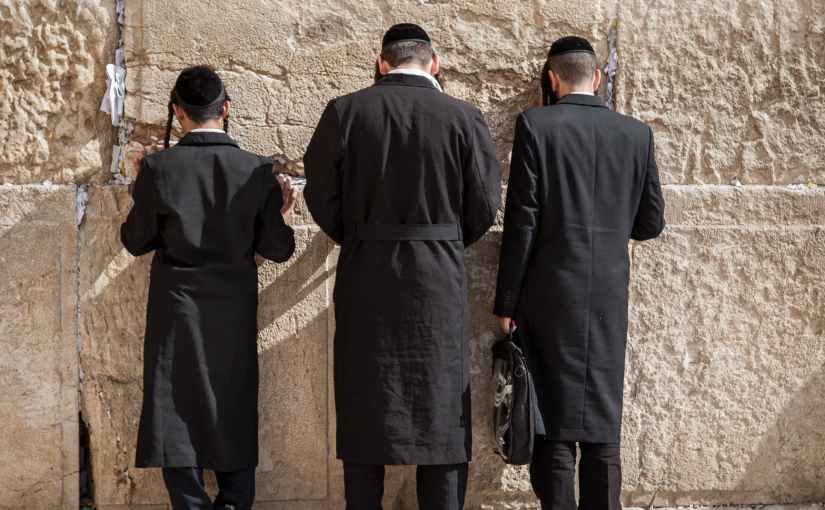
FALSE PROPHETS, ATHEISTS, PEACE, AND WHOLENESS


Separation from the primal union with the mother,

the Garden of Eden, causes a lot of suffering, but is inevitable.

However, it is crucial to remember that there was

and there still is, a Garden.


The suffering of Jews/Blacks/Indigenous

has deepened them and elevated them

above the meaninglessness and triviality of the white man.

This is the secret spiritual heritage

of the United States of America and many other countries.


Between 1999 and 2009, the number of people

who identified as ‘religious only’ fell from 54% to 9%

and those who identified as ‘spiritual and religious’

grew from 6% to 48% – a ringing endorsement

of the value of spirituality.


Spiritual transformation normally results

in transformed relational virtues –

more honesty/compassion/forgiveness –

or it may mean you become a prophet.

Like any true reformer/prophet today

Jesus critiqued Judaism from inside Judaism

by Judaism’s own criteria and holy values.


Today, atheists who attack Christianity do so

based on Christian values, but they do not realize this

because western civilization has marinated in Christian values

for so long these values have become subconscious.

However, false prophets, unlike Jesus,

always attack from the outside – therefore

the Four Horsemen of the Atheist Apocalypse –

Dawkins/Dennett/Harris/Hitchens –

are false prophets – they have no real understanding

of the depths of the religion they attack.


In critiquing Judaism’s over-emphasis on Law/morality

Jesus helped us replace our one-sided emphasis on goodness –

we are good, you are evil –

with a healthier ethic of wholeness –

looking at both our own goodness and brokenness

and seeing both the goodness and brokenness in others.

When Christians do this – take the logjam out of their own eye –

they bring peace to the world.
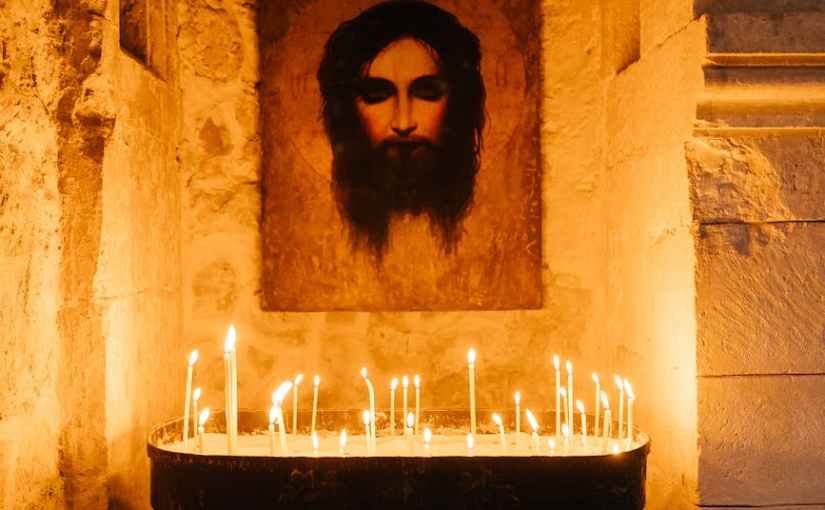


LOOKING EAST AND BACK WEST


In The Mystic Heart Brother Teasdale pictured a tree

in which the branches are all the religions of the world.

The main branches: Judaism/Christianity/Islam/Buddhism/Hinduism

and the minor ones: Sufism/Shintoism/Confucianism/Bahaism.

and the come-and-gone ones: Greek and Roman gods and goddesses/

Inca/Mayan/Aztec religion.


It is possible to learn and grow from all these traditions:

from Buddhism, Anthony de Mello, a Catholic mystic

learned “the fantasy of attending your own funeral”

and “the fantasy of your own corpse.”


Many Christians would have become Buddhists

but the tendency of eastern religions

towards world-denial and over-spiritualization

are pitfalls that prevent Christians from embracing the east

and prevent eastern traditions

from discovering the riches of the Incarnation and the Cross.


The intrinsic connection between the mystery of Incarnation

and the mystery of Creation means that in Jesus Christ

we discover the divine clue

not only to the structure and meaning of humanity

but also the entire universe.


Karl Barth’s massive Church Dogmatics

thoroughly Trinitarian and Christocentric

reminded us not to lose sight

of the central doctrines of the faith

while attempting to live Christianity out in the world.

Our image of God is central to our understanding

of how God acts in the world

and central to our attempts to transform this world

rather than deny/withdraw from it.


The question for Catholics at the contemporary crossroads:

do we deny modern theology/cling to old notions of God/

revert to the static medieval worldview

or do we grasp the dynamic evolutionary universe

that constantly raises consciousness

toward integral wholeness:

the unity of God/self/others/the world?


A CULTURE OF LIES


Liberal Protestant theology has its roots

in Friedrich Schleiermacher who spoke of

the basic goodness of humans/the inevitable progress of culture/

the ethical imperative of love, and played down

sin/the judgment of God/the miracles of Jesus/the Resurrection –

Schleiermacher bought into secular beliefs in his landmark book

On Religion: Speeches to its Cultural Despisers.


But Schleiermacher was naïve:

so much of contemporary politics/advertising/sex

violates the Fourth Buddhist Precept of Mindful Speech –

people lie to start wars/get votes/sell products/have sex –

it’s a culture of lies that bows to the Father of Lies –

Schleiermacher should have titled his book

On Religion: Speeches to Cultural Liars.


According to Buddhism:

a Bodhisattva is not contained in the world –

rather she contains the world

and holds it in her jewelled hands.


According to Islam:

Mohammed supernaturally received fragments of the Koran

in a trance between 610CE and his death in 622CE –

he was illiterate so he simply recited what Allah taught.


According to Christianity:

doctrine saves no one

salvation comes from an existential confession

that for you, personally, “Jesus Christ is Lord!”

Christianity based on doctrine alone is dead –

Christians must be involved

in the suffering of the world.


To this end Jesus criticized the cultured men of religion –

the Pharisees – for their hypocrisy

and then attacked the cultured men of affairs –

the Sadducees – for their oppression of the poor –

Jesus wanted the leaders to model a spiritual kingdom

whereas the Pharisees and Sadducees

modelled the kingdom of Rome

a culture of lies just like our own.

LETTING GOD LOVE YOU

In the Paleolithic period when agriculture first developed

the fertility of the land was imaged

in the pregnant goddess statues

found all over Europe/the Middle East/India.


Modern science believes all religious claims

whether ancient/modern/literal/mystical

are a holdover from humanity’s childhood

like Santa Claus – science denies them all

as there is no empirical evidence for any of them.


However, religion is not focused on evidence

but on self-transformation – crossing the threshold

of any temple/church is meant to be self-annihilation

a reminder to let go of the small self/ego.


This is why entrances to the sacred are commonly guarded

by angels/saints/gargoyles/dragons/lions/bulls –

entering you undergo metamorphosis/

leave your secular/unholy self behind/

and discover the World’s Womb/Navel/Earthly Paradise.


The call to grandeur/union with God

and to the depths of misery/separation from God

are both integral parts of human experience

that only receive their ultimate explanation

in God’s revelation.


Christian love calls you to transcend your selfishness

to commit your self to the good of others

enabling them to realize their full potential.


But, contemporary psychology tells us that to love others

you must first love your self.

But true self-love involves loving your self

the way God loves you.

But none of us is capable of loving the way God loves –

you have to let God do it.


True self-love therefore involves letting God love you

the way only God can love you.


Then you can love your self and you can love others

the way only God can love them.

LOVE WITHOUT BORDERS

Love knows no boundaries:

from the most elementary particles: quarks and bosons

to the most intense human relationships/sexuality

there exists a lifeforce that lures and attracts –

gravity/attraction/love is the basic driver

of the universe/evolution.


Evolution is not just another theory

according to Teilhard de Chardin

it is a dimension of truth to which all theories/disciplines –

physics/chemistry/biology/sociology/history of religions –

must bow, if they are to be credible.


Religion as our ultimate concern (Paul Tillich)

is a dimension of spirituality to which all major religions

Judaism/Christianity/Islam/Hinduism/Buddhism

must bow – this means religion is much broader than church:

lawyers can be seized by an ultimate concern for justice

and thus make the legal system more accessible for the poor.

In a ‘theonomous’ (God-based not church-based) culture

many groups can co-operate, including churches,

in transforming society. Is not this all religion too – God acting in the world?


Buddhism can transform civilizations, as in Thailand and Vietnam

with its Five Precepts which outlast any war:

cultivate compassion/kindness/oneness of body and mind/

mindful speech/mindful consuming.


Christ’s only description of the Final Judgement (Matthew 25: 31-46)

has nothing to do with following the Ten Commandments/

attending church/believing in papal infallibility

it is only about seeing Christ in the marginalized

and reaching out to them in lovingkindness

as the image of God in the least sister/brother.


In giving Christian or Buddhist lovingkindness to others

we need to start with unconditional love for ourselves

whether we feel weak/small/incompetent/not good enough

we can still choose to love our true self/

forgive our false self/

be happy.


Loving others starts, but never ends, with loving our whole self

without boundaries/limits/conditions.

THE SOURCE OF VIOLENCE AND PLEASURE

According to Teilhard de Chardin

religion itself is the fruit of evolution

and has spread across the globe by peace and violence

because the world has been converging

on Christ throughout its history

as its personal center of fulfillment.


Christian faith takes hold when people look at the Cross

and can no longer deny their chains of sin/guilt/death

and when complete individuation/autonomy/irresponsibility

for others fails to fulfill them.


Beyond not being their brother or sister’s keeper

aggression, like a drug for an addict

gives temporary relief but then

the nightmare and hatred continue to grow inside you –

violence is picking up burning coals with your bare hands

and throwing them at your enemy.

Whether you hit them or not, you are guaranteed

to burn yourself.


The biggest source of violence from religious people

is a colossal modern problem:

the pressure cooker of science has kept a lid on faith

so people feel pressured to give up their beliefs

to be part of the modern/postmodern world

and some rebel with violence.

But some gifts of religious people

to the modern/postmodern world involve seeing:

sin/darkness is an inescapable part of us

there can be joy in imperfection

and Jesus built community not hierarchy

circles not pyramids.


Our sins come out of our God-given desires

which are healthy in themselves

but God is the only real fulfillment of those desires –

godless luxury wants over-abundance to fill its soul-hole

but God is

an inexhaustible treasure of incorruptible pleasure:

“At your right hand there are pleasures forever”

– Psalm 16:11

CHALLENGING OUR PARADIGMS

The new cosmology revealed by science

like the parables of Jesus

shatters our old paradigms

and challenges us to broader/more inclusive thinking.


Irenaeus had a cosmic Christology

largely lost because the Church Fathers

focused on practical/down-to-Earth matters

such as combating Arianism

which claimed Christ is not divine.

The Council of Nicea (325 AD) asserted that

Christ’s incarnation saves us and deifies us –

we become like Christ.


Theology has always been otherworldly –

about metaphysics – “What is the nature of God

and God’s Kingdom?” – things ultimately ineffable

instead of teaching us how to live the teachings of Jesus.


Teilhard de Chardin’s hyper-physics (union before being)

overthrew metaphysics focused on

stasis/unchangeability/sameness.

Union always searches for ‘moreness’ –

more being/consciousness/love –

it is never satisfied with the status quo.


But in the West, religion has done our work

for us: scholars and bishops have told us

what to know not how to know

and what to see not how to see.

The result? People who never had to think

and are unable to comprehend

great and holy things.


Still, a spirit of prayer pervaded the Second Vatican Council

and reading the documents of Vatican II

can be a form of ‘lectio divina.’

The Council encouraged all believers to put prayer first

urged people to pray while reading scripture

pray for the conversion of hearts

and begged all of us to follow the ways of

universal love/peace/justice –

it was a fresh take

on an old paradigm.

IDEAS, RELIGIOUS ATHEISTS AND SUFFERING

For Paul Tillich every aspect of culture –

a new law/painting/political movement

is charged with religious meaning

because it is part of the dynamic energy of God.


Every culture subsists in ideas –

Notre Dame Cathedral in Paris began as an idea

and Meister Eckhart knew what every true intellectual knows:

the importance of ideas for peoples’

freedom/courage/integrity

so, when he was shown Notre Dame he said

“I would trade it all for John Chrysostom’s manuscripts.”


However, there are narrow and broad ideas –

ideas can be limiting or fulfilling.

As Kierkegaard wrote: “the cultured despisers of religion”

“The New Atheists” such as Richard Dawkins, rightfully attack

immature fundamentalist claims of biblical literalism

but mature believers promote the idea

that knowledge born of faith, like poetry, music, theatre or any art

enables us to see reality more deeply than science can.


The Church may reject atheism, but does not reject atheists –

it takes them and their profound questions very seriously

and just like religion, atheism can be narrow or broad

limiting or fulfilling – Buddhism is essentially atheistic

or at least indifferent to the “God question.”

According to Theravada Buddhists, Buddha was an atheist

but manifested the highest humanity and helped multitudes –

his only concern was not God but eliminating suffering.

Anyone who eliminates suffering is a Buddhist.

Therefore, Jesus was a Buddhist. But Buddha was just human,

and when Jesus opened his heart at baptism in the Jordan River

the Holy Spirit descended on him like an eagle

and he manifested as not just human

but the Son of God called to redeem all suffering

through carrying his cross out of love for all humans.

Humans are God’s constant Cross.


Those who are truly guided see this

and when tried/visited with affliction

they say “Surely to God we belong and to God we return”

and in temptation/trials/suffering they take comfort

in being “hidden with Christ in God” (Colossians 3:3).

OVERCOMING OUR SHADOW AND OUR SUFFERING

Theologians try to make Christianity relevant

by showing theology follows scientific methods

or correlating it to some current philosophy

or urgent need: racism, nuclear war, climate change

but the problem behind all problems

is dualistic non-unitive thinking in the form of individualism.


Individualism, the triumph of the individual

the foundation of American culture, is ironically false freedom:

separation from others and therefore separation from God

who in Jesus exhorted us to “love others as our self”

and “love our enemies.”


America is ironically “Land of the free and home of the slave”

according to the artist formerly known as “Prince.”

Ironically too, America will only overcome its shadow history

by embracing it: “Taking up your cross today

means owning your own shadow

which is the essence of ethics/

integrity/spirituality/religion.” – Carl Jung

First recognize the log in your own eye

before trying to take out the speck in your neighbour’s eye.

Otherwise, you project your shadow onto others

and force them to carry your darkness.


We can use everything that happens in us

and that happens to us, to wake up:

Buddhism exhorts us to resolve the dualistic struggle

by embracing difficulties (our crosses)

and by meditating day and night.

“Seek in reading and you will find in meditating;

knock in verbal prayer and it will be opened to you

in contemplation” – Guigo the Carthusian.


But contemplation is always beyond us:

beyond art/philosophy/theology

even beyond discussion or explanation –

the language of God

is silence.


But the language of the blind and deaf Helen Keller is

“Life is full of suffering

and it is also full of the overcoming of suffering.”

TRANSFORMING GLOBALIZATION AND THE UNIVERSE

The Interspiritual Age believes the spreading

of world religions as an offshoot of globalization

will create a global spirituality.


People need to remember how

the ancient religions of the East

thru the deepest longings/joys/sorrows of civilizations

strengthened and expressed the nobility of humans

how their temples have been home to

contemplation and prayer

how they shaped Eastern history and culture

and have been doorways to God

thru the Universal Christ –

the Way, the Truth, and the Life.


All people become contemplative

whenever God discovers God thru them.

Contemplation is God contemplating God thru us.


When people of any religion abandon themselves to God

God takes away everything they have

and returns it to them in a new form –

God takes away all natural objects

and returns them all as supernatural gifts.


In a previous generation ‘supernatural’

was a banned word in theology

but Baron Friedrich von Hugel recovered it

because humans need both the Transcendent Wholly Other

as well as the Immanent Wholly Here and Now –

but monism and pantheism both leave one or the other out.


The Universal Christ as exemplar/model of the universe

teaches us two things about created reality:

Divine Love is integrated into the Creation

and the destiny of the universe is not destruction

but resurrection/transformation/glorification

in God.